
Custom instruments for research teams.
Data acquisition hardware, sensor systems and lab or field equipment that no catalog sells, designed and built around your measurement, with engineering and small batches in Beijing and Hangzhou and partner factories in Shenzhen and Suzhou, China.
The problem it solves
Your experiment needs a measurement, a sensor setup or a field device that no off-the-shelf instrument does, and your lab has the science but not the electronics, firmware and enclosure people to build it. One team turns the requirement into a working instrument, then into the units the study needs.
Who this is for
- University labs and research groups
- Research institutes and instrument teams inside companies
- Any starting point: a measurement idea, a bench setup built from development boards, or a first prototype that has to become reliable units
What Anvol does
- Turns the measurement requirement into a hardware architecture: sensors, computing, power, links, enclosure
- Designs the boards: carrier boards for modules such as NVIDIA Jetson, acquisition front ends, power and interface boards
- Writes the firmware and acquisition software, and the PC or app side that shows and stores the data
- Designs the enclosure, mounting and cooling for the bench or the field
- Builds and tests the prototype, then prepares the BOM and assembly files for more units
- Builds the follow-on units when the study needs more than one
What you send
- What has to be measured, how often and how accurately
- Where it runs: bench, cage, field, body-worn
- Any setup you already use: sensors, development boards, code, photos
- How many units the study needs, and by when
A full specification is not needed to start; we write the engineering requirements with you.
How the work runs
- Requirement review and feasibility, with the risks named
- Written scope, milestones and acceptance tests
- Engineering prototype: boards, firmware, enclosure, software
- Testing against the agreed measurements, fixes, a second round if needed
- Production files, then follow-on units
Deliverables
- Working instrument prototypes
- Schematics, PCB files, firmware and software source, CAD
- Test records against the agreed acceptance criteria
- BOM and assembly documents for repeat builds
Limits and what is excluded
- We build research equipment, not medical devices, and claim no medical, metrology or safety certification. Certification is done by a test lab and quoted separately.
- Accuracy is set in the written scope and proven in testing, not promised before the requirements are reviewed.
- No fixed price before we have the requirements; we quote after the review.
Related client projects
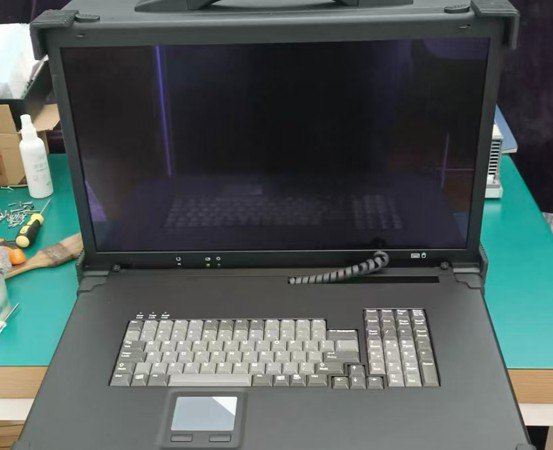
Portable hyperspectral field workstation
University agricultural research: Jetson carrier board, power chain, harness and enclosure, with follow-on production.
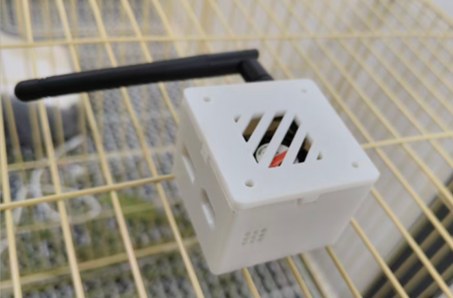
Rodent behavior and eye-movement AI system
Edge-AI camera that tracks lab animals on the device: PCB, firmware, models and app, 2 months.
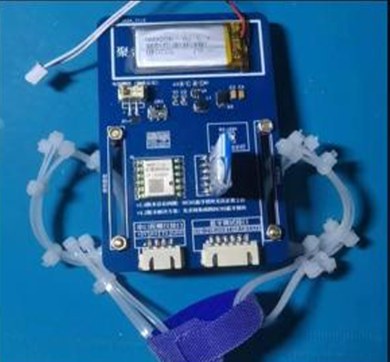
Wearable motion tracking with ECG and EMG
Research prototype recording ECG, sEMG and gait over Bluetooth to a PC app, 2 months.
- Industries
- Scientific Instruments & Laboratory Equipment · All industries
- More builds
- Jetson-based hyperspectral and remote sensing data acquisition system · 24-channel logic analyzer · Multi-channel IMU motion capture system · Electronic nose prototype · Dual-cable dimensional measurement device · BlueBerry wireless optogenetic stimulation system
- Related services
- Hardware engineering & prototype · Firmware & embedded systems · Pilot & small-batch assembly
Questions
Yes. Most research instruments are one to a few units; the hyperspectral systems above started as one engineering prototype and moved on to follow-on production.
Yes. Send the sensors, boards, code and photos you use; we keep what works and engineer the rest into a reliable unit.
You do. The project files, drawings and source are yours, and we sign an NDA before we open anything you send. IP and handover →
Anvol, Inc., a Delaware company, paid in USD by milestone. Company details →