
A voice-controlled device, built from your idea.
Send a sketch, a requirements document or a development-board demo, and our engineers in Shenzhen build a working device that listens and talks: microphone and speaker, an offline wake word and commands or a link to an existing speech and AI service, circuit board, firmware and enclosure. There is no minimum order, so one working prototype is a normal start. Our voice builds include two offline voice-controlled four-legged robots, a pocket AI voice companion and a smart planter that holds spoken conversations. You pay in USD to our US entity.
Updated
What you can send
- An idea or a sketch
- A requirements document listing what the device must do
- Code that already runs on a development board
- A working prototype that needs to become repeatable
Devices we have built
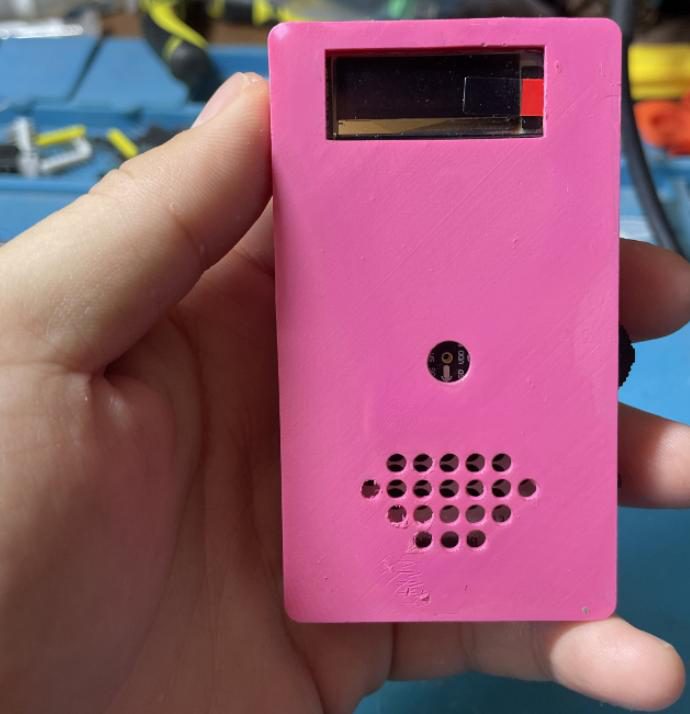
AI voice companion
Pocket device: press, speak, and it answers through its speaker and display, using an existing speech and AI backend.
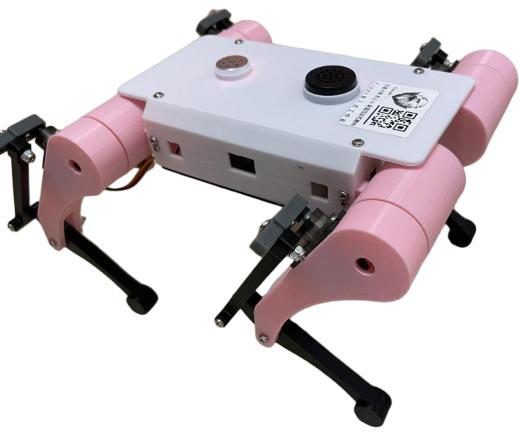
Offline voice-controlled quadruped
STM32 control board, offline wake word and predefined commands, microphone and speaker, no internet.
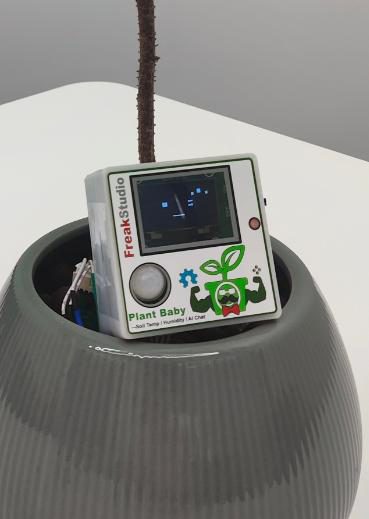
PottedBaby smart planter
ESP32-C3, microphone and speaker with an amplifier, spoken AI conversations about the plant.
What we built on the offline voice quadruped
- Mechanical design: compact 3D-printed structure, four-leg linkage, modular assembly
- Custom control board: servo interfaces, power management, microphone, speaker, buttons, battery monitoring
- Embedded software: servo and gait control, offline voice command recognition, 2.4 GHz remote receiver, predefined action library
- System integration and debugging
What it costs
You pay a one-time development fee, then a price per unit that depends on the quantity. Our engineers' reference range for development is about $500 to $3,000 for a simple small device and about $3,000 to $10,000 for a multi-board device. Totals exclude certification (quoted separately) and shipping. Reference figures, not fixed prices; you get a written price before any work starts. Costs →
Engineering notes on sound and voice
- Your prototype makes a sound. Will people hear it clearly?
- Add spoken prompts to a prototype without building a voice assistant
- Add offline voice control without making users learn the wrong commands
- Your microphone prints SOUND. Can it record a voice?
- Your prototype can listen or play sound. Why not both?
- How to make an interactive prototype play the right audio clip
Who does the work
- Zisheng Li, engineering lead
- Embedded systems. 20+ hardware products built. Named inventor on 8 granted patents.
- Where it is built
- Electronics benches in Shenzhen where our engineers build and debug, and the tool rooms, board and assembly lines we order from. You see each process, not the factory's name. Factories →
How it starts
- Send what you have through the project form, by email or on WhatsApp.
- If you ask, we send the NDA first. We sign it before we open any file.
- We reply within 12 hours, list what is missing and suggest the next build step.
- You get a written scope with price and date before any work starts. Major scope changes are re-quoted before work continues.
Questions
Yes. There is no minimum order. We can start with a single prototype and continue into small-batch production after you approve it.
Not necessarily. The two four-legged robots above recognise a wake word and fixed commands with no internet. The AI voice companion and the planter send speech to an existing speech and AI service over Wi-Fi. Tell us which your users need and it goes into the written scope.
You do. We sign an NDA before we open any file. The project-specific design files, drawings and tooling belong to you; our general tools and libraries stay ours.
No. Certification testing is done by a test lab and quoted separately when a product needs it.
Show us the device you want built.
Review my projectOr email chris@anvol.dev · WhatsApp +1 (323) 719-3730