How we worked as their outside engineering team
- Starting point
- The team brought an early working prototype, a product requirements document and a filled-in checklist of what the first demo had to do. The idea was clear: a small instrument that plays full chords from its own speaker, without a computer. Many details were not.
- Requirements
- We compared their documents with the hardware and wrote down seven open questions, among them: the document asked for 21 playing keys and the panel had 20; which key stops playback; how the bass line and arpeggio should work; whether USB MIDI was in scope. We took them back to the team and recorded each decision in the project requirements. For sound we asked only what the team could judge by ear: which instruments first, how each should sound, the range, and whether notes keep ringing.
- Design
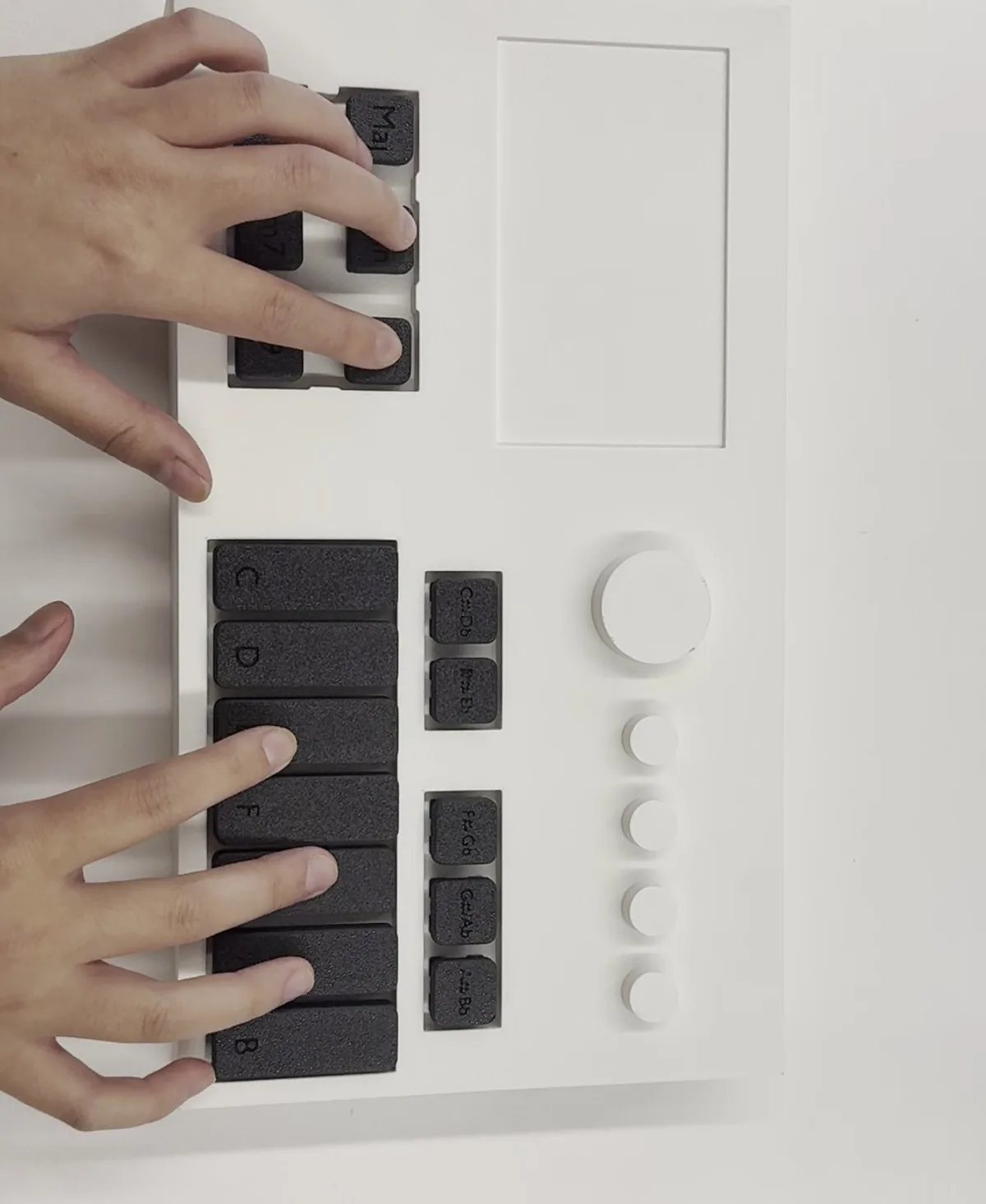
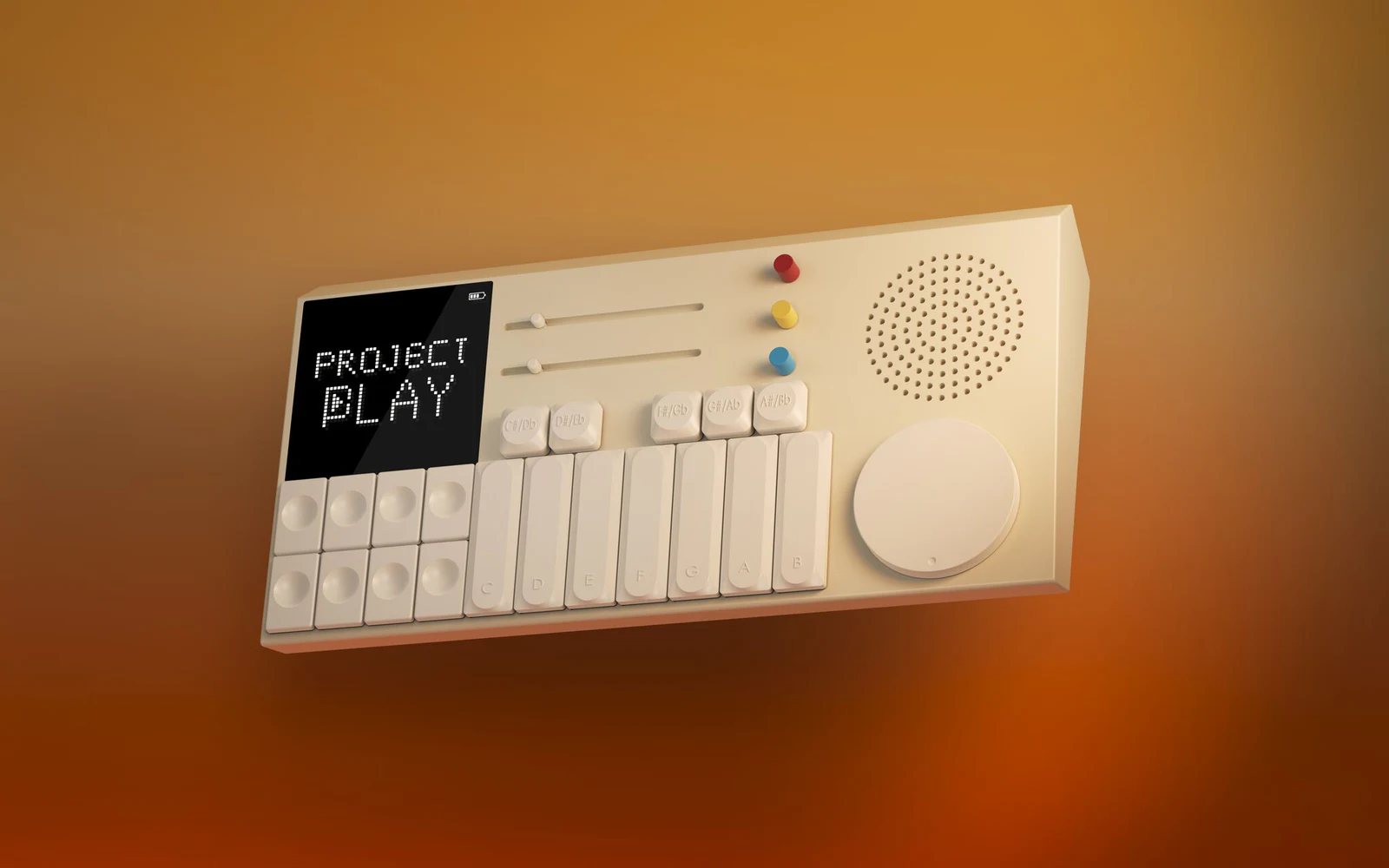
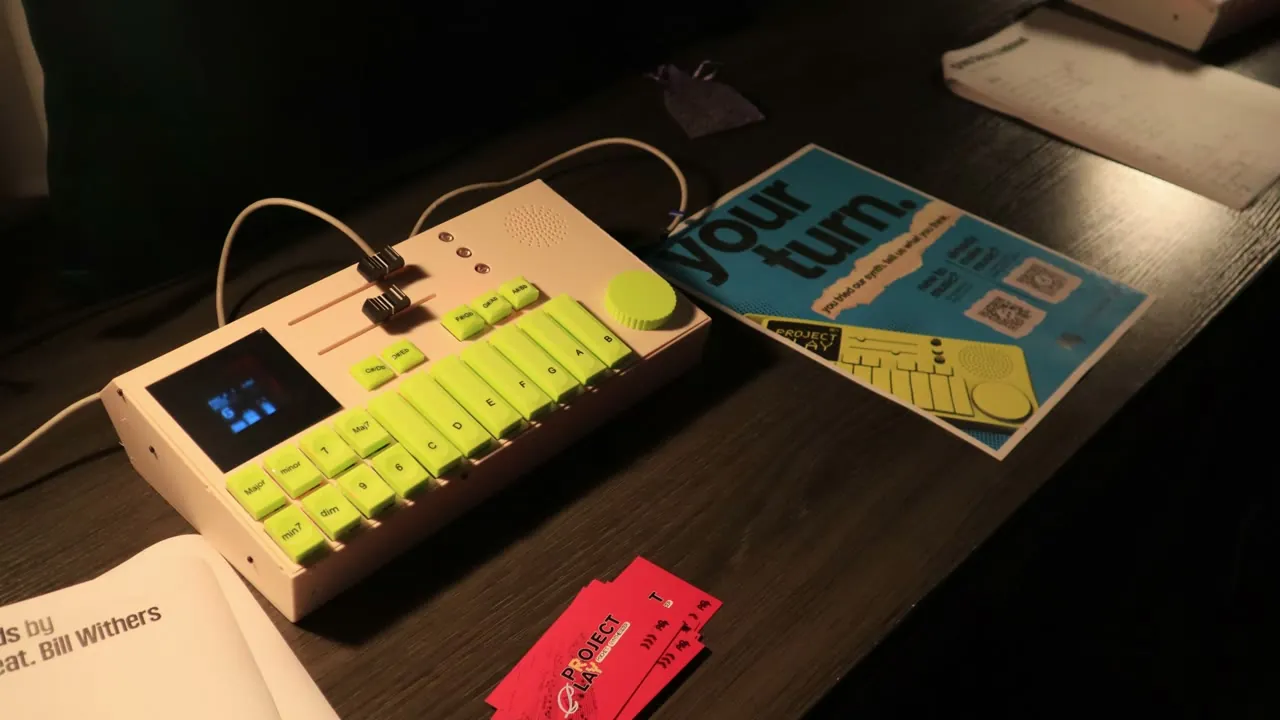
- A two-step way to play (pick a root note, then one of 8 chord keys: major, minor, 7, maj7, min7, dim, 9, 6), the screen layout, a start-up animation and instrument menu, the control electronics, the firmware and the sound library.
- The hard part: sound
- The first chords were test tones and sounded flat. We rebuilt the acoustic instruments from real recordings, designed the synth, flute and drum sounds, mixed each chord in advance so the device plays one clean file, and tuned playback until piano or guitar with a live bass line play together without crackling in listening tests. 2,148 sound files in all.
- Review rounds
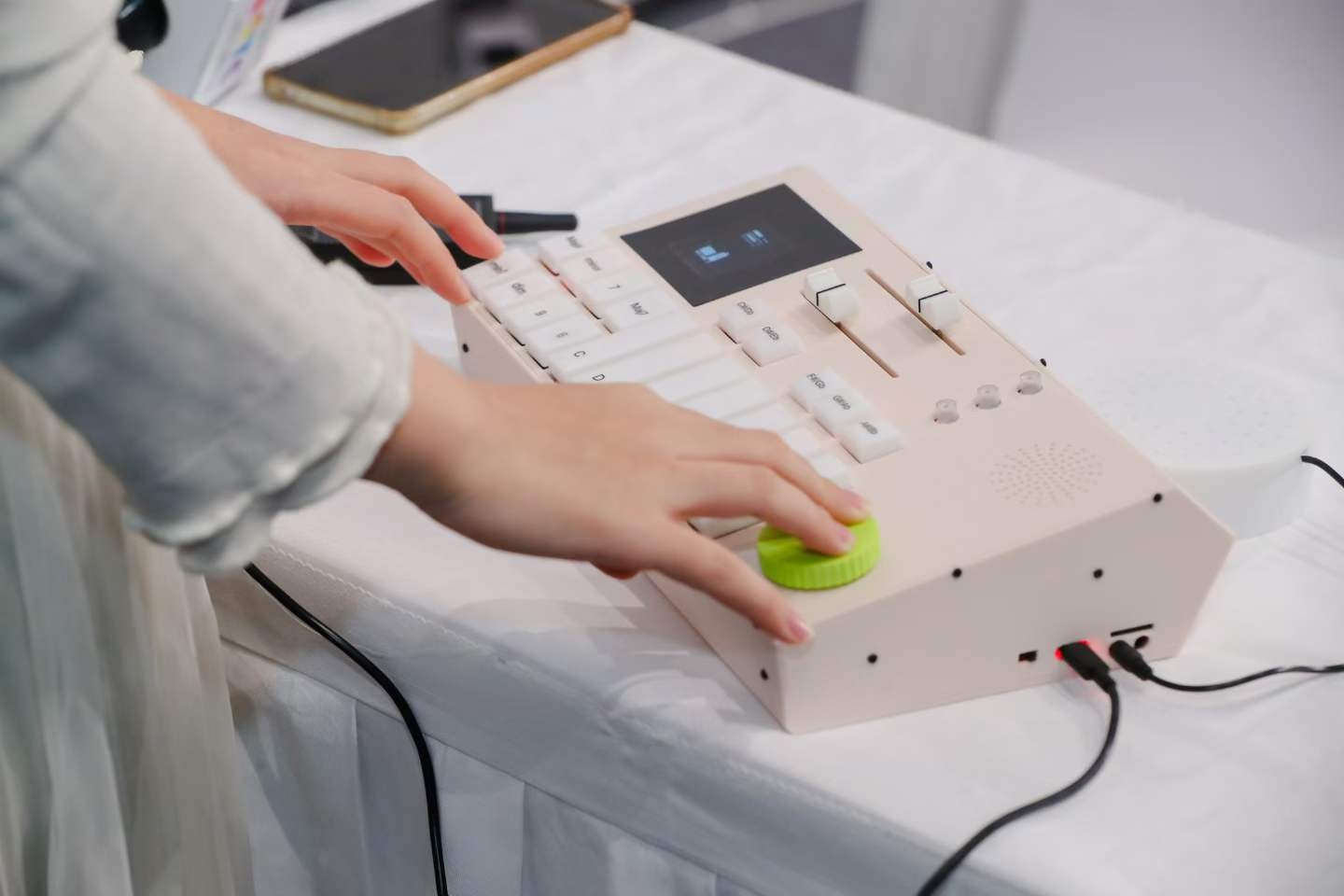
- Review rounds on the working units changed the product: chord keys restart on every press, the top slider sets the tempo (40 to 240 BPM) and the bottom one the note length, the screen turned 90 degrees to fit the final assembly, and the device opens with a short melody and an instrument menu.
- Testing
- A 100-round test over USB across all eight instruments: 800 runs, 0 device failures. All 1,776 playing combinations triggered, 0 failures. All 876 sounds of the four newer instruments played to the end on the device. 12 sound cards checked file by file on a PC. Three replacement control boards were checked one by one: all 23 keys, the knob, both sliders and the screen work on each, all three play sound (one after an audio module swap), and a 30-minute memory-card test ran with 0 errors.
- Upgrades
- Prototype units are built and played (photo above). Reviewing them found a knob cap that can break and indicator lights that sit too low; the upgrade round for the control board, lights and enclosure parts is under way, and each open item stays on our list until it is closed.