Contents
- I. Module Introduction
- 2. Introduction to Main Chips
- 2.1 Chip Overview
- 2.2 Pin Definition
- 2.3 Functional Block Diagram
- 2.4 Performance Parameters
- 2.5 Reference Circuit
- 2.6 Chip Configuration
- 2.7 Communication Interfaces and Related Protocols
- 2.8 PCB Routing Precautions
- III. Instructions for Circuit Engineering and Module Usage
- 3.1 Circuit Source Engineering
- 3.2 Module Usage Instructions
- 3.3 Application Experiment
- 4. Drivers
- 5. BOM & Recommended Alternative Parts
- VI. Revision History
- VII. Relevant Materials
- 7.1 Chip Datasheet
- 7.2 Unique Icons for PCB Silk Screen
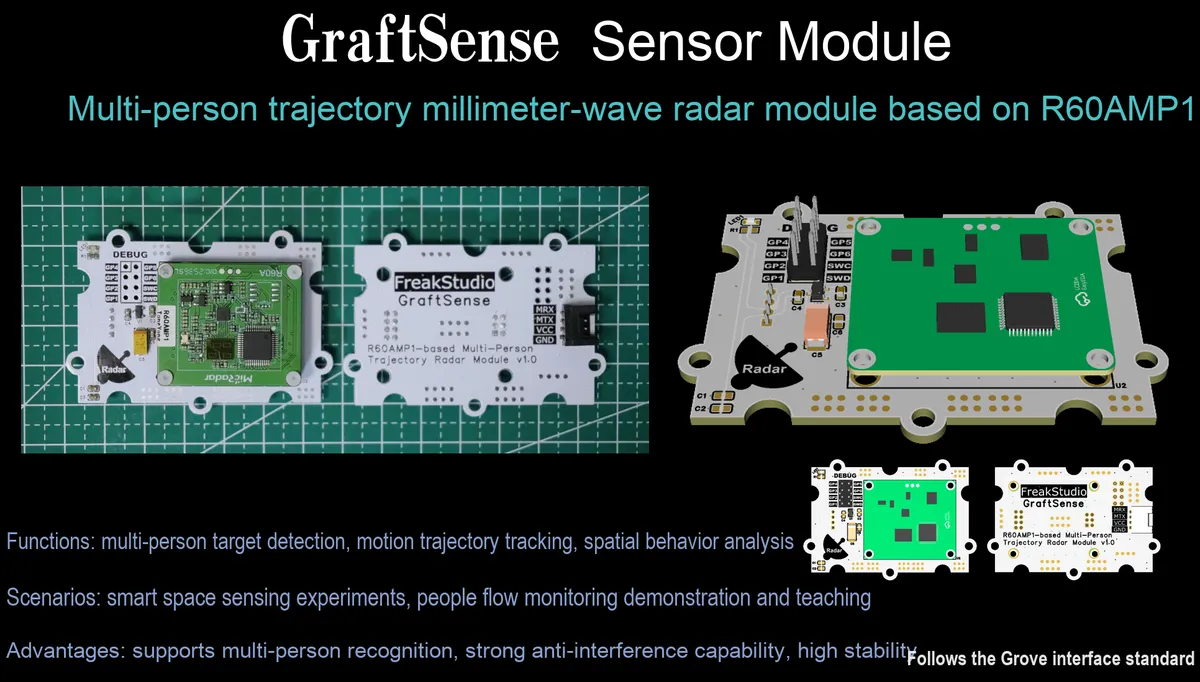
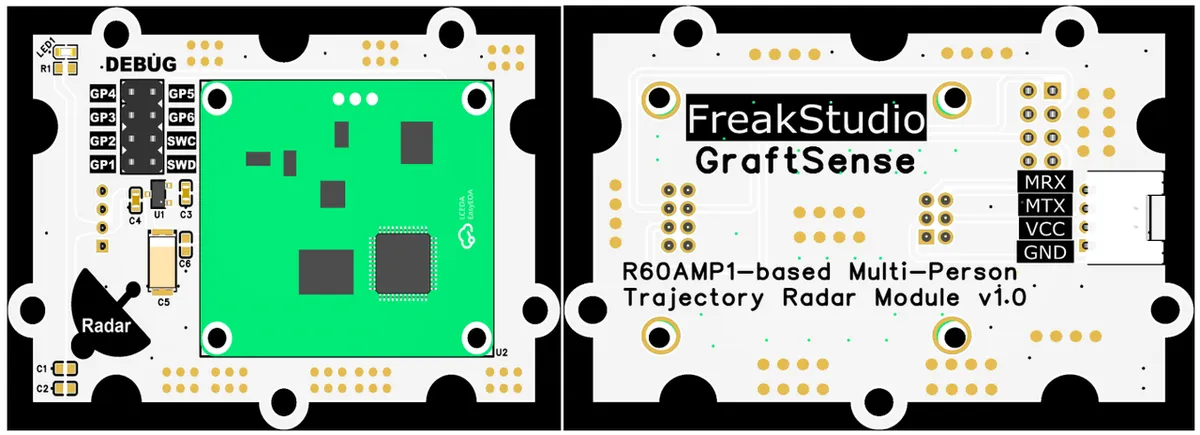
I. Module Introduction
Multi-person trajectory millimeter-wave radar module based on R60AMP1 that adopts FMCW frequency modulated continuous wave technology, can realize multi-person trajectory tracking, simultaneously perceive human respiration and heart rate, record sleep monitoring data, and has a detection distance of ≤1.5 meters. It features an output power of ≤0.5W, requires continuous power supply, is free from environmental interference such as temperature and humidity, is equipped with multiple interfaces, and is suitable for non-contact monitoring of indoor personnel trajectories and health status.
2. Introduction to Main Chips
The module adopts R60AMP1 multi-person trajectory millimeter-wave radar module.
2.1 Chip Overview
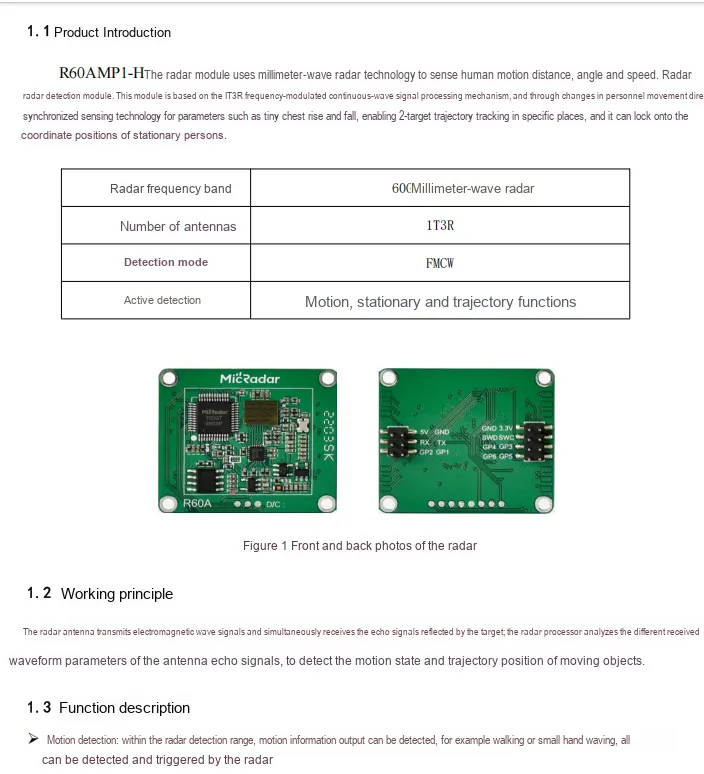
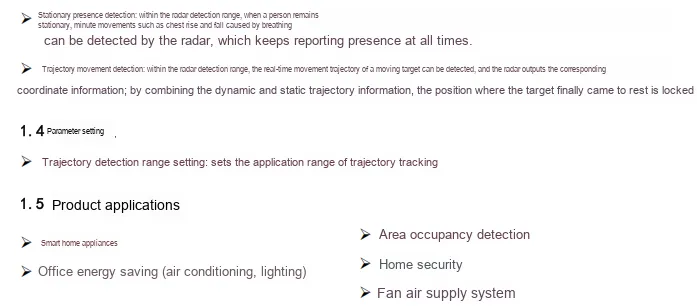
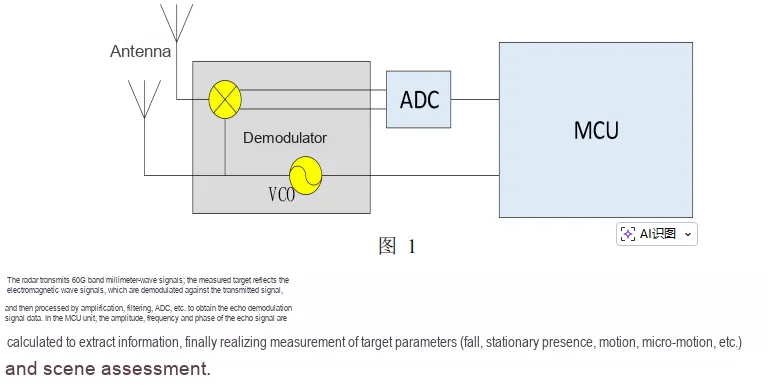
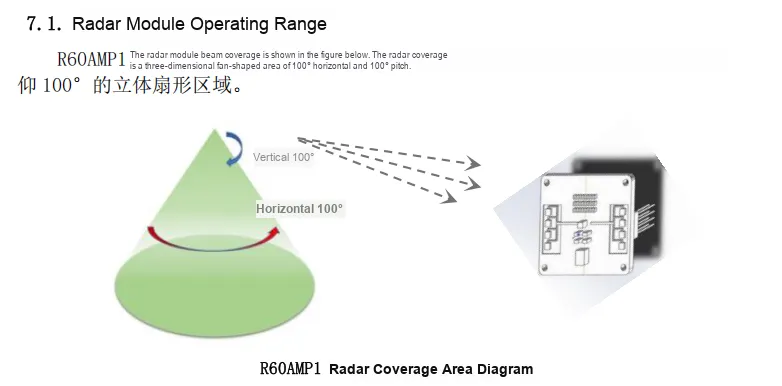
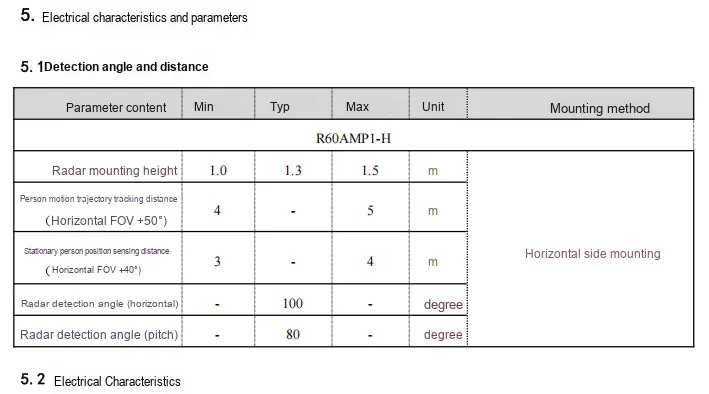
R60AMP1-H is a radar module that adopts 60G millimeter-wave technology. Based on 1T3R antennas and FMCW system, it transmits electromagnetic waves and analyzes the waveform parameters of the echo, which enables it to simultaneously track the movement trajectories of 2 targets, detect tiny movements such as chest undulations caused by respiration to realize static human detection, and lock the final static coordinates of personnel; it supports setting the trajectory detection range, and is applicable to scenarios such as smart home appliances, office energy conservation, regional personnel detection, and home security, so as to realize motion and static state perception as well as trajectory positioning.
2.2 Pin Definition
2.3 Functional Block Diagram
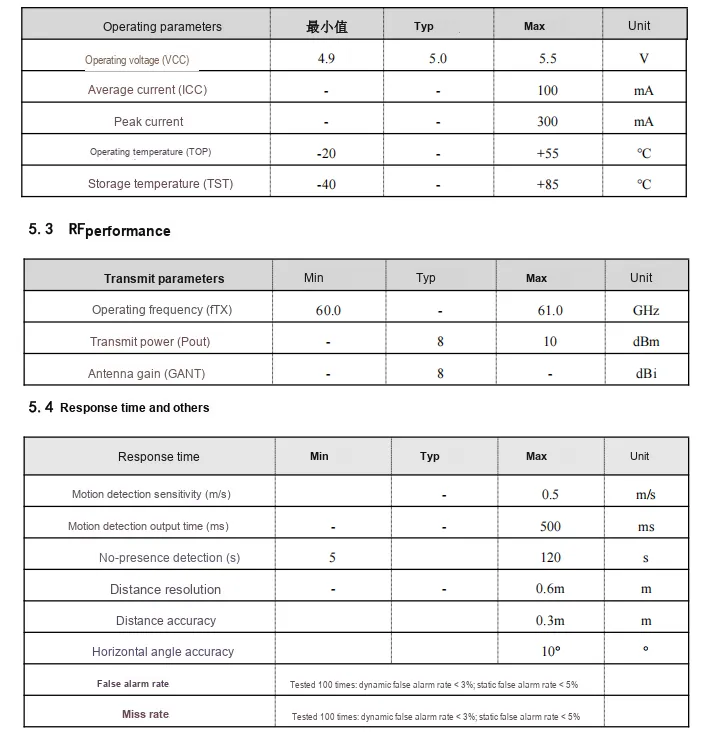
2.4 Performance Parameters
2.5 Reference Circuit

2.6 Chip Configuration
This module is of Plug and Play type, requiring no hardware configuration or software register setup.
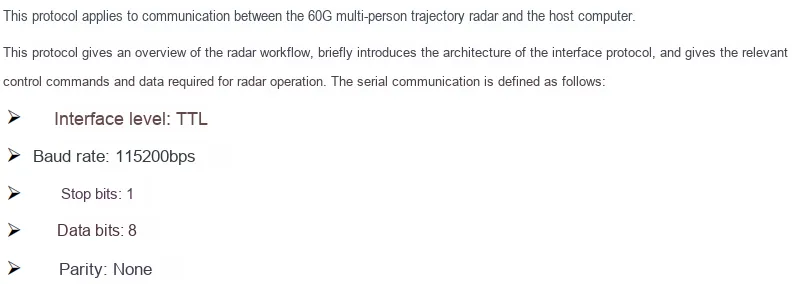
2.7 Communication Interfaces and Related Protocols
2.7.1 Description of Vital Sign Parameters Actively Posted Back by Radar
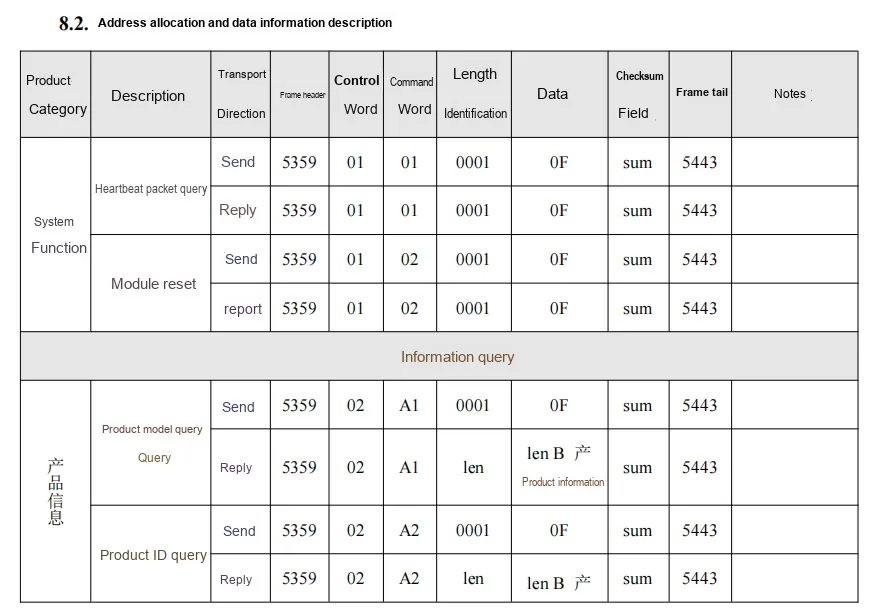
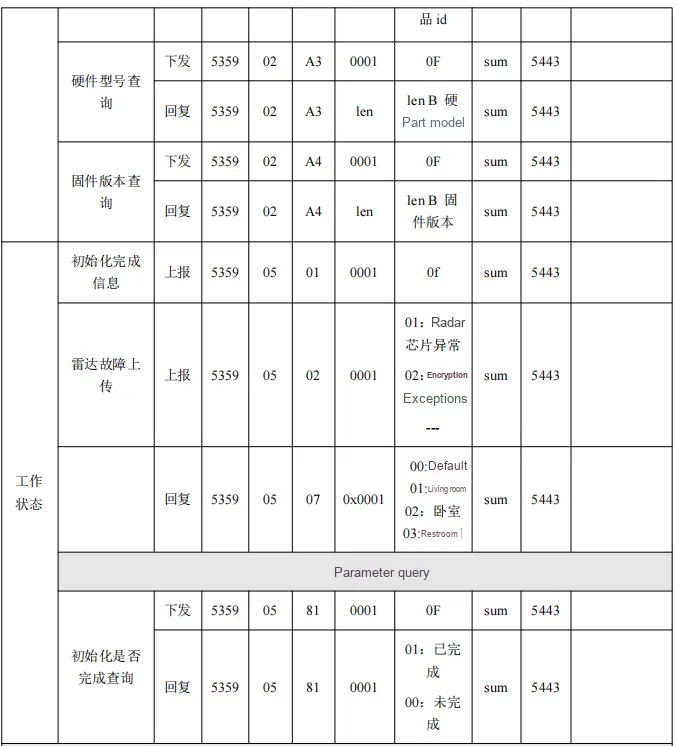
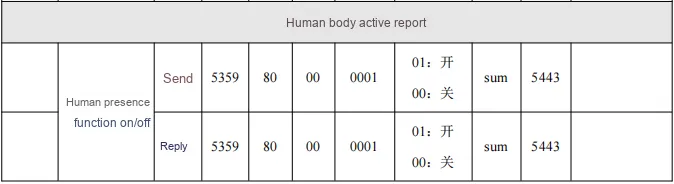
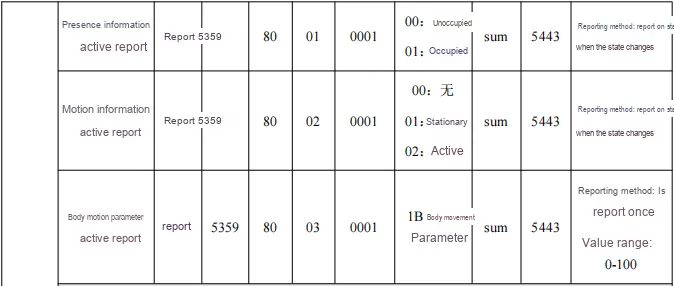
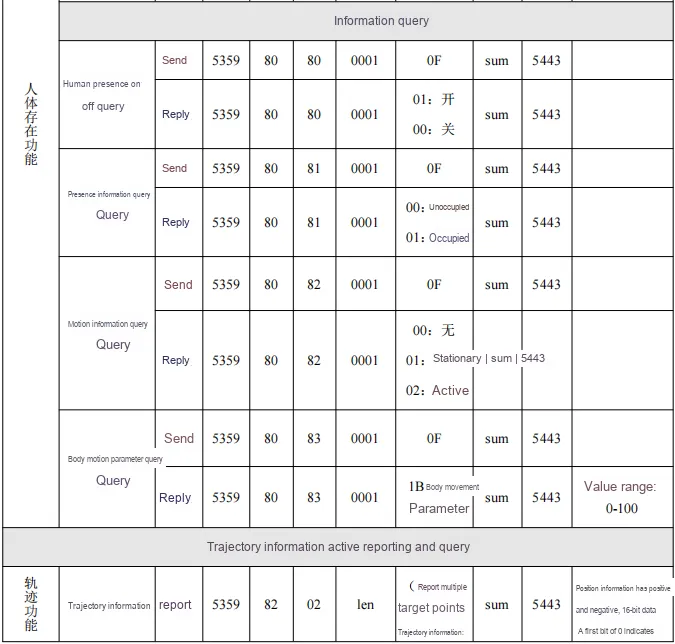
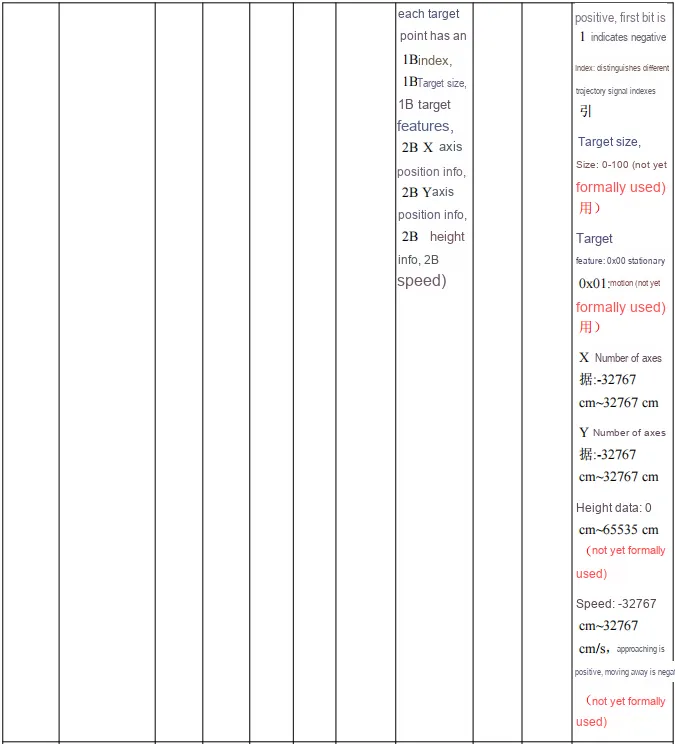
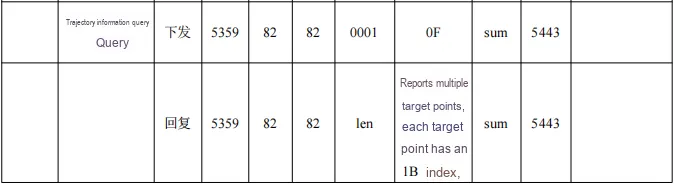
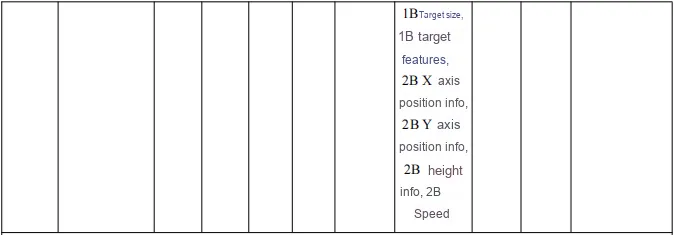
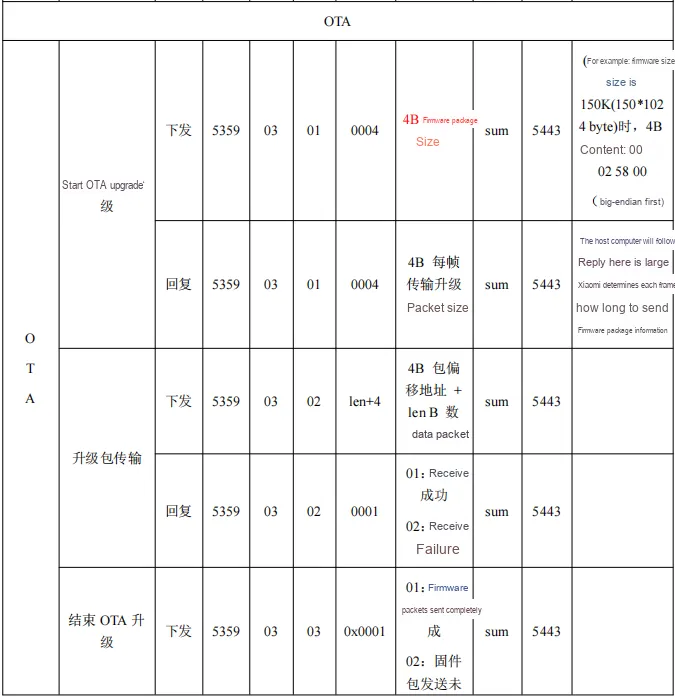

2.7.2 Custom Protocol Frame
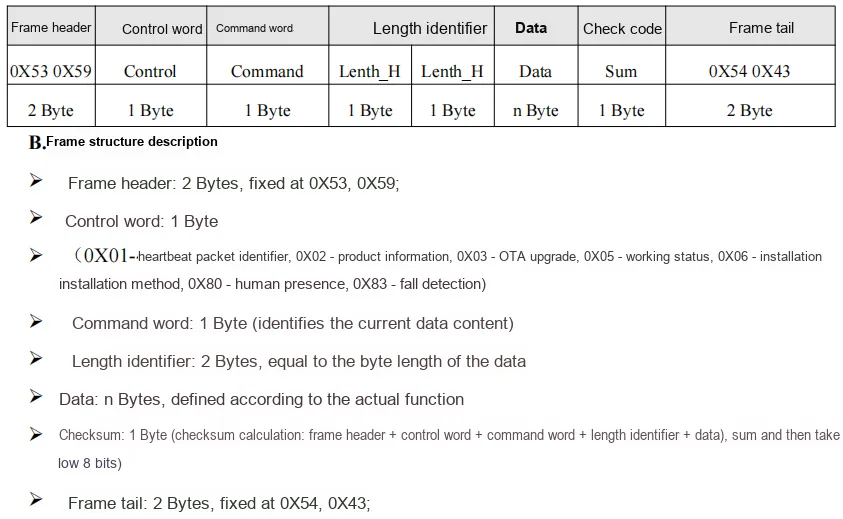
2.7.3 Instruction Summary, Practical Testing and Related Issues
2.7.3.1 Query and Setting of Basic Instruction Information
- Heartbeat Packet Query:
53 59 01 01 00 01 0F BE 54 43- Sample response:
53 59 01 01 00 01 0F BE 54 43
- Sample response:
- Module Reset: 53 59 01 02 00 01 0F BF 54 43 00
- Sample Reply:
# Module reset (system function - control word 0x01, command word 0x02) 53 59 01 02 00 01 0F BF 54 43 # (Unknown command; the function for control word 0x04, command word 0x04 is not listed in the manual, so please check the protocol) 53 59 04 04 00 01 00 B5 54 43 # Initialization complete report (working status - control word 0x05, command word 0x01) 53 59 05 01 00 01 0F C2 54 43 - Product Model Inquiry:
53 59 02 A1 00 01 0F 5F 54 43- Response example:
53 59 02 A1 00 08 52 36 30 41 48 58 32 00 22 54 43R60AHX2Hexadecimal:52 36 30 41 48 58 32 00
- Response example:

- Product ID Query: 53 59 02 A2 00 01 0F 60 54 43
- Response example:
53 59 02 A2 00 0E 52 33 30 32 48 32 32 32 33 37 30 30 31 00 1E 54 43 R302H22237001Hexadecimal:52 33 30 32 48 32 32 32 33 37 30 30 31 00
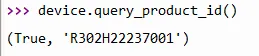
- Response example:
- Hardware Model Query:
53 59 02 A3 00 01 0F 61 54 43- Sample response:
53 59 02 A3 00 08 52 36 30 41 48 58 32 00 24 54 43 R60AHX2in hexadecimal is52 36 30 41 48 58 32 00
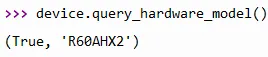
- Sample response:
- Firmware Version Query:
53 59 02 A4 00 01 0F 62 54 43- Response example:
53 59 02 A4 00 10 47 36 30 54 50 31 53 59 56 30 31 30 30 30 33 00 0A 54 43 G60TP1SYV010003Hexadecimal value:47 36 30 54 50 31 53 59 56 30 31 30 30 30 33 00

- Response example:
- Initialization completion query:
53 59 05 81 00 01 0F 42 54 43- Response sample:
53 59 05 81 00 01 01 34 54 43 01: Completed00: Incomplete

- Response sample:
2.7.3.2 Presence Function of Human Body
- Enable Human Presence Detection Function (On):
53 59 80 00 00 01 01 2E 54 43- Sample response:
53 59 80 00 00 01 01 2E 54 43

- Sample response:
- Toggle human presence detection function (Off):
53 59 80 00 00 01 00 2D 54 43- Sample Response:
53 59 80 00 00 01 00 2D 54 43
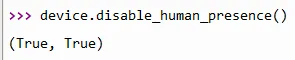
- Sample Response:
- Human presence switch query:
53 59 80 80 00 01 0F BC 54 43- Response Example:
53 59 80 80 00 01 00 AD 54 43(Off)53 59 80 80 00 01 01 AE 54 43(On)01: On00: Off

- Existence Query:
53 59 80 81 00 01 0F BD 54 43- Sample Reply:
53 59 80 81 00 01 01 AF 54 43(someone)53 59 80 81 00 01 00 AE 54 43(Unmanned)

- Exercise Information Query:
53 59 80 82 00 01 0F BE 54 43- Sample Reply:
53 59 80 82 00 01 02 B1 54 43(Active)53 59 80 82 00 01 01 B0 54 43(Static)53 59 80 82 00 01 00 AF 54 43(No activity)
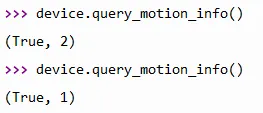
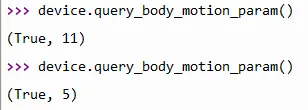
- Motion parameter query:
53 59 80 83 00 01 0F BF 54 43- Response Example:
53 59 80 83 00 01 01 B1 54 43(Motion Parameter 1)53 59 80 83 00 01 0F BF 54 43(Body Motion Parameter 15)
- Track Information Query:
53 59 82 82 00 01 0F C0 54 43 - Response Example:
53 59 82 82 00 0B 01 5B 02 00 1D 00 BC 00 00 00 00 F2 54 43- Number of target points: 1
- Target Point Details:
- Index: 1
- Size: 91
- Feature: 02 (Undefined state, which may be "jog" or other extended states)
- Position:(X= 29 cm, Y= 188 cm)
- Height: 0 cm (unused)
- Speed: 0 cm/s (Unused)

2.7.3.3 Summary of Related Issues
During the actual testing process, we have identified the following issues that require attention in the subsequent driver code development, and I have documented the details of these issues along with the specific version numbers here.
An unknown command occurred during the module reset function test on firmware version G60TP1SYV010003, and the version information is as follows:
Product Model: R60AHX2
Hardware Model: R60AHX2
Firmware Version: G60TP1SYV010003
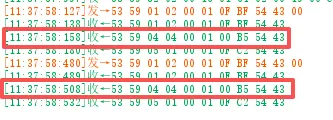
53 59 04 04 00 01 00 B5 54 43 The instruction is not listed in the manual.
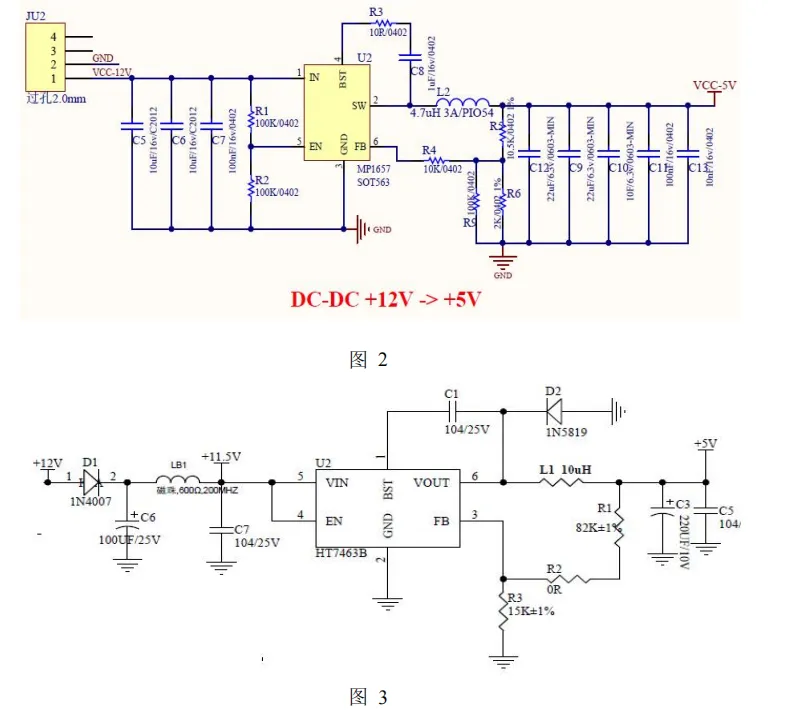
2.8 PCB Routing Precautions
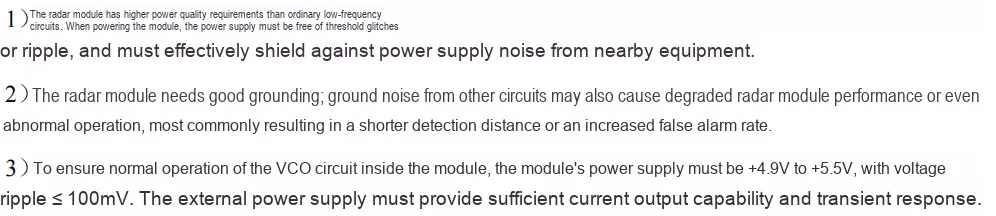
《R60AMP1-H (Side Mount)_Datasheet_V2.0》 specifies the power supply section as follows:
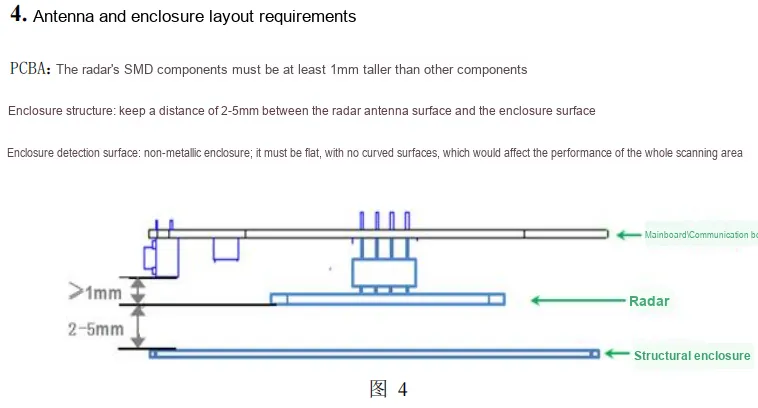
《R60AMP1_User Manual_V1.3》 specifies the power supply section as follows:

III. Instructions for Circuit Engineering and Module Usage
3.1 Circuit Source Engineering
To obtain the circuit source project, please follow the official account [Freak Embedded].
3.2 Module Usage Instructions
The schematic diagram of this module is shown below:
SCH_Multi-Person Trajectory Millimeter-Wave Radar Module Based on R60AMP1-v1.0_2026-01-29.pdf 2.5 MB
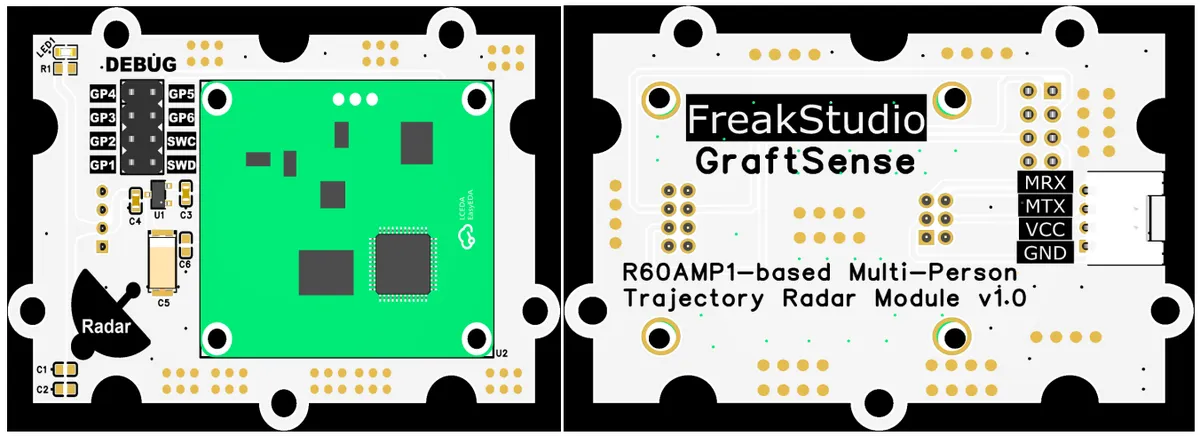
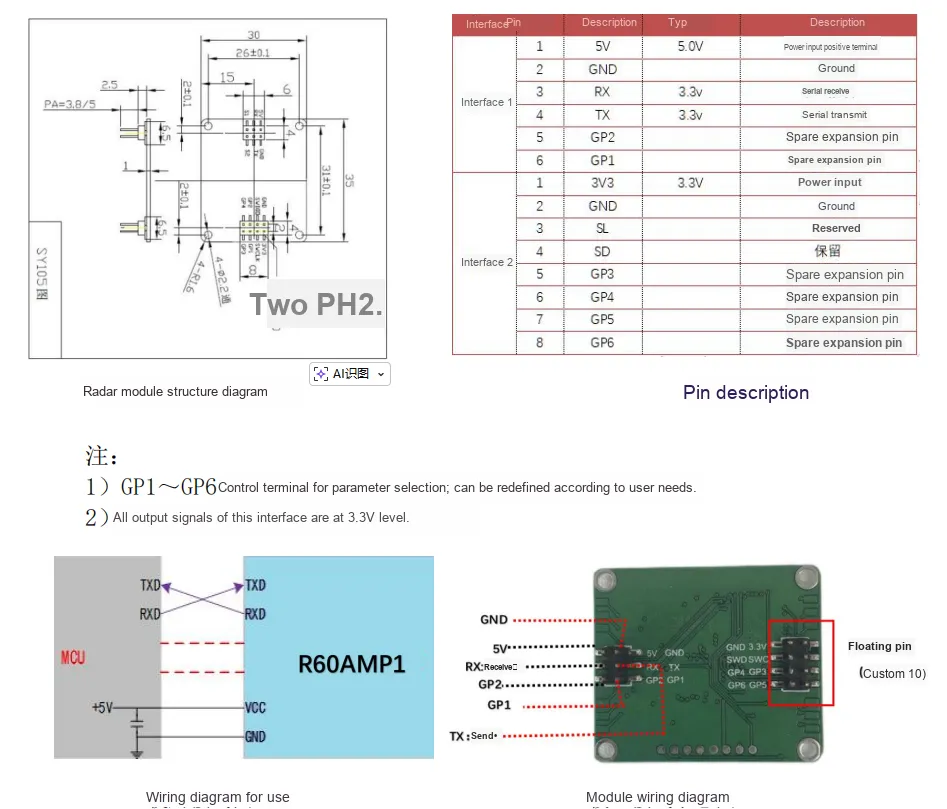
This module provides a serial port UART interface MRX and MTX: where M stands for master, meaning the MCU 's RX corresponds to the module' s TX.
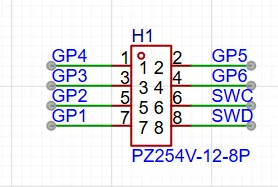
This module leads out external expansion interfaces GP1 to GP6, SWC and SWD, which facilitates subsequent function development and firmware upgrade. It should be noted that when soldering 2.54 header pins to the DEBUG interface, the pins need to be reversely connected to the back side to avoid interference with the radar module.
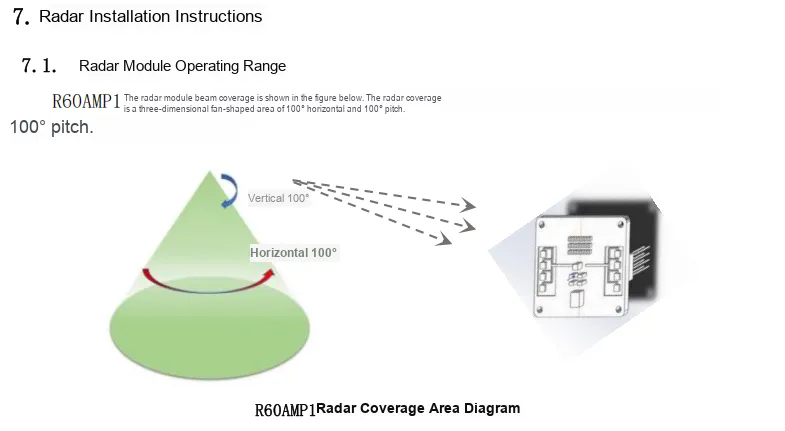
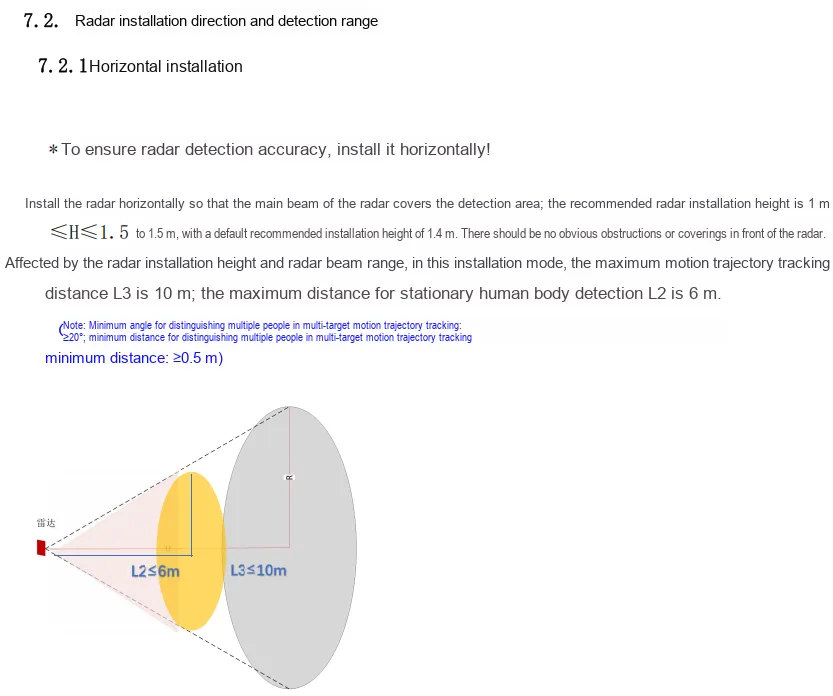
Also, please note the following when using it:
3.3 Application Experiment
Here, we use the GraftPort-RP2040 development board for testing. The fall detection millimeter-wave radar module based on R60AMP1 uses the UART1 interface to communicate with the main controller. To facilitate result viewing, data is transmitted via serial Bluetooth, and the UART0 interface is connected to the master-slave integrated BLE Bluetooth module based on HC-08.
The module connections are shown in the following table:
Fall Detection Millimeter-Wave Radar Module Based on R60AMP1:
Development Board Pins | Module Pins | Description |
Pin 8 |
|
|
Pin 9 |
|
|
HC-08 Based Master-Slave Integrated BLE Bluetooth Module:
Development Board Pins | Module Pins | Description |
Pin 16 |
|
|
Pin 17 |
|
|
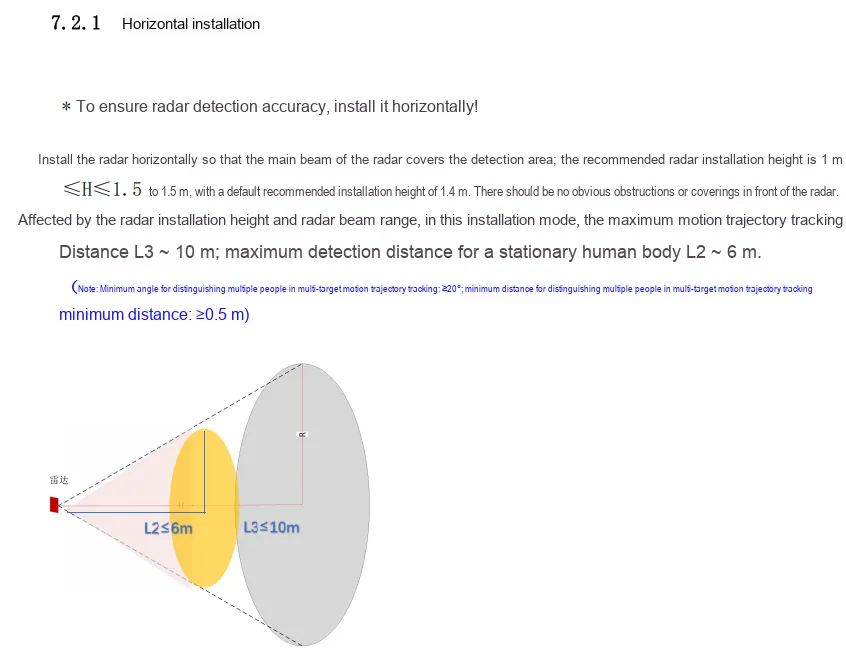
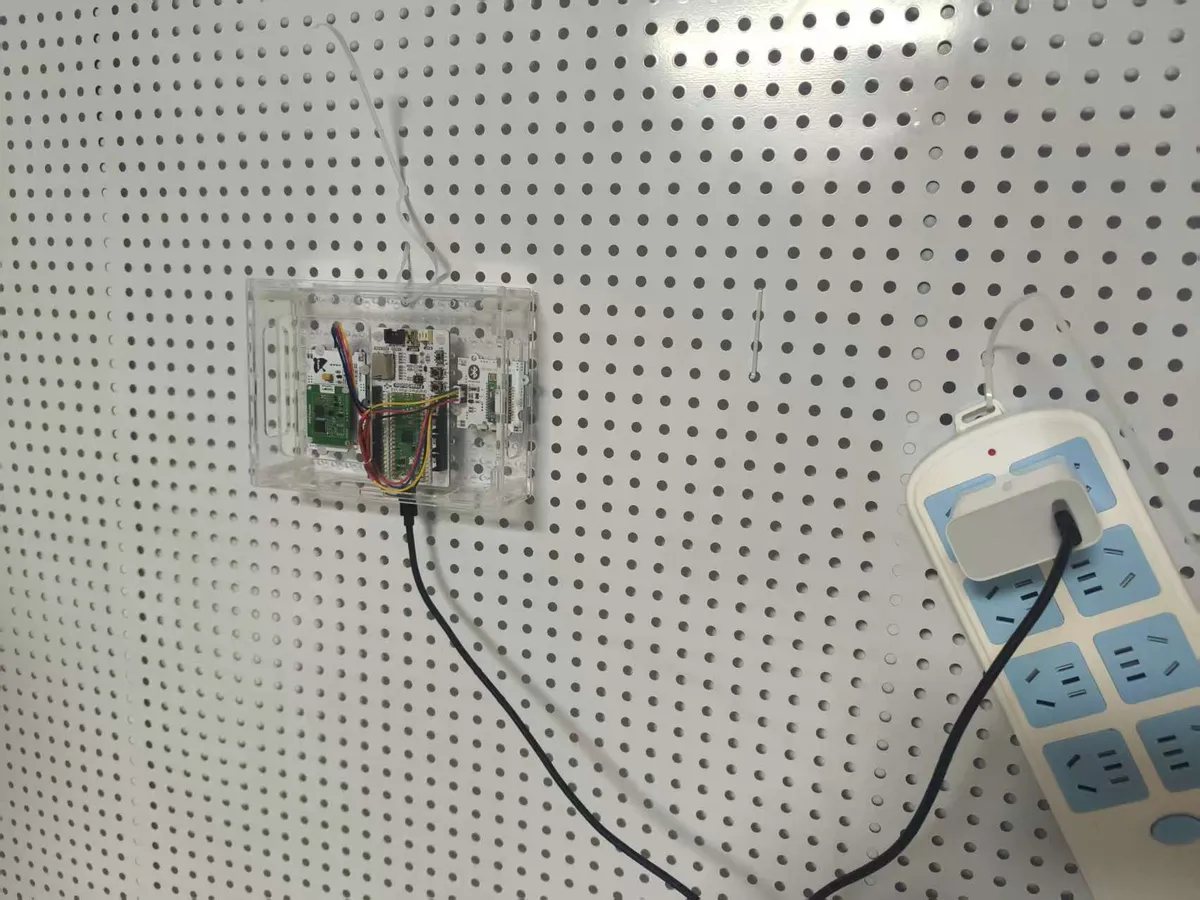
Install horizontally during use:
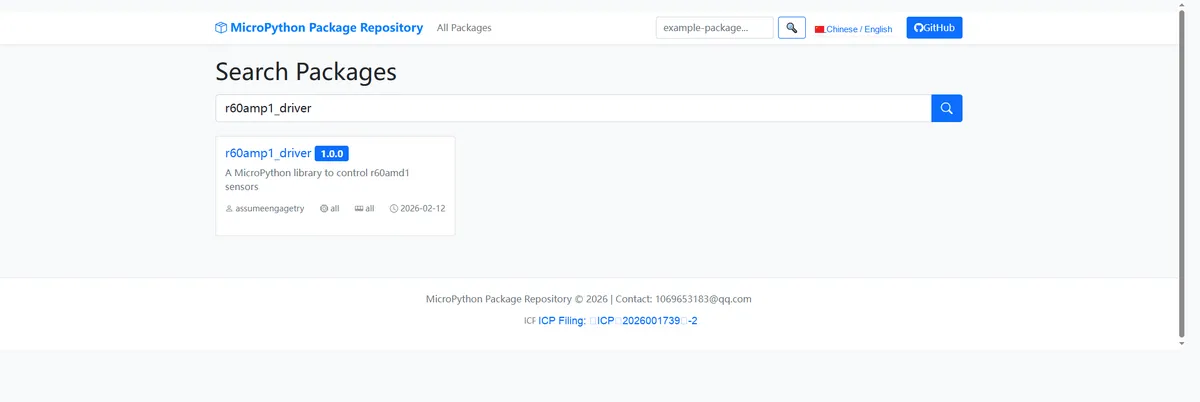
Here, we need to search for the relevant driver packages on uPyPI: https://upypi.net/zh/
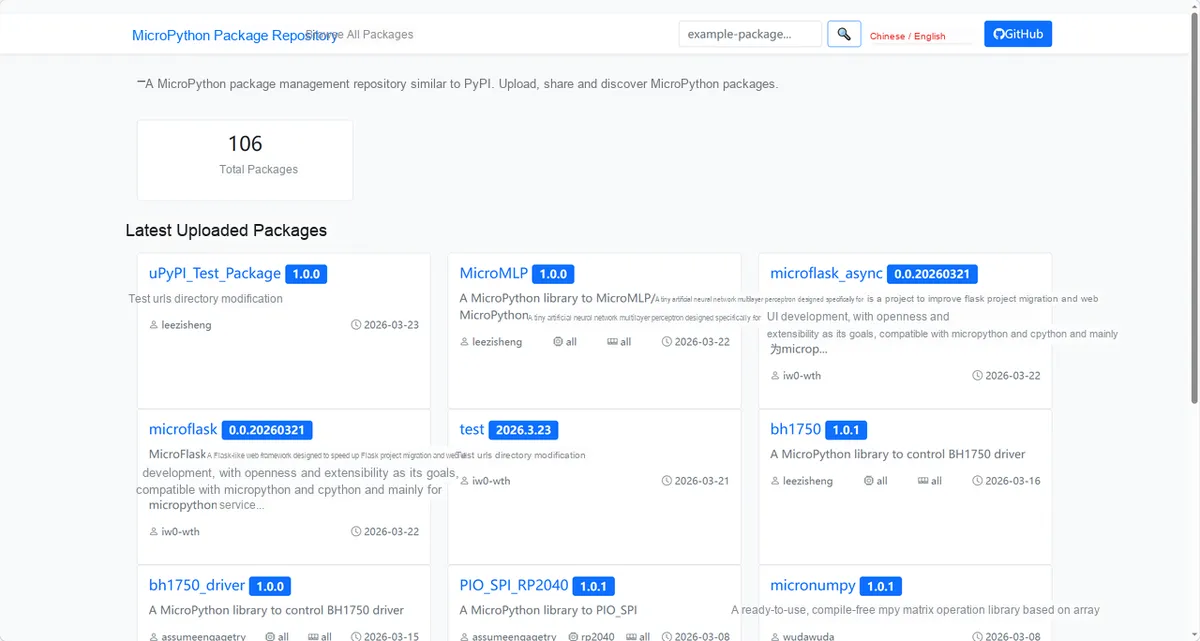
Enter r60amp1_driver to search, and the following will be displayed:
Click to copy the local installation command:
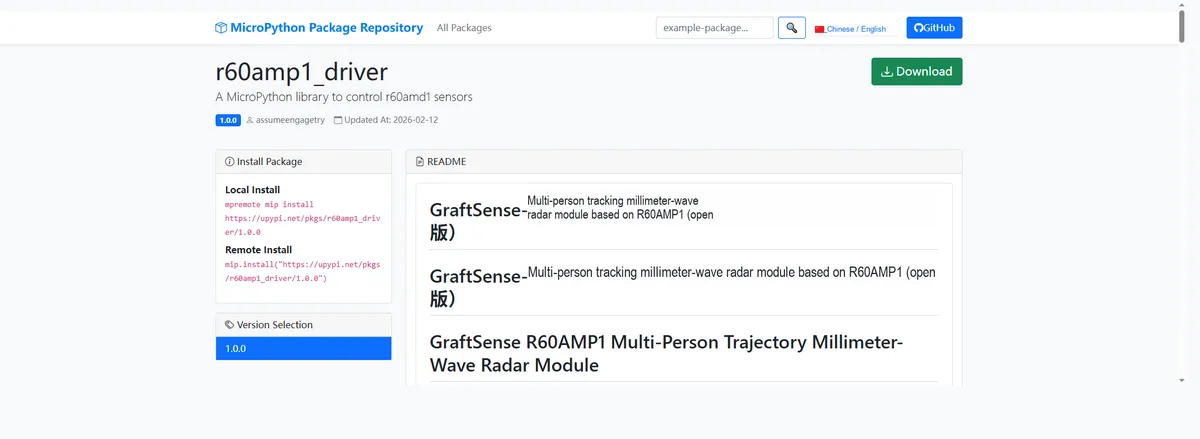
Here, we can import the module driver library code via the mip tool. The following are the usage commands for the mpremote tool:
mpremote mip install github:FreakStudioCN/GraftSense-Drivers-MicroPython/sensors/r60amp1_driverImport the multi-target trajectory meter-wave radar module based on R60AMP1 - MicroPython driver code, then copy the following main.py code into our project:
# Python env   : MicroPython v1.26.1
# -*- coding: utf-8 -*-
# @Time    : 2025/11/4 5:33 PM
# @Author  : hogeiha
# @File    : main.py
# @Description : Code for testing the R60AMP1 multi-person trajectory radar device driver class
# @License : CC BY-NC 4.0

# ======================================== Import Modules =========================================

from machine import UART, Pin, Timer
import time
from data_flow_processor import DataFlowProcessor
from r60amp1 import R60AMP1, format_time
from hc08 import HC08

# ======================================== Global Variables ============================================

# Enable debug mode (optional)
R60AMP1.DEBUG_ENABLED = True

# Last print time
last_print_time = time.ticks_ms()

# Periodic print interval: print once every 2 seconds
print_interval = 2000

# ======================================== Functions ============================================

def print_report_sensor_data():
    """
    Print the data reported by the sensor to the Thonny console.

    Note: This function prints data actively reported by the device, not query results.
    The data comes from the attribute values of the R60AMP1 class, which are updated automatically in the timer callback.

    ==========================================

    Print sensor reported data to Thonny console.

    Note: This function prints data actively reported by the device, not query results.
    Data comes from R60AMP1 class attributes, which are automatically updated in timer callbacks.
    """
    # Declare global variables
    global device

    print("=" * 50)
    print("%s Sensor Data" % format_time())
    print("=" * 50)

    # System-level information
    print("System Initialized: %s" % ("Yes" if device.system_initialized else "No"))
    print("Radar Fault Status: %s" % ["Normal", "Radar chip error", "Encryption error"][
        device.radar_fault_status] if device.radar_fault_status < 3 else "Unknown")
    print("Environment Mode: %s" % ["Default", "Living Room", "Bedroom", "Bathroom"][
        device.environment_mode] if device.environment_mode < 4 else "Unknown")

    # Product information
    print("Product Model: %s" % device.product_model)
    print("Product ID: %s" % device.product_id)
    print("Hardware Model: %s" % device.hardware_model)
    print("Firmware Version: %s" % device.firmware_version)

    # Human presence detection
    print("Presence Status: %s" % ("Someone" if device.presence_status == R60AMP1.PRESENCE_PERSON else "No one"))
    print("Motion Status: %s" % ["No motion", "Static", "Active"][
        device.motion_status] if device.motion_status < 3 else "Unknown")
    print("Body Motion Parameter: %d" % device.body_motion_param)
    print("Presence Function Enabled: %s" % ("ON" if device.presence_enabled else "OFF"))

    # Trajectory information
    if device.trajectory_targets:
        print("\nTrajectory Targets (%d):" % len(device.trajectory_targets))
        for i, target in enumerate(device.trajectory_targets):
            print("  Target %d:" % (i + 1))
            print("    Index: %d" % target['index'])
            print("    Size: %d" % target['size'])
            print("    Feature: %s" % ("Static" if target['feature'] == R60AMP1.TARGET_FEATURE_STATIC else "Moving"))
            print("    Position: X=%d cm, Y=%d cm" % (target['x'], target['y']))
            print("    Height: %d cm" % target['height'])
            print("    Speed: %d cm/s" % target['speed'])
    else:
        print("\nNo trajectory targets detected")

    print("=" * 50)

def print_active_query_data(timeout=200):
    """
    Actively query and print sensor data (blocking query).

    Args:
        timeout: Timeout for a single query, in milliseconds.

    Note:
        - This function performs blocking queries and queries all sensor data in turn.
        - There is a 200ms delay between queries to avoid overloading the device.
        - A failed query displays a failure message; a successful one displays the specific data.

    ==========================================

    Actively query and print sensor data (blocking queries).

    Args:
        timeout: Single query timeout time in milliseconds.

    Note:
        - This function performs blocking queries, sequentially querying all sensor data.
        - Each query has 200ms delay to avoid overwhelming the device.
        - Failed queries display failure information, successful ones display specific data.
    """
    # Declare global variables
    global device

    print("=" * 50)
    print("%s Active Query Sensor Data" % format_time())
    print("=" * 50)

    # Query heartbeat
    success, heartbeat_result = device.query_heartbeat(timeout)
    if success:
        print("Query Heartbeat: Success")
    else:
        print("Query Heartbeat: Failed")

    time.sleep(0.2)

    # Query product model
    success, product_model = device.query_product_model(timeout)
    if success:
        print("Query Product Model: %s" % product_model)
    else:
        print("Query Product Model: Failed")

    time.sleep(0.2)

    # Query product ID
    success, product_id = device.query_product_id(timeout)
    if success:
        print("Query Product ID: %s" % product_id)
    else:
        print("Query Product ID: Failed")

    time.sleep(0.2)

    # Query hardware model
    success, hardware_model = device.query_hardware_model(timeout)
    if success:
        print("Query Hardware Model: %s" % hardware_model)
    else:
        print("Query Hardware Model: Failed")

    time.sleep(0.2)

    # Query firmware version
    success, firmware_version = device.query_firmware_version(timeout)
    if success:
        print("Query Firmware Version: %s" % firmware_version)
    else:
        print("Query Firmware Version: Failed")

    time.sleep(0.2)

    # Query initialization status
    success, init_status = device.query_init_complete(timeout)
    if success:
        print("Query Init Status: %s" % ("Completed" if init_status else "Not completed"))
    else:
        print("Query Init Status: Failed")

    time.sleep(0.2)

    # Query human presence switch
    success, presence_switch = device.query_human_presence_switch(timeout)
    if success:
        print("Query Presence Switch: %s" % ("ON" if presence_switch else "OFF"))
    else:
        print("Query Presence Switch: Failed")

    time.sleep(0.2)

    # Query presence status
    success, presence_status = device.query_presence_status(timeout)
    if success:
        print("Query Presence Status: %s" % ("Someone" if presence_status == R60AMP1.PRESENCE_PERSON else "No one"))
    else:
        print("Query Presence Status: Failed")

    time.sleep(0.2)

    # Query motion status
    success, motion_status = device.query_motion_info(timeout)
    if success:
        status_text = ["No motion", "Static", "Active"][motion_status] if motion_status < 3 else "Unknown"
        print("Query Motion Status: %s" % status_text)
    else:
        print("Query Motion Status: Failed")

    time.sleep(0.2)

    # Query body movement parameters
    success, body_motion_param = device.query_body_motion_param(timeout)
    if success:
        print("Query Body Motion Parameter: %d" % body_motion_param)
    else:
        print("Query Body Motion Parameter: Failed")

    time.sleep(0.2)

    # Query trajectory information
    success, trajectory_targets = device.query_trajectory_info(timeout)
    if success:
        print("Query Trajectory Info: Success")
        if trajectory_targets:
            print("  Number of targets: %d" % len(trajectory_targets))
            for i, target in enumerate(trajectory_targets):
                print("  Target %d: Index=%d, Size=%d, Feature=%s, Position=(%d, %d), Height=%d, Speed=%d" %
                      (i + 1, target['index'], target['size'],
                       "Static" if target['feature'] == R60AMP1.TARGET_FEATURE_STATIC else "Moving",
                       target['x'], target['y'], target['height'], target['speed']))
        else:
            print("  No targets detected")
    else:
        print("Query Trajectory Info: Failed")

    print("=" * 50)

# ======================================== Custom Classes ============================================

# ======================================== Initialization ==========================================

# Power-on delay
time.sleep(3)
# Print debug information
print("FreakStudio: Using R60AMP1 Multi-person Trajectory Radar")

# Initialize UART0: TX=16, RX=17, baud rate 115200
uart = UART(0, baudrate=115200, tx=Pin(16), rx=Pin(17), timeout=0)
uart1 = UART(1, baudrate=9600, tx=Pin(8), rx=Pin(9), timeout=0)

# Bluetooth
hc0 = HC08(uart1)
# Create DataFlowProcessor instance
processor = DataFlowProcessor(uart)

# Create an R60AMP1 instance

device = R60AMP1(
    processor,
    parse_interval=200,  # Data parsing interval 200ms
    presence_enabled=True,  # Enable human presence detection
    max_retries=3,  # Maximum of 3 retries
    retry_delay=100,  # Retry delay 100ms
    init_timeout=5000  # Initialization timeout 5 seconds
)

# Print the configuration status
print("\nDevice Configuration Status:")
config_status = device.get_configuration_status()
print("Initialization Complete: %s" % config_status['initialization_complete'])
print("Configuration Errors: %d" % len(config_status['configuration_errors']))

if len(config_status['configuration_errors']) > 0:
    print("Configuration Error Details:")
    for error in config_status['configuration_errors']:
        print("  - %s" % error)

# Print the device information
device_info = config_status['device_info']
print("\nDevice Information:")
print("  Product Model: %s" % device_info['product_model'])
print("  Product ID: %s" % device_info['product_id'])
print("  Hardware Model: %s" % device_info['hardware_model'])
print("  Firmware Version: %s" % device_info['firmware_version'])

# Print the current settings
current_settings = config_status['current_settings']
print("\nCurrent Settings:")
print("  Presence Detection: %s" % ("ENABLED" if current_settings['presence_enabled'] else "DISABLED"))

time.sleep(1)

# ========================================  Main Program  ===========================================

try:
    print("\nStarting main loop...")
    print("Press Ctrl+C to stop the program\n")

    while True:
        current_time = time.ticks_ms()

        # Print sensor data periodically
        if time.ticks_diff(current_time, last_print_time) >= print_interval:
            # Print the actively reported data
            print_report_sensor_data()
            presence_status = device.presence_status
            motion_status = device.motion_status
            body_motion_param = device.body_motion_param
            trajectory_targets = device.trajectory_targets
            hc0.send_data("=== status ===\n")
            hc0.send_data(f"presence_status: {presence_status}\n")
            hc0.send_data(f"motion_status: {motion_status}\n")
            hc0.send_data(f"Body movement: {body_motion_param}\n")
            hc0.send_data(f"Target Quantity: {len(trajectory_targets)}\n")
            hc0.send_data("Trajectory Target:\n")
            for i, target in enumerate(trajectory_targets):
                hc0.send_data(f"  target{i + 1}: {target}\n")
            # Query and print the presence status
            success, presence_status = device.query_presence_status()
            if success:
                print("Active Query Presence Status: %s" % (
                    "Someone" if presence_status == R60AMP1.PRESENCE_PERSON else "No one"))
            else:
                print("Active Query Presence Status: Failed")

            last_print_time = current_time

        # Small delay to avoid using too much CPU
        time.sleep_ms(10)

except KeyboardInterrupt:
    print("%s Program interrupted by user" % format_time())

finally:
    # Clean up resources
    print("%s Cleaning up resources..." % format_time())
    # Stop the instance
    device.close()
    # Destroy the instance
    del device
    print("%s Program exited" % format_time())
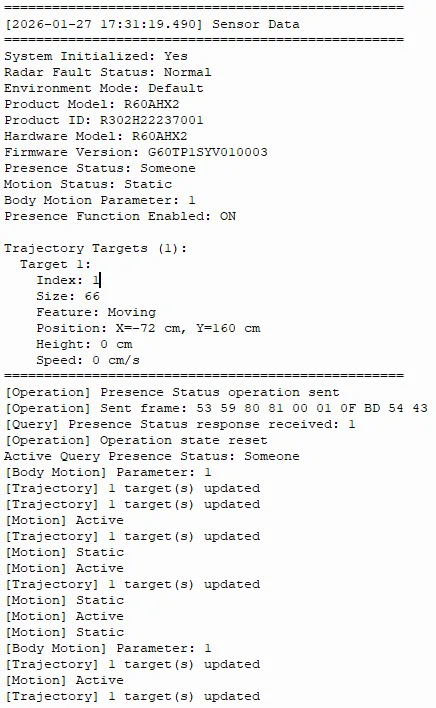
Burn the code, open the terminal, and use the mpremote tool to connect to the main controller. The output is as follows:
We need to install the mobile phone Bluetooth debugger APP, and the following will briefly demonstrate its basic functions.
Bluetooth_Debugger.apk 2.3 MB
- Enable the Bluetooth and location services on your mobile phone, open the APP, tap the scan button, and you will see the list of currently connectable Bluetooth devices.
- Based on the previously output module information from the terminal (the Bluetooth name is
HC-08, corresponding to theMACaddress), findHC-08in the device list, click the+sign on the right to select this device, and the connection will be completed. - After the connection is established, switch to the "Chat Mode", then you can type content in the input box and send it to realize communication and interaction with the Bluetooth module.
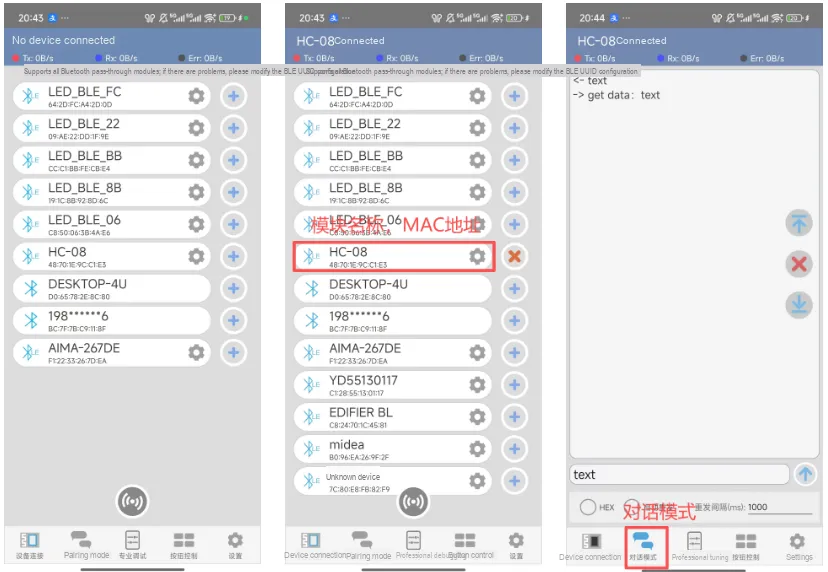
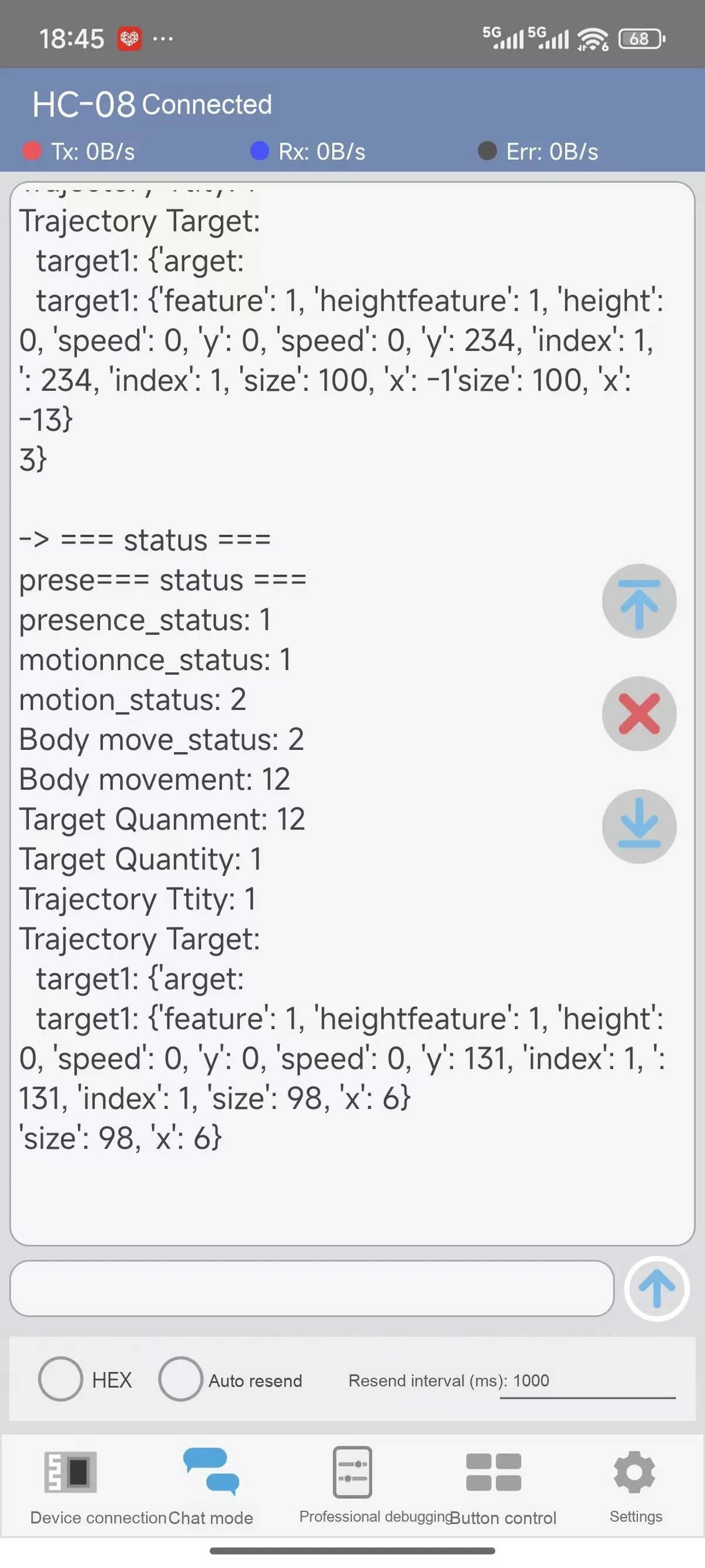
The following content will be output after the Bluetooth connection is successfully established:
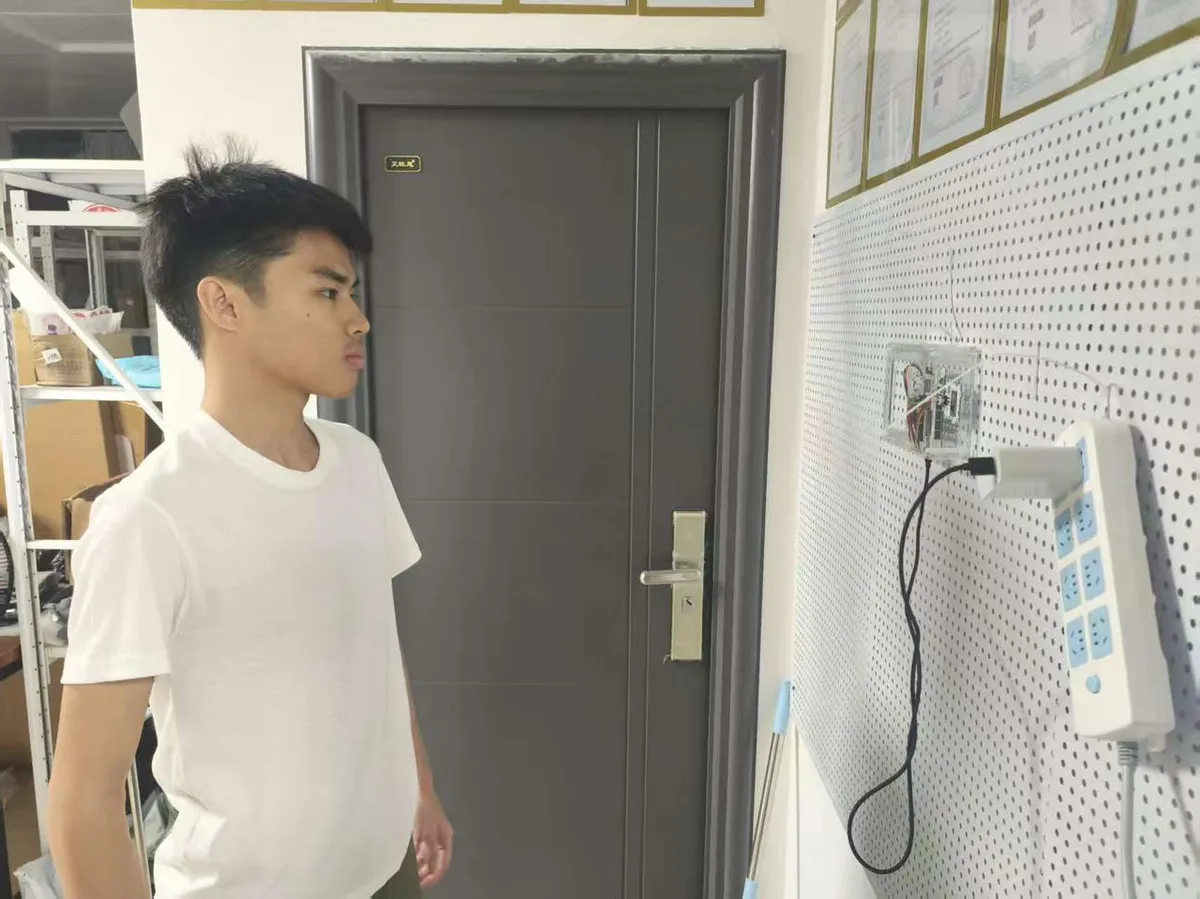
As our tester walks right in front, you can see data being output:
The results and their implications are as follows:
1. Status values
presence_status: 1 → Presence of a person detected
motion_status: 2 → Target is currently stationary
Body move_status: 2 → Human body motion status is stationary
Body movement: 12 → Human body movement parameter value is 12
Target Quantity: 1 → 1 target detected

2. Target feature values
feature: 1 → Target feature value is 1
heightfeature: 1 → Target height feature value is 1
height: 0 → No valid target height data has been obtained yet
speed: 0 → Target current speed is 0 cm/s
size: 100 / 98 → Feature size of the target
x: -13 / 6 → Position coordinates of the target on the X axis
y: 234 / 131 → Position coordinates of the target on the Y axis
index: 1 → Target number is 1
4. Drivers
r60amp1_driver.rar 26 KB
5. BOM & Recommended Alternative Parts
None.
VI. Revision History
Document Version | Date of Modification | Modifier | Revised Content |
v1.0 | 2026-01-29 | Zero Kōkō | Initialize Document |
v1.1 | 2026-02-12 | Xin Ruili | Create an open version of the document based on the internal document version v1.0. |
v1.2 | 2026-03-29 | Xin Ruili | Modified the application experiment section |
VII. Relevant Materials
7.1 Chip Datasheet
R60AMP1_Module Getting Started Guide_ V1.0.pdf 707 KB
R60AMP1_User Manual_V1.3.pdf 490 KB
R60AMP1-H (Side Mount)_Datasheet_V2.0.pdf 540 KB
7.2 Unique Icons for PCB Silk Screen