
Contents
- Introduction - Ubiquitous Capacitive Sensors
- I. How does a capacitive sensor work?
- II. Limitations of Traditional Capacitive Sensors
- III. What is a Capacitive Sensing SOC Chip?
- 3.1 How to address the limitations of traditional capacitive sensors
- 3.2 Taking MCP1085S as an Example to Illustrate Capacitive Sensing SOC Chips
- 3.3 Common Types of Capacitive SOC Chips and Their Differences
- 3.4 How to Choose a Capacitive SOC Chip Suitable for Yourself
- IV. Practical Applications of Capacitive Sensing SOC Chips
- 4.1 Partial Applications of Sensor Modules Equipped with Integrated Capacitive Sensing SOC Chips
- 4.2 Partial Demonstration of the Application Scheme Using Integrated Capacitive Sensing SOC Chip
- References
- Version Record
Introduction - Ubiquitous Capacitive Sensors
From the smartphone screens in our pockets and the tireless production lines in factories, to the soil-monitoring probes in farmlands and the medium-identifying switches inside pipelines, capacitive sensors have long served as the "invisible sensing tentacles" of modern society. Without requiring physical contact, they can detect the subtle changes of all things, adapt to countless scenarios ranging from consumer electronics and industrial control to agricultural monitoring in diverse forms, and penetrate every corner of our daily life and production activities.
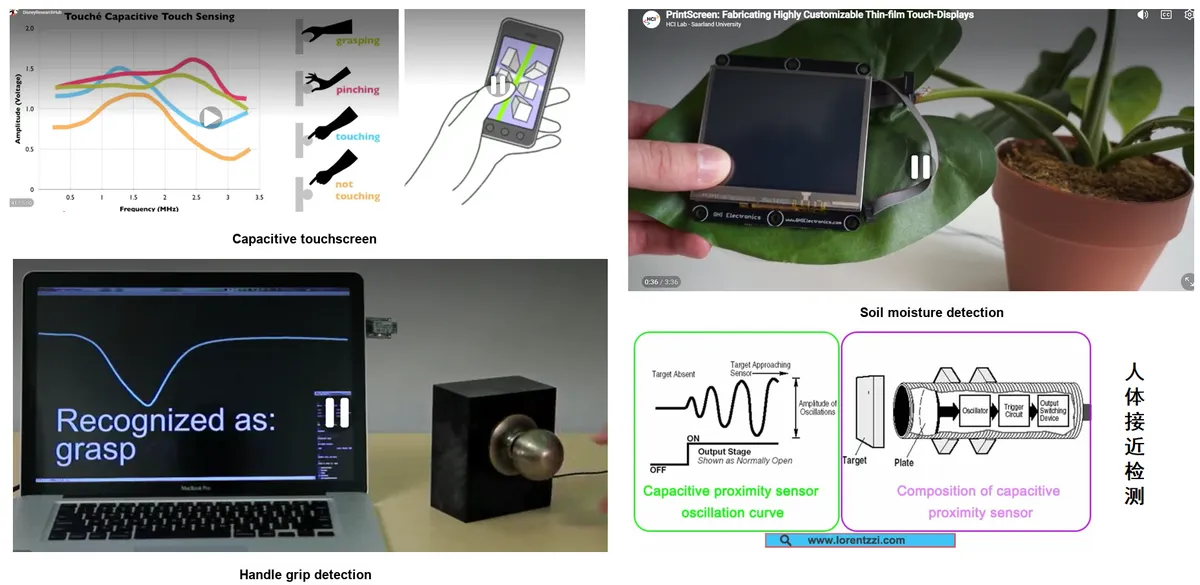
The most widely recognized application of capacitive sensing technology lies in touchscreen interaction within the consumer electronics sector. By detecting the subtle capacitance changes caused by the human finger, it enables accurate recognition of touch, swipe, and grip gestures, making the operation of smartphones and tablets natural and smooth. Meanwhile, it has also extended to a broader range of human-computer interaction scenarios:
- The grip detection of the door handle can identify the user's intention to open the door;
- Proximity sensors in smart homes enable contactless detection.
- Even soil moisture probes are centered on capacitive sensing, quietly providing data support for smart agriculture.
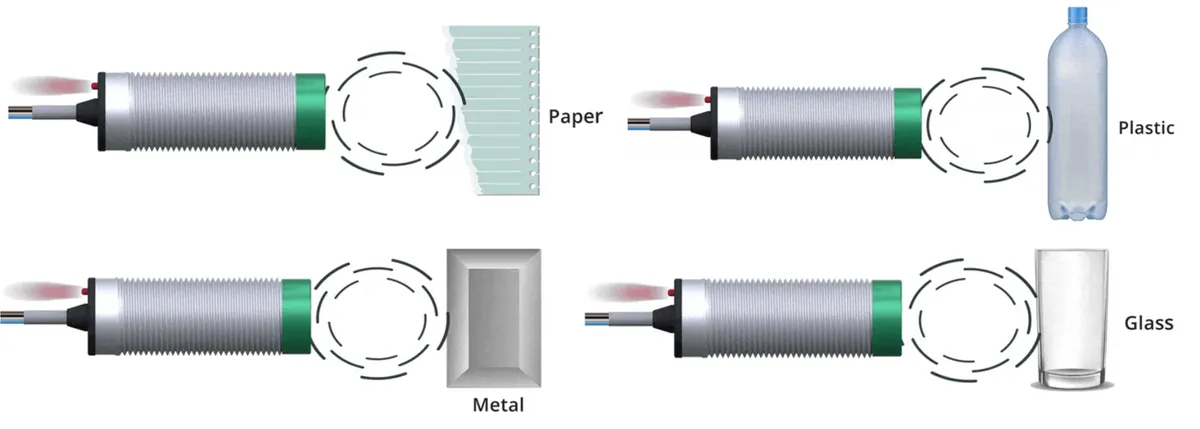
In automated production lines, capacitive sensors, with their ability to perceive materials of different dielectric constants, have become highly efficient tools for material identification. Whether it is paper, plastic bottles, metal parts or glass products, they can quickly distinguish material types through non-contact detection, providing accurate signals for processes such as packaging sorting, material screening and product quality inspection, and greatly improving the automation and intelligence level of industrial production.
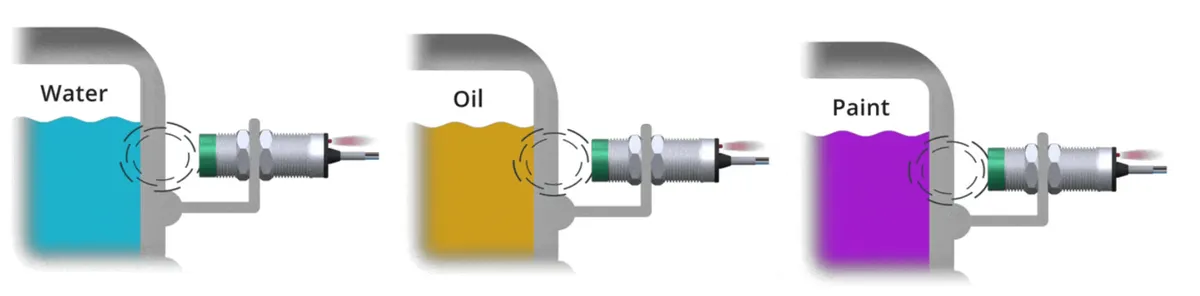
In industries such as chemical engineering, food processing, and coating, capacitive sensors are widely used for the identification and monitoring of liquid media. Capable of penetrating container walls, they can detect the differences in dielectric constants of various liquids including water, oil, and coatings, so as to achieve liquid type differentiation, liquid level detection, and even concentration change monitoring. They provide reliable support for safety monitoring in pipeline transportation and tank storage processes, and are especially suitable for special fluid scenarios such as corrosive and sterile ones.
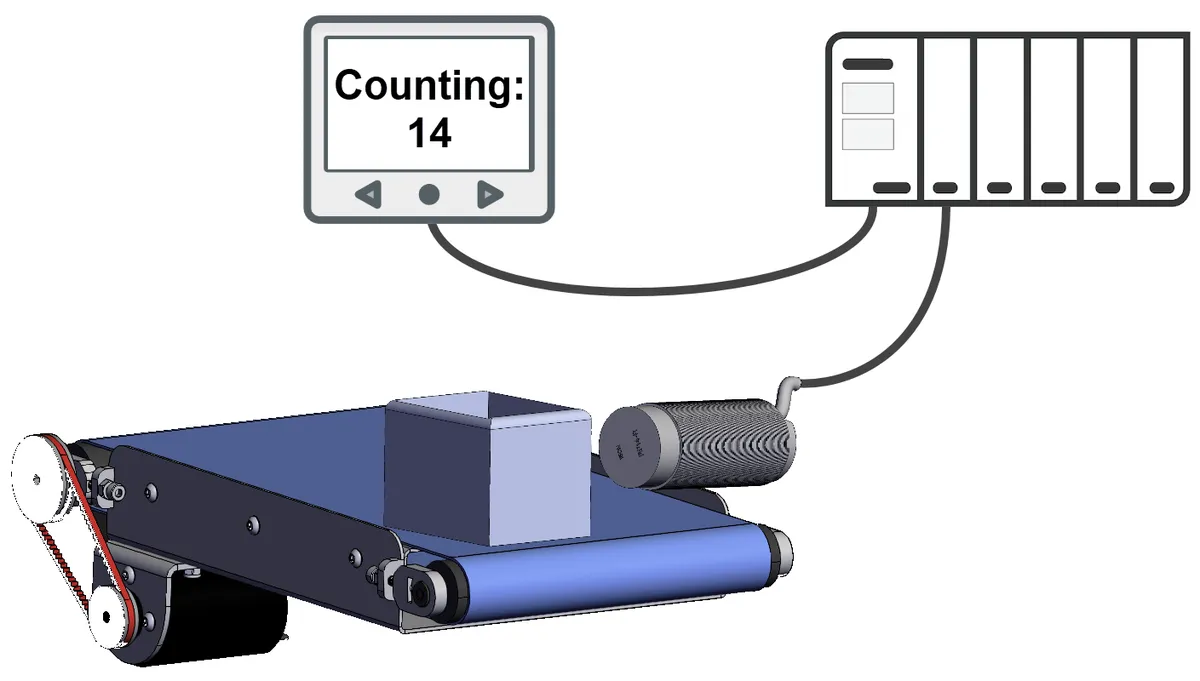
In assembly line production, capacitive sensors are one of the core devices for realizing automatic product counting. When products on the conveyor belt pass by the sensor, it can quickly detect the presence of the object and output electrical signals, enabling contactless and high-precision counting statistics. They are widely used in scenarios such as packaging, logistics, and electronic manufacturing, helping enterprises realize automated management and control of the production process as well as Data Acquisition.
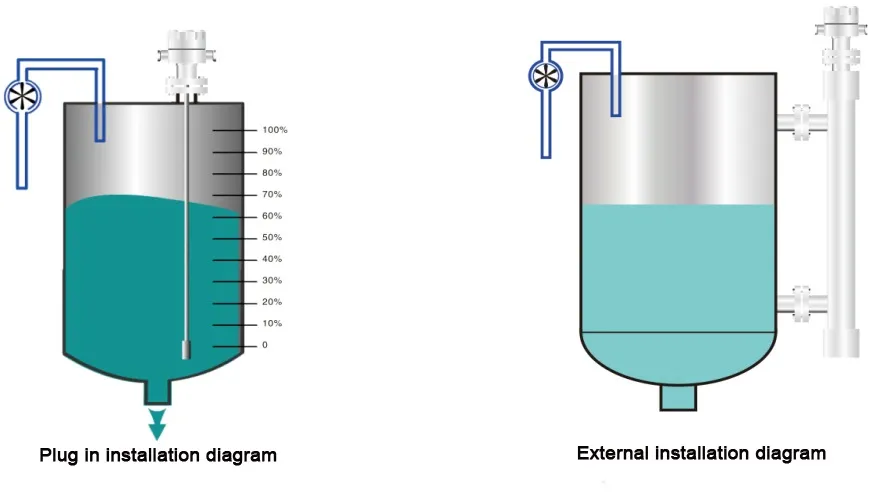
To meet the liquid level monitoring requirements of industrial tanks and pipelines, capacitive sensors offer flexible adaptation solutions: plug-in sensors are directly inserted into the tank to monitor the liquid level height in real time; external sensors are mounted on the outer wall of the container, enabling liquid level detection without contact with the liquid, which is perfectly suitable for special scenarios such as toxic, corrosive and sterile liquids, balancing both safety and stability.
Compared with traditional optical detection and mechanical detection structures, capacitive sensing technology is rapidly gaining popularity and gradually completing technological iteration and replacement by virtue of its unique technical advantages. This technology can not only realize multiple functions such as proximity sensing, gesture recognition, material analysis and liquid level monitoring, but also has prominent advantages including a wide range of detectable materials, non-contact measurement, no mechanical wear, compact size, excellent sensing distance, low manufacturing cost and low-power operation.
I. How does a capacitive sensor work?
Capacitive sensors are non-contact sensing devices that rely on the electrical characteristics of capacitance as their core foundation, and their core operating logic revolves around capacitive coupling effect. The sensor has a built-in sensing electrode, which will form a stable electrostatic induction electric field around the sensing surface after being energized. When no external object intervenes, the internal capacitance value of the sensor remains in a fixed equilibrium state.
When the measured object gradually approaches the sensing area of the sensor, or the dielectric environment and relative position between the electrodes are changed, the original electric field distribution will be directly disturbed, which prompts the capacitance between the sensor plates to change in real time. The oscillation circuit and signal processing unit integrated inside the sensor can accurately capture this weak capacitance fluctuation, and convert the capacitance change into a stable analog electrical signal or digital switch signal for external output after a series of processing such as conversion, amplification and calibration.
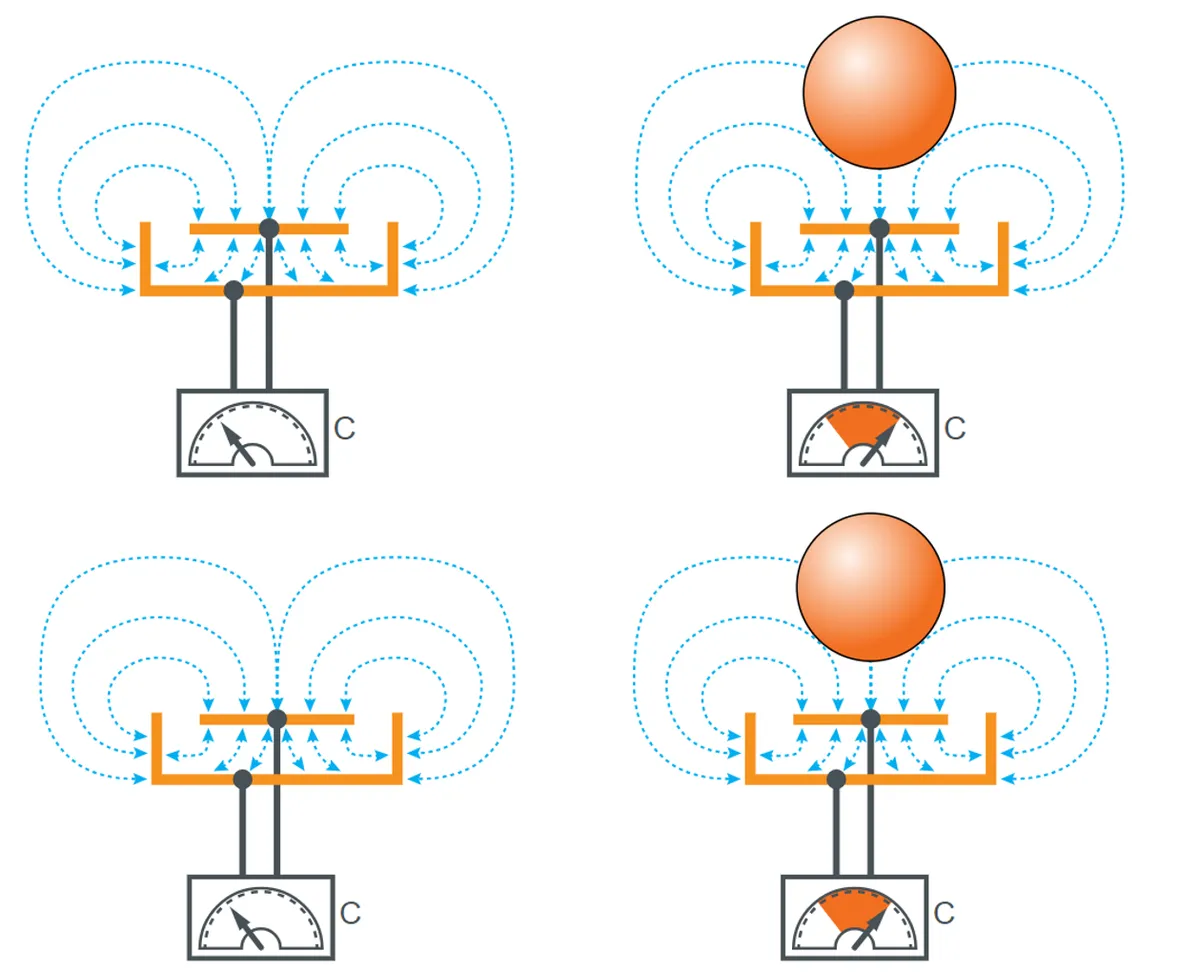
By virtue of this complete set of sensing logic, capacitive sensors can efficiently convert various non-electrical physical parameters such as distance, medium type, liquid level, and object displacement into electrical signals that can be recognized and read by the control system, ultimately fulfilling the functions of automatic detection, judgment and control. This sensing method does not require any contact friction of mechanical structures throughout the whole process, and realizes stable perception in multiple materials and scenarios with its simple working mechanism.
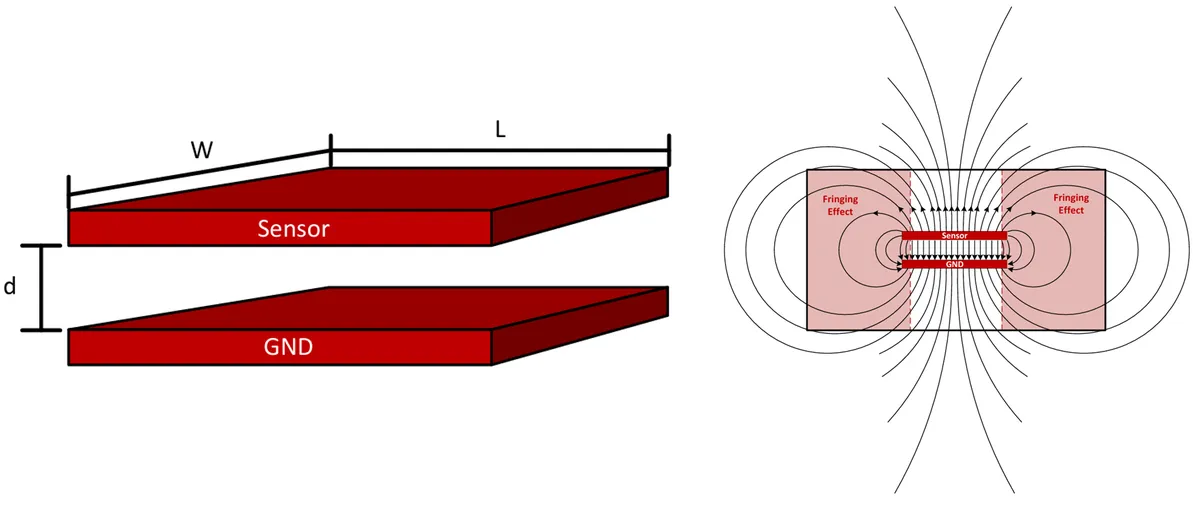
The above figure is a schematic diagram of the structure of a standard parallel-plate capacitor, which is also the most fundamental physical model for fabricating capacitive sensors. A parallel-plate capacitor has a simple overall structure, mainly consisting of two parallel conductive plates, between which an insulating dielectric is filled to function as isolation and electric field conduction.
Generally speaking, the capacitance that a capacitor can induce and generate is only closely related to three core conditions, namely the material of the dielectric filled between the plates, the effective area where the two plates are attached to each other, and the separation distance between the two plates.
These three influencing conditions also serve as the core basis for classifying different types of capacitive sensors and designing different detection functions. In practical application scenarios, edge effect will also occur in capacitive sensing: the electric field around the electrode plates will naturally diffuse outward, resulting in a slight difference between the actual sensing effect and the ideal state. When developing and manufacturing high-precision capacitive sensing devices, structural design is usually optimized to reduce the adverse impact caused by such errors.
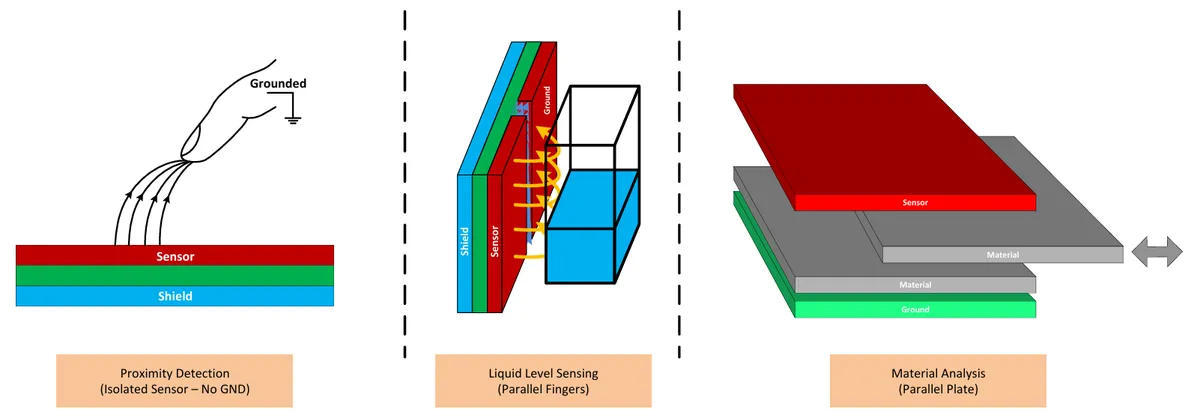
Combined with the three variable parameters in the capacitance calculation formula, capacitive sensors are divided into three mainstream structures in the industry, which are respectively adapted to different detection requirements:
- Variable dielectric capacitive sensor: it alters the type of dielectric filled between the two plates, which triggers a change in the dielectric constantand further modifies the capacitance value. This type of sensor is mostly applied in scenarios such as liquid level detection, soil moisture monitoring, and material property identification, and it can penetrate non-metallic containers to detect the internal medium.
- Variable-area capacitive sensor: With the electrode spacing and dielectric environment kept unchanged, this type of sensor adjusts the capacitance by altering the effective overlapping area A between the two electrodes via mechanical motion, and is commonly applied to the measurement of linear physical quantities such as object displacement and dimensional length.
- Variable-pole-distance capacitive sensor: With the dielectric and plate area fixed, capacitance detection is achieved by adjusting the distance d between the two plates. Since capacitance is inversely proportional to the distance between the plates, a single structure suffers from poor measurement linearity and a limited measurement range. Therefore, a differential structure design is mostly adopted in practical engineering to effectively offset detection errors and improve the overall measurement accuracy and operational stability.
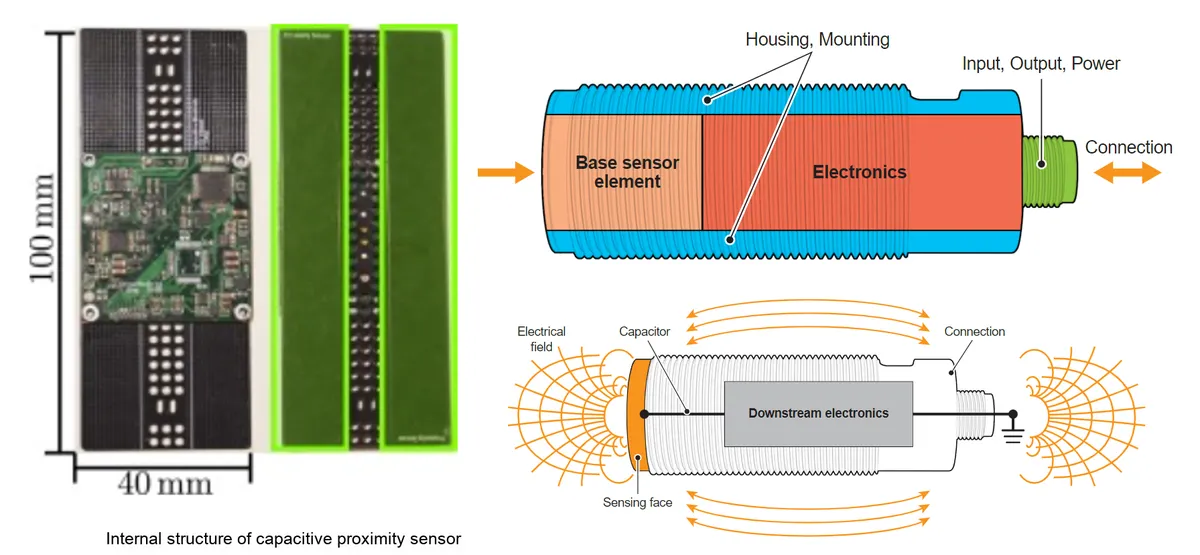
Taking capacitive proximity sensors as an example, the hardware system mainly consists of four parts:
- Housing and Mounting Structure (Housing, Mounting): It provides mechanical protection and a fixing method for the sensor to adapt to the installation requirements of different industrial scenarios;
- Base sensor element: As the core electrode for electric field emission and induction, it is the key component for realizing capacitive coupling;
- Signal Processing Circuit (Electronics): It is responsible for converting weak capacitance changes into recognizable electrical signals, consisting of an oscillator, an amplifier and an output module;
- Electrical Connection Components (Input, Output, Power): supply power to the sensor and transmit the processed signals.
This compact modularization design enables capacitive sensors to combine the advantages of miniaturization and integration, providing a hardware foundation for their application in different scenarios.
II. Limitations of Traditional Capacitive Sensors
Capacitive sensors have become ubiquitous in both our daily lives and industrial scenarios, thanks to their outstanding advantages such as high sensitivity, non-contact operation, and low power consumption. However, in practical applications, you will find that they also have quite a few "inherent flaws" — most of these problems stem from their working principle itself and are also related to the limitations of application scenarios, which makes them "functional but far from user-friendly" in many cases.
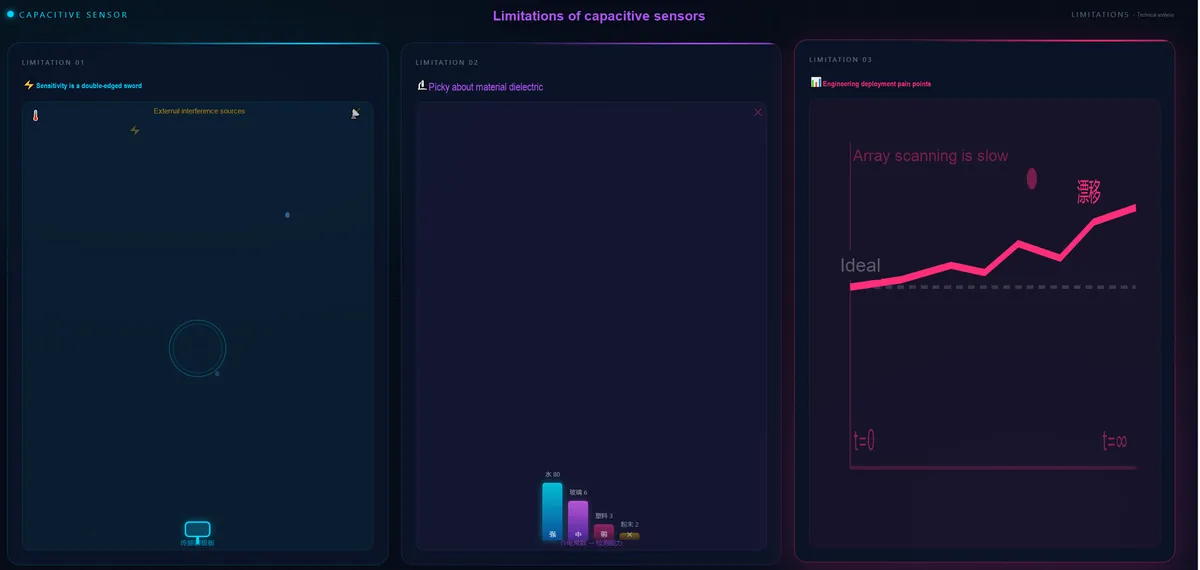
Among these limitations, the most prominent one is the paradox that "sensitivity makes it a success, and sensitivity also makes it a failure".
- It can capture extremely weak capacitance changes, but it is also highly susceptible to external interference: fluctuations in temperature and humidity, dust and moisture, and even electromagnetic interference from nearby motors may all cause it to trigger erroneously or produce inaccurate readings.
- Secondly, it is selective about the object to be measured: it can only stably detect materials whose dielectric constant differs significantly from that of air, while plastic powders with low dielectric constants and liquids in metal containers are difficult to detect stably with traditional capacitive sensors.
- In addition, the drift in long-term measurement, the slow scanning speed of large-area arrays, and the higher cost compared to resistive sensors are also common pain points of traditional capacitive sensors.
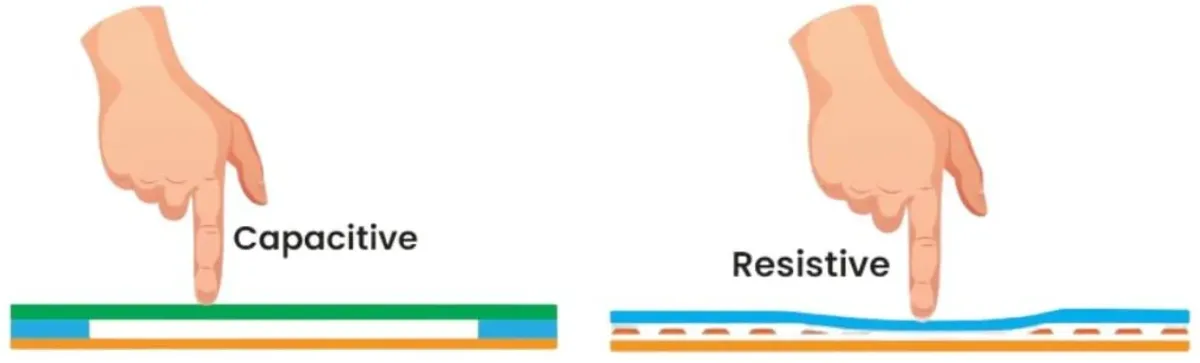
For example, many people find that their capacitive touchscreen phones do not respond at all when they operate them while wearing gloves, which is a typical limitation of traditional capacitive sensors. Just like the two touch principles shown in the figure: resistive touch relies on pressing to bring two conductive layers into contact to trigger a signal, so it can be operated with fingernails, plastic pens or other objects;while capacitive touch is triggered by the weak capacitance change of the human body, which requires a bare conductive hand to work.This characteristic makes traditional capacitive sensors highly limited in scenarios such as glove-wearing operations and non-conductive tool manipulation. Moreover, to achieve stable signal acquisition, they require more complex signal conditioning circuits than resistive sensors, leading to higher costs, and this disadvantage will be further amplified in cost-sensitive scenarios.
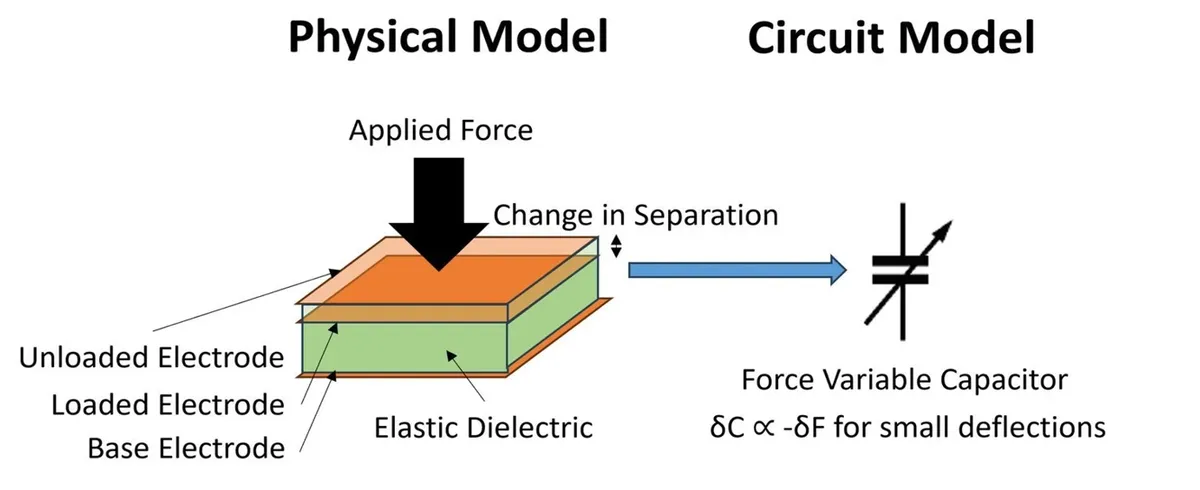
Many people are unaware that traditional capacitive pressure sensors are not suitable for long-term weight monitoring, as their core structure suffers from the "creep" issue. As demonstrated by the force-sensitive capacitor model in the diagram, the sensor detects force magnitude by changing the electrode spacing via pressure, yet the elastic dielectric material separating the electrodes will undergo gradual deformation under prolonged loading — even if the applied pressure remains unchanged, the electrode spacing will slowly shift, leading to capacitance drift and increasingly inaccurate readings.This characteristic makes traditional capacitive sensors only capable of short-term pressure/touch detection, and unable to meet the requirements of scenarios that require ultra-stable long-term readings such as industrial weighing instruments.
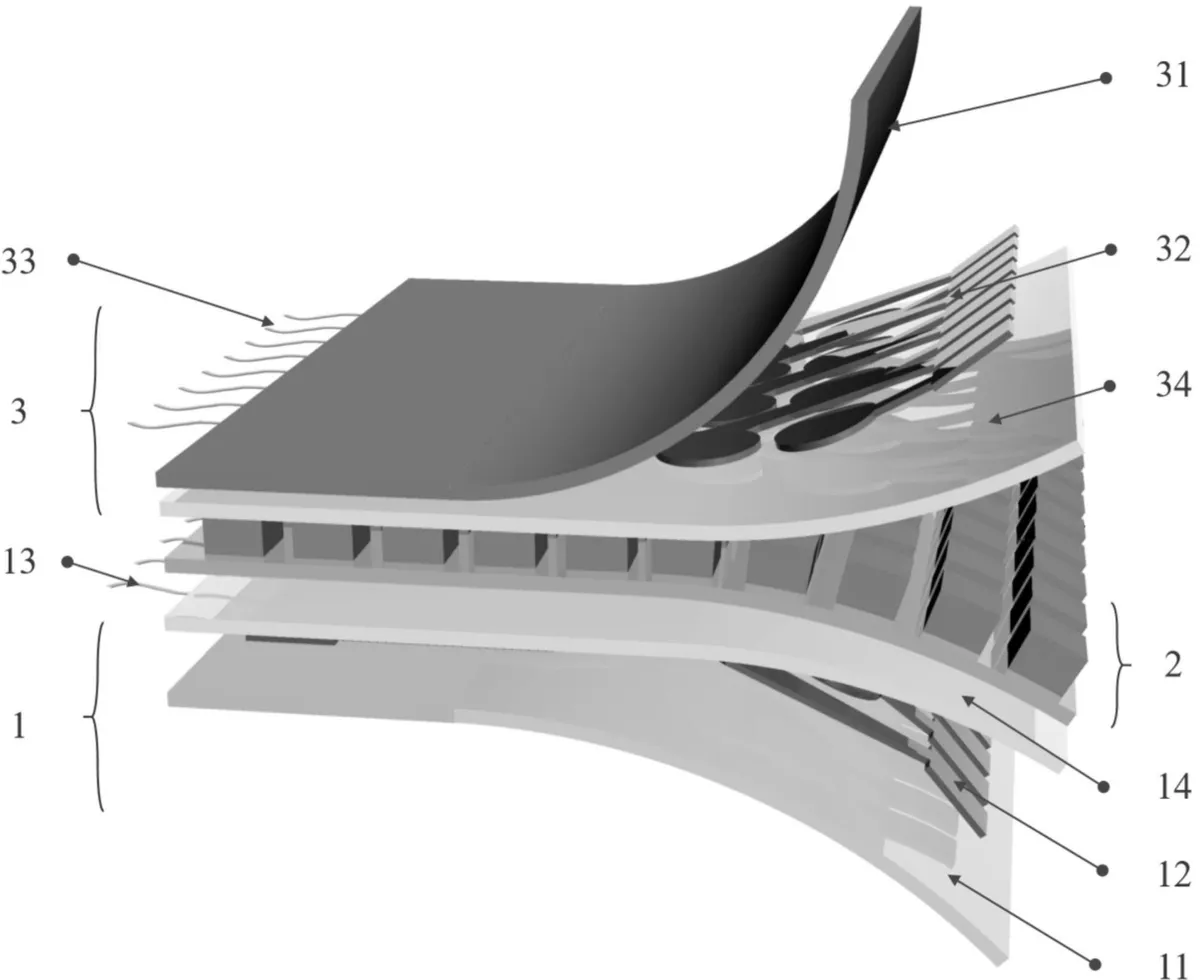
When we try to fabricate capacitive sensors into large-area arrays (such as robotic tactile skins and large-sized touch screens), we will encounter a bottleneck in scanning speed. As shown by the multi-layer structure in the figure, each intersection in the array is an independent capacitive unit. To obtain the pressure/touch data of the entire array, it is necessary to scan the capacitance value of each unit one by one. As the array size increases and the number of units grows, the time required for one scan becomes longer and longer, making it difficult to achieve ultra-high-speed Data Acquisition — in scenarios such as airbag deployment testing and high-speed impact sensing, traditional capacitive arrays will be far from sufficient.In addition, a large number of electrodes and traces will complicate the circuit, and adjacent electrodes are also prone to mutual interference, which requires additional shielding and calibration, further increasing the design difficulty and cost.
The pain points of these traditional capacitive sensors have also driven the iterative upgrading of the technology. As we will see later, the capacitive sensing SOC chip with integrated dedicated signal processing circuit addresses these issues in a targeted manner, elevating capacitive sensing from merely "functional" to truly "user-friendly".
III. What is a Capacitive Sensing SOC Chip?
As can be learned from the previous chapter, although traditional capacitive sensors feature simple structure and high sensitivity, they have inherent drawbacks: they are susceptible to temperature and humidity interference, suffer from drift in long-term measurement, have low speed for large-area scanning, are selective about detection materials, and require complex peripheral circuits with relatively high costs. To address these issues, early engineers could only piece together circuits by relying on external amplifying circuits, analog front ends (AFE), microcontrollers, and filtering components.
This discrete construction approach not only leads to messy wiring and difficult debugging, but also suffers from poor anti-interference performance, making it hard to truly address the inherent drawbacks of capacitive sensors. To fundamentally optimize the capacitive sensing performance, the industry has introduced capacitive sensing SOC chips, which are currently the most mainstream and straightforward integrated chips adopted in both consumer and industrial capacitive detection solutions.
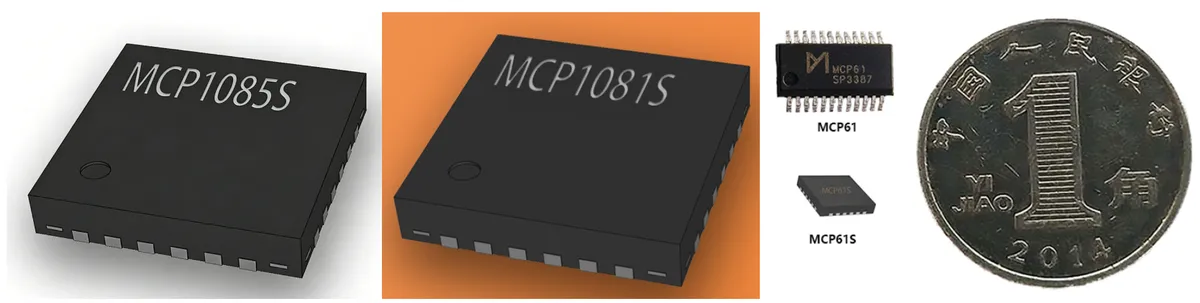
Generally speaking, a capacitive sensing SOC chip is an integrated intelligent chip tailored specifically for capacitive detection. It integrates and encapsulates all the components that originally required separate soldering, including the analog front-end (AFE), signal amplification circuit, filtering and noise reduction circuit, micro arithmetic processor, calibration algorithm, and communication interface, into a single chip.
Many beginners tend to confuse AFE, microcontrollers and SOC chips, so here is a simple distinction between them:
- Independent AFE analog front-end: only capable of acquiring and amplifying weak signals, with no reasoning or computing capabilities;
- General microcontroller unit (MCU): Users need to connect external circuits on their own and develop complex capacitance algorithms, which comes with a high threshold;
- Capacitive Sensing SOC Chip = AFE Analog Front End + Arithmetic Core + Factory-Embedded Capacitance Algorithm. It requires no complex peripheral circuits, starts operating immediately upon power-on, and is a dedicated chip optimized specifically for capacitive sensing.
3.1 How to address the limitations of traditional capacitive sensors
Simply put, most of the drawbacks of traditional capacitive sensors stem from crude circuits, lack of algorithm compensation, and weak signal processing capabilities. By contrast, the capacitive sensing SOC chip achieves high integration, embedding analog signal acquisition, operation, calibration and anti-interference functions all into a single chip, thus addressing the shortcomings of traditional sensors at both the hardware and algorithm levels.
It upgrades capacitive sensors from "error-prone basic components" to low-noise, highly stable, easy-to-develop, and low-cost intelligent sensing modules.
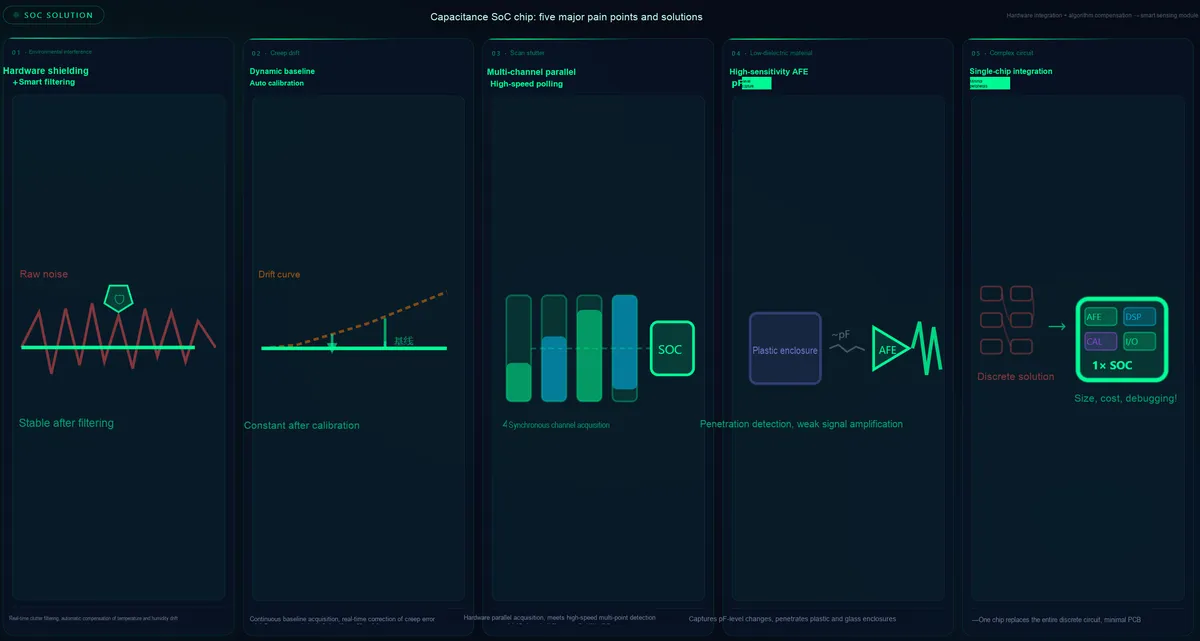
3.1.1 Address Pain Point 1: Strong environmental interference, temperature and humidity are prone to false triggering
The exposed electrode of traditional capacitive sensors is easily affected by water vapor, dust, and temperature fluctuations. The dielectric constant will change when the air is slightly humid, causing data jumping and false triggering. The capacitor SOC chip integrates hardware shielding circuit + intelligent filtering algorithm , which can filter environmental clutter in real time and automatically compensate for the offset caused by temperature and humidity. Even in humid and dusty industrial and kitchen environments, the signal can be maintained stable.
3.1.2 Addressing the Second Pain Point: Creep Drift in Long-Term Measurement
After being subjected to force and pressure for a long time, traditional capacitive sensors will experience slow deformation of the dielectric material, leading to reading drift and making long-term constant measurement impossible. The capacitive SOC chip is equipped with the factory-optimized dynamic baseline calibration algorithm, which automatically collects no-load reference values continuously, corrects the errors caused by material creep in real time, solves the problem of long-term monitoring data deviation, and is suitable for long-term uninterrupted detection scenarios such as liquid level monitoring and soil moisture monitoring.
3.1.3 Address Pain Point 3: Slow Array Scanning Speed and Multi-Channel Laggy
When constructing traditional circuits for multi-channel capacitance detection, channels need to be scanned one by one, leading to high scanning delay and slow response. Capacitive SOC chips have built-in multiple independent detection channels, optimize the scanning timing at the hardware level, support parallel acquisition and fast polling, greatly improve the array scanning speed, and can meet high-speed acquisition scenarios such as touch panels, multi-point detection, and high-speed material counting.
3.1.4 Solve Pain Point 4: Material-Selective Detection and Difficulty in Identifying Low-Dielectric Materials
Ordinary capacitive sensors can only identify objects with large differences in dielectric constants, and have extremely low detection sensitivity for plastics, powders, and thin materials. The SOC chip has a built-in high-sensitivity AFE analog front end, which can capture tiny capacitance changes at the picofarad (pF) level, amplify weak sensing signals, detect internal media through plastic and glass shells, and is compatible with a wider range of detection materials.
3.1.5 Address Pain Point 5: Complex Circuits, Difficult Debugging, and High Costs
Traditional solutions require separate matching of amplification chips, filter capacitors, microcontrollers, and shielding circuits, which involve numerous components, complicated wiring, and a high threshold for debugging. A single capacitive SOC chip can replace the entire set of discrete circuits, with extremely few peripheral components, greatly simplifying PCB design, reducing production, labor and debugging costs, while shrinking the size of the sensor to adapt to miniaturized smart devices.
3.2 Taking MCP1085S as an Example to Illustrate Capacitive Sensing SOC Chips
Here, taking Minsensor's MCP1085S as an example, let's see how an integrated microprocessor SOC chip designed specifically for capacitive sensing addresses all the drawbacks of traditional solutions while enabling multi-mode, multi-scenario capacitive detection.
The MCP1085S acts as a "smart brain" for capacitive sensors: unlike ordinary microcontrollers that require you to connect a host of external circuits and write complex capacitive sensing algorithms, it integrates capacitive signal processing circuitry (AFE), main control core, memory, and communication interfaces all into a single tiny chip.In principle, it can not only capture extremely weak capacitance changes, but also process data on its own to calculate physical quantities such as liquid level, humidity and distance. It even comes with built-in temperature compensation and low-power mode, and can be easily adapted to scenarios ranging from liquid level detection in industrial settings to touch buttons in consumer electronics.
Next, we will walk you through how the chip works step by step by combining its internal structure, operating modes and typical circuits.
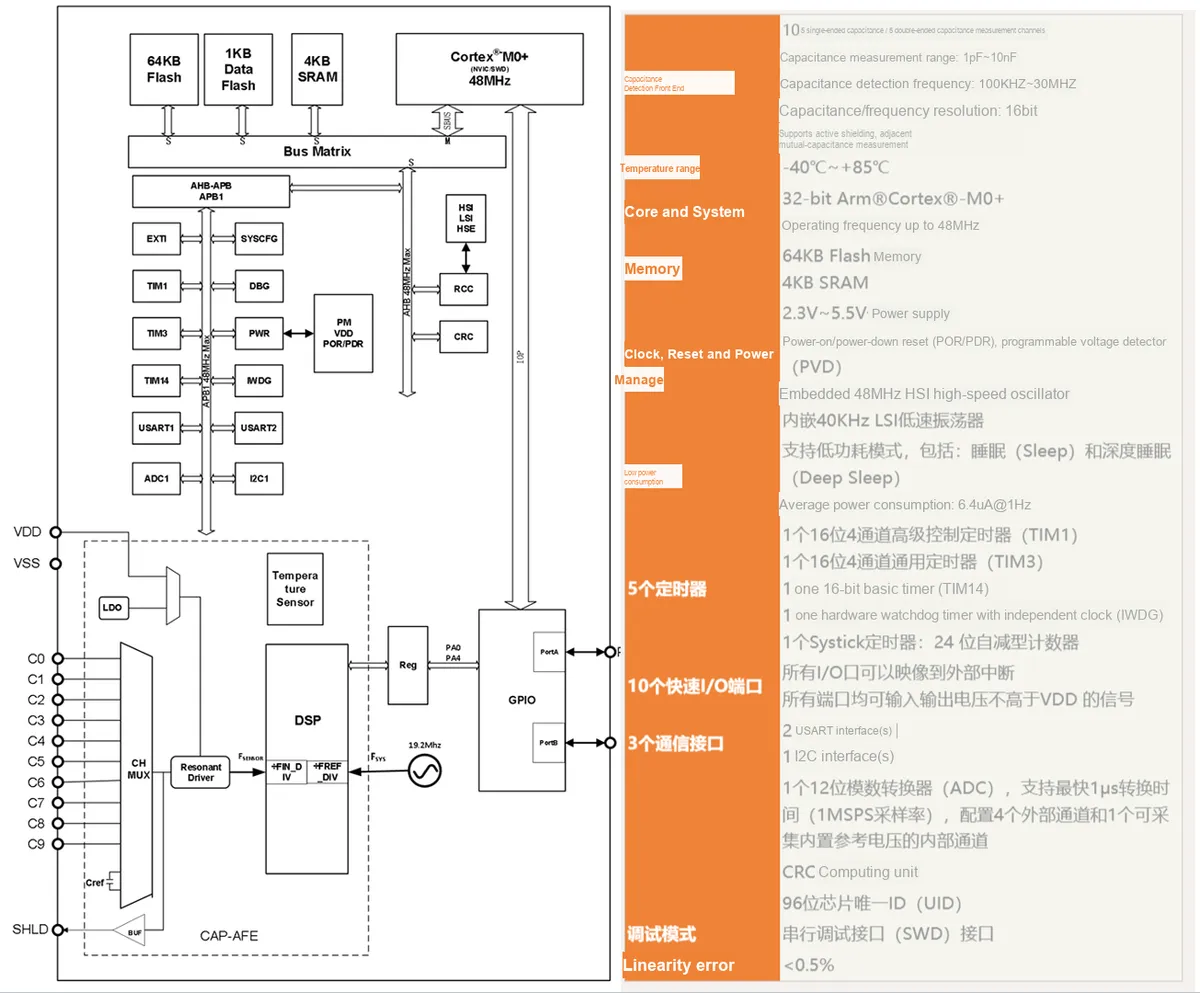
Many people are curious about what "cutting-edge technologies" are actually packed inside this tiny chip. It can be clearly seen from the architecture diagram that its core consists of two major parts:
- On the left is a custom-designed capacitive signal processing circuit dedicated to capacitance detection (CAP-AFE), which acts as the "eyes" of the chip: it is responsible for capturing the weak signals transmitted from the electrodes, amplifying and filtering them, and converting them into clean digital signals.
- On the right is a complete microprocessor system based on the Arm® Cortex®-M0+ core. Acting as the "brain" of the chip, it can run algorithms to convert raw data into intelligible physical quantities such as liquid level and humidity, and meanwhile takes charge of functions including low-power control, communication interfaces and temperature compensation.
Simply put, the functions that previously required an entire circuit board to implement are now all integrated into this single chip — it even has a built-in high-precision temperature sensor that automatically compensates for signal drift caused by temperature and humidity changes, addressing a major pain point of traditional capacitive sensors.
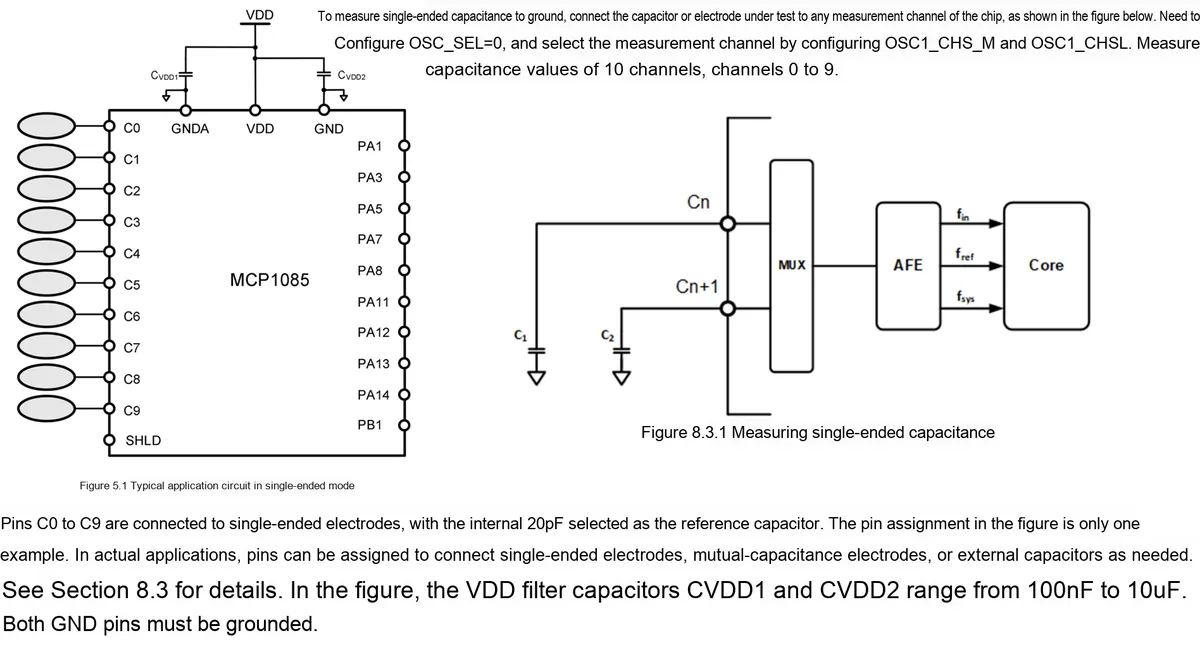
The most basic and commonly used configuration is the single-ended capacitance mode, which is suitable for scenarios such as touch buttons and proximity sensing. The 10 channels C0 to C9 of the chip can be directly connected to the copper foil electrodes on the PCB, which is equivalent to equipping each channel with an independent capacitive sensor.
For example, if you make 10 touch keys, you can connect the 10 electrodes to C0 to C9 respectively. Without connecting any other additional components, the chip can automatically detect the capacitance change of each electrode. The VDD filter capacitor in the circuit is used to reduce noise for the chip's power supply and ensure signal stability; the SHLD pin is a shielding pin, which can reduce external electromagnetic interference and make the electrode sensing more accurate. This mode features simple structure and low cost, and is also the most common capacitive sensing solution in consumer electronics.
The core logic of single-ended mode is "the capacitance change between the measurement electrode and the ground". For example, when your finger approaches the electrode, it will change the capacitance between the electrode and the ground; changes in moisture in the soil will also alter this capacitance.
The signal processing circuit of the chip switches channels via a multiplexer (MUX), reads in the signal from each electrode, and then compares it with the internal reference frequency to calculate the capacitance variation. This mode features a simple structure, allows electrodes to be directly fabricated on PCBs, and boasts extremely low cost, so it is most widely used in scenarios such as touch buttons and soil moisture detection.
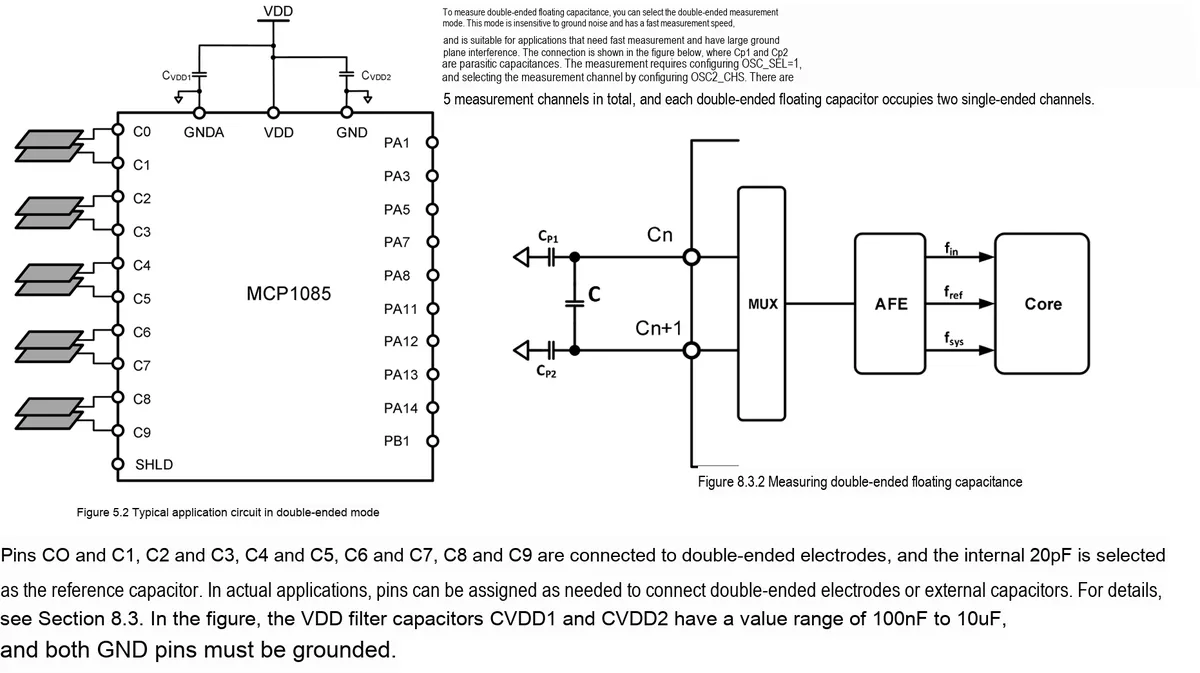
If there is significant ground noise in your scenario, or you need to quickly detect liquid through a container wall, you can use the dual-ended floating capacitance mode. In this mode, every two channels (e. g., C0 and C1) form a pair to measure the capacitance change between the two electrodes, just like a traditional parallel-plate capacitor.
This mode does not rely on a reference ground, can filter out most environmental noise, and features a faster measurement speed, making it highly suitable for liquid level detection — for example, by attaching a pair of electrodes to both sides of a plastic bottle, the height of the liquid inside the bottle can be directly measured without contacting the liquid itself. The chip supports a total of 5 channels of differential capacitance measurement, which means it can simultaneously perform 5 sets of such parallel-plate detection, making it ideal for multi-point liquid level monitoring scenarios in industrial applications.
The biggest difference between the dual-terminal mode and the single-terminal mode is that the former directly measures the capacitance between two electrodes instead of relying on the ground as a reference. Whether there is liquid or different materials placed between the electrodes, as long as the dielectric constant changes, the capacitance between the two electrodes will change, which can be detected by the chip.
Furthermore, this mode can filter out most of the parasitic capacitance and noise to ground. In humid and dusty industrial environments, the signal is much more stable than that in single-ended mode, making it well-suited for liquid level detection through container walls or material composition analysis in industrial scenarios.
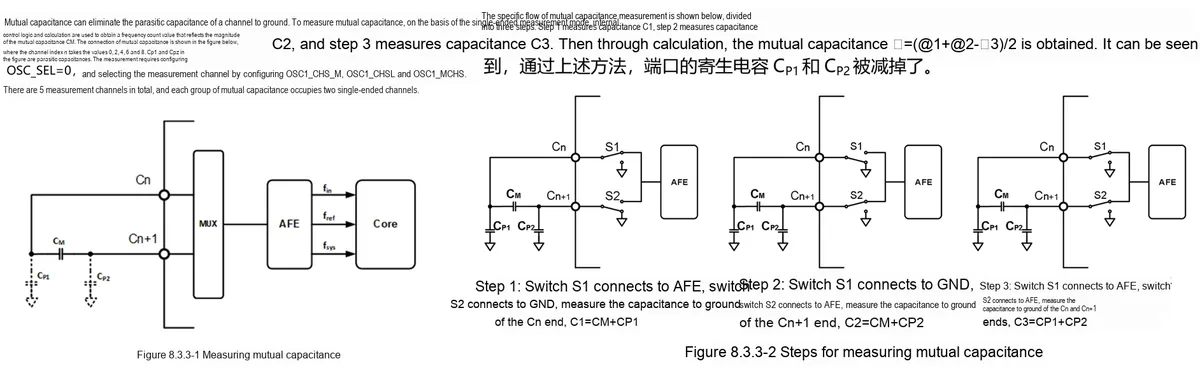
If more complex array detection is required, such as for multi-touch panels, the mutual capacitance mode of the chip can be used. In this mode, the chip automatically performs measurements in three steps, subtracting the parasitic capacitance of the two electrodes to ground, leaving only the change in mutual capacitance between the two electrodes.
For example, when manufacturing a touch panel, the transmitting electrodes and receiving electrodes are arranged in a crisscross pattern. When a finger presses on the panel, the mutual capacitance at the intersection changes, and the chip can then calculate the pressed position. This mode can eliminate most interference from parasitic capacitance, delivers higher accuracy, is suitable for large-area touch arrays, and eliminates the need to handle complex signals on your own, greatly reducing development difficulty.
3.3 Common Types of Capacitive SOC Chips and Their Differences
In the previous section, we took the MCP1085S as an example to understand how capacitive sensing SOC chips address the pain points of traditional capacitive sensors. However, Minsensor's capacitive SOC chips are far more than just this single model — it boasts a complete product matrix covering diverse scenarios, ranging from entry-level low-power applications for small household appliances to automotive-grade industrial/automotive use cases, and from 10-channel multi-touch panels to dual-channel liquid level detection. Each series comes with its own "exclusive capabilities" that can precisely match the requirements of different projects, eliminating the hassle of "failing to find a suitable chip".
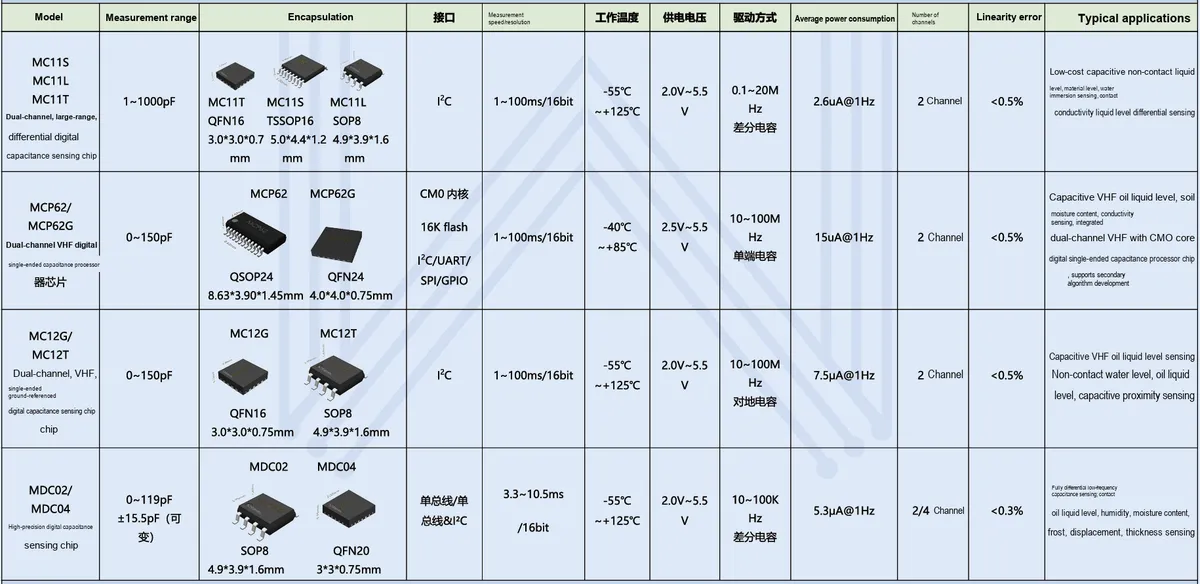
Now, let’s first take a quick look at the core differences between different models through a "family portrait of chips", then break down their respective advantages and applicable scenarios one by one.
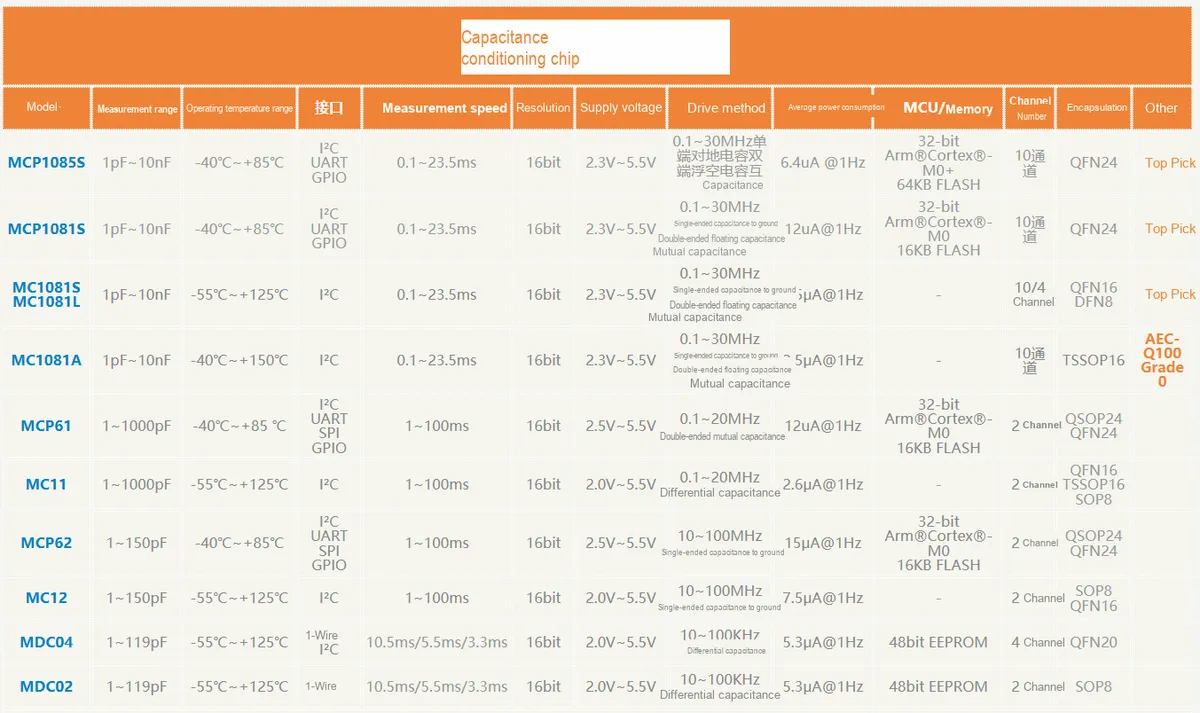
This table compares the core parameters of all chips, and we can categorize them into several major groups based on "application scenario + core strengths": there are "all-rounders" that focus on multi-channel full functionality, "industrial/automotive-grade tough guys" that can withstand extreme temperatures, "king of cost-effectiveness" designed exclusively for dual-channel, and "entry-level models" that prioritize low cost, covering almost all common capacitive sensing requirements.
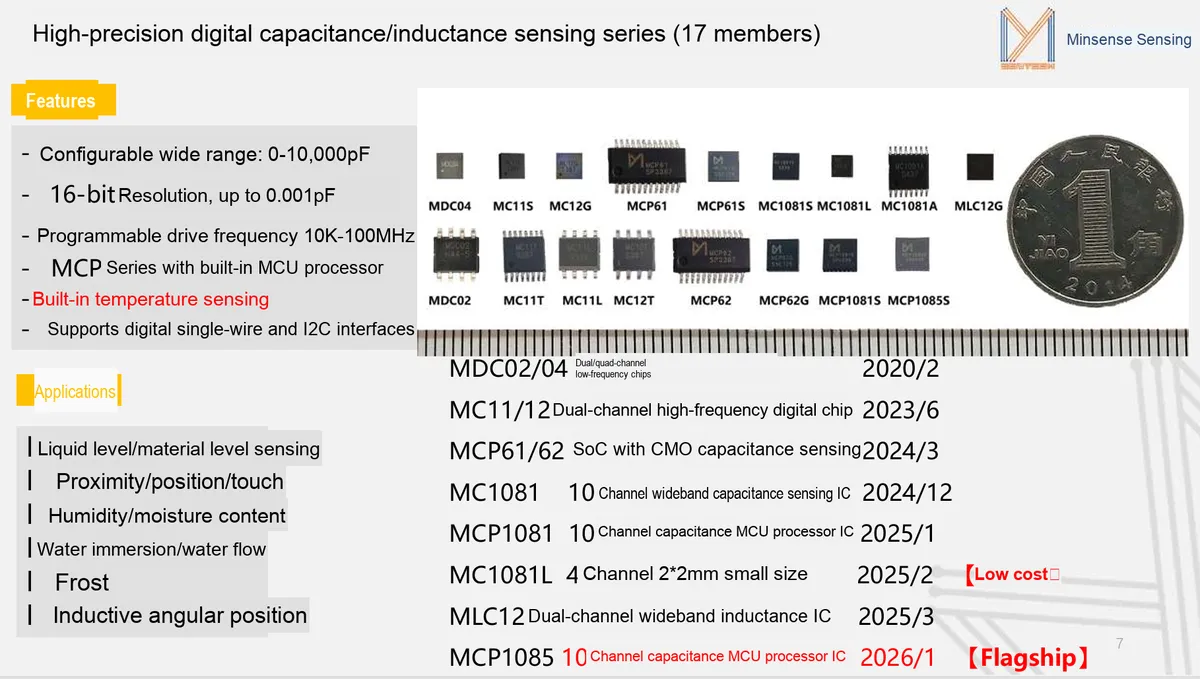
3.3.1 All-in-one Multi-channel Flagship Model: MCP1085S
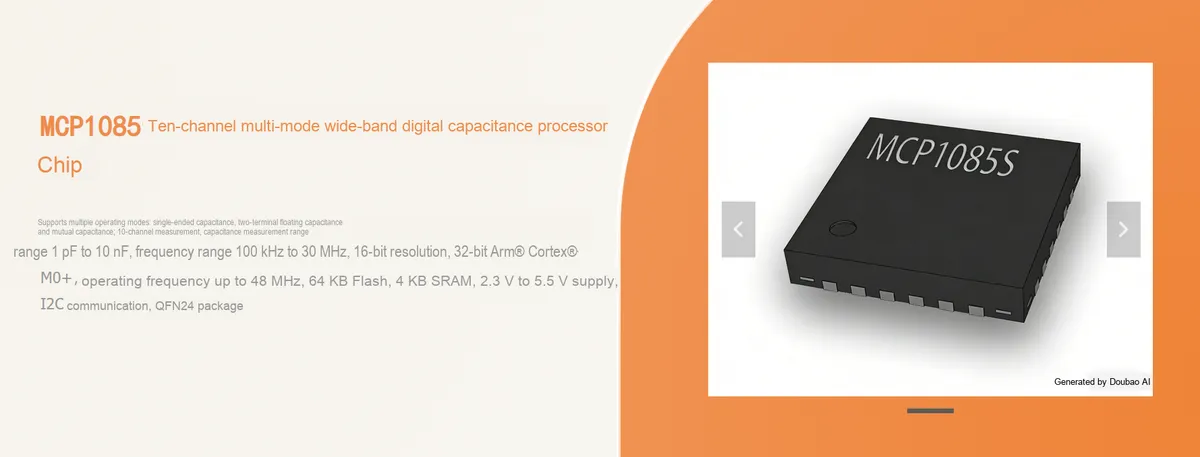
This is the "benchmark-level" chip we discussed in detail earlier, and it is also the "all-rounder" among capacitive SOC chips. Its biggest advantage lies in full-scenario adaptation capability: 10 measurement channels support three modes: single-ended, differential, and mutual capacitance. Whether you need to implement 10 touch buttons, 5 sets of liquid level detection, or a multi-touch panel, this single chip can handle all of them; it comes with a built-in Cortex-M0+ core, which can run algorithms directly to convert capacitive data into physical quantities such as liquid level, humidity, and distance, eliminating the need for an additional microcontroller.The average power consumption in low-power mode is only 6.4uA, which can last for several years on a button battery, making it particularly suitable for battery-powered smart devices.
It is suitable for a very wide range of scenarios: from touch panels for smart homes and multi-point liquid level monitoring in industrial settings to soil moisture array detection in agriculture, it can handle all of them with ease, making it the "preferred chip" for most projects.
3.3.2 All-round Basic Version: MCP1081S
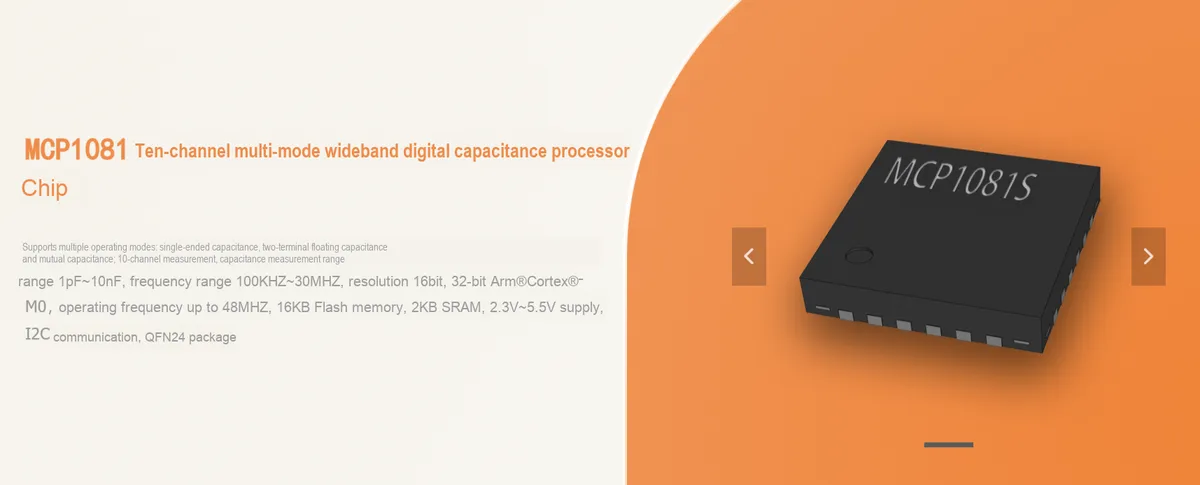
It is a "sibling model" in the same series as the MCP1085S, with almost identical core functions; it also supports 10 channels and three measurement modes, only that its Flash memory is reduced from 64KB to 16KB, with a slightly higher power consumption (12uA@1Hz) and a lower cost as well.
If your project does not require overly complex algorithms or massive storage, and only involves basic capacitance detection, touch buttons or liquid level measurement, the MCP1081S is a more cost-effective choice that delivers the same core functions at a lower cost.
3.3.3 Wide-Temperature Low-Power Industrial Model: MC1081S/MC1081L
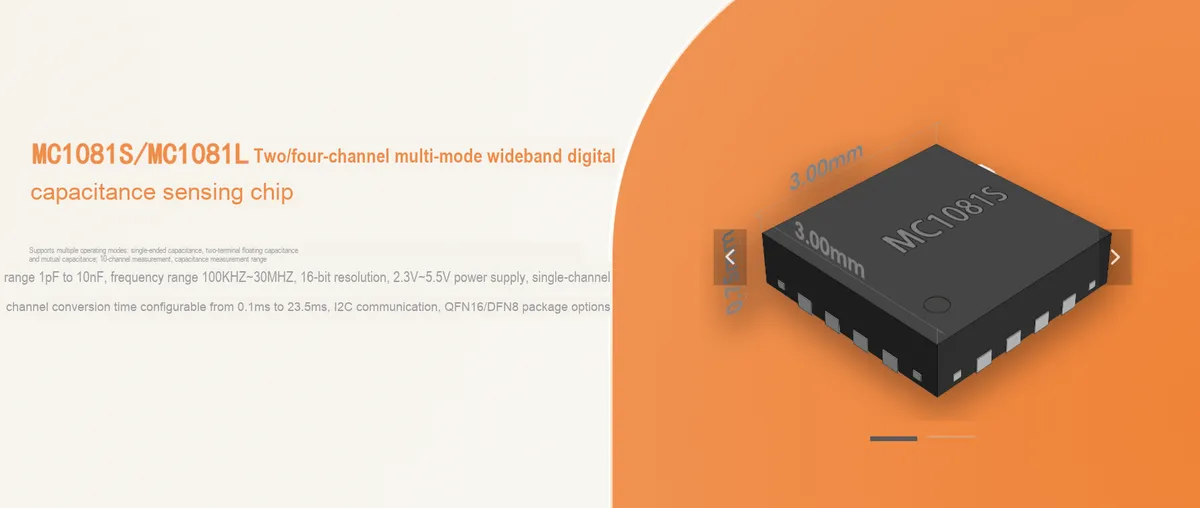
This is a "rugged model" purpose-built for industrial, outdoor and low-power-consumption scenarios. Its biggest highlight is the ultra-wide operating temperature range from -55℃ to 125℃: it can withstand the frigid outdoor temperatures of Northeast China's winters, hold up against the high-heat environment next to industrial ovens, and deliver stable operation even in extreme weather and harsh industrial settings.
It features lower power consumption, only 2.5uA@1Hz, and has no built-in MCU, so its cost is lower than that of SOC chips with cores. It is suitable for scenarios where only capacitance data acquisition is required and complex algorithms do not need to be run on the chip side, such as outdoor liquid level monitoring, water immersion sensing for industrial equipment, and low-power soil moisture detection.
3.3.4 Automotive-Grade Industrial Model: MC1081A
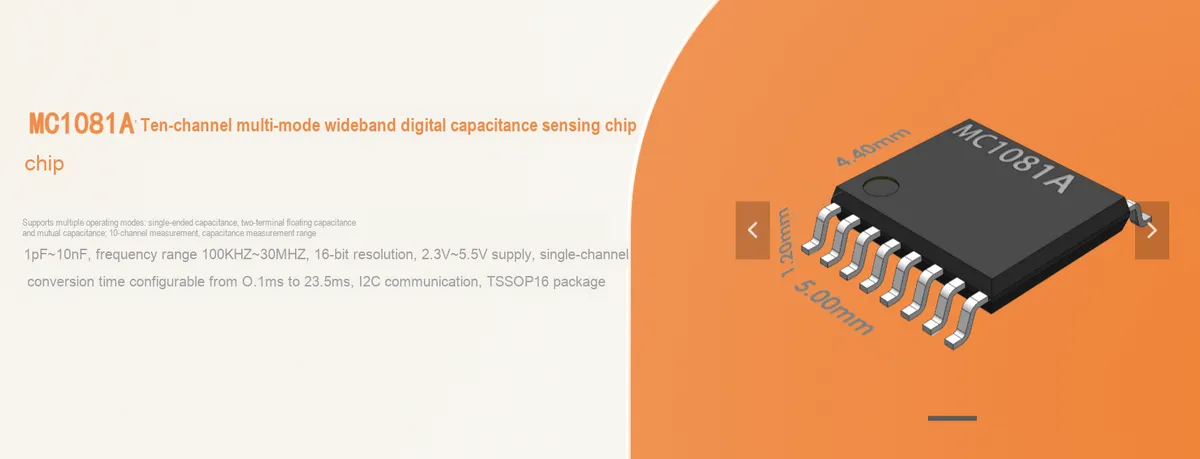
If your project targets automotive applications or high-reliability industrial scenarios, the MC1081A is tailor-made for you. It complies with the AEC-Q100 Grade 0 automotive standard, features an operating temperature range of -40°C to 150°C, can withstand the high temperatures and vibrations in automotive engine compartments, and also meets the long-term reliability requirements of industrial equipment.
It also supports 10 channels with three measurement modes, features a simple interface and minimal peripheral circuitry, and is particularly suitable for scenarios such as touch buttons in automobiles, liquid level detection, seat occupancy sensing, as well as dielectric detection and proximity sensing for high-temperature industrial equipment.
3.3.5 Dual-channel model with MCU: MCP61
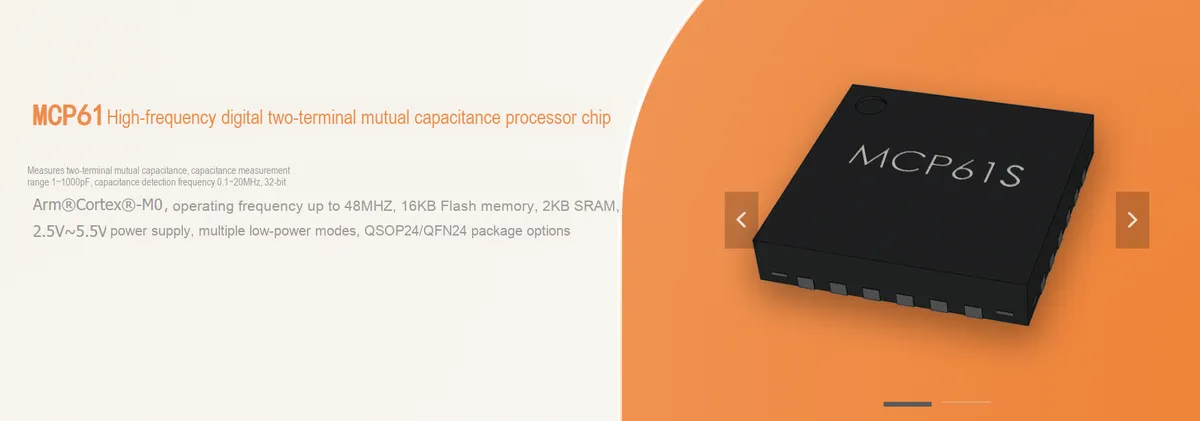
If your project only requires 2 channels and you expect the computing capability on the chip side, the MCP61 is the ideal option. This chip is specifically designed for dual channels, supporting differential mutual capacitance measurement with a measurement range of 1 to 1000 pF. It integrates a Cortex-M0 core, which enables direct data processing, and features a lower cost compared to 10-channel chips.
It is ideal for scenarios such as two-electrode liquid level detection, differential humidity sensing, and dual-channel touch buttons. A single chip can handle all these functions without requiring an additional microcontroller, featuring a simple circuit and controllable cost.
3.3.6 Dual-channel Low-power Version: MC11
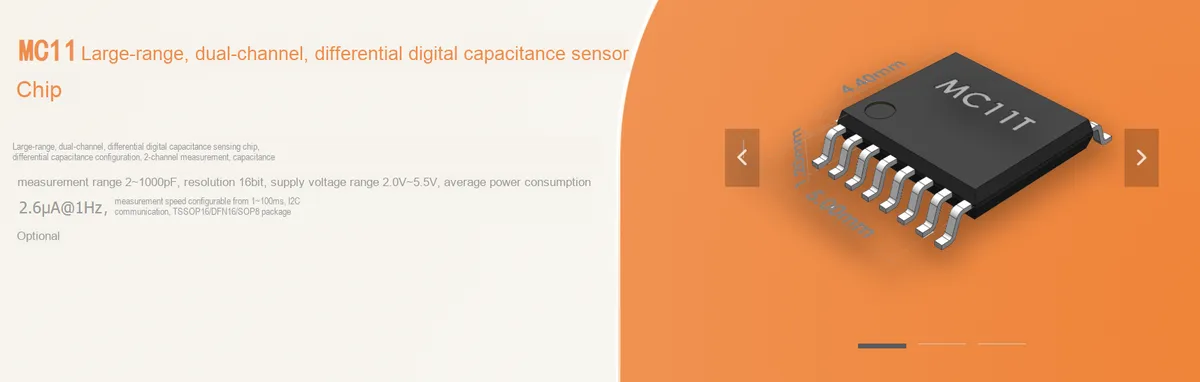
Like the MCP61, it is a dual-channel chip, but the MC11 has no built-in MCU, features lower power consumption of only 2.6uA@1Hz, and comes with a more cost-effective price point. It supports differential capacitance measurement with a measurement range of 1~1000pF, making it ideal for dual-channel scenarios where only capacitance data acquisition is required without the need to run algorithms on the chip side, such as liquid level detection in small household appliances, water immersion sensing, and low-cost differential humidity detection.
3.3.7 High-Frequency Penetration Model: MC12
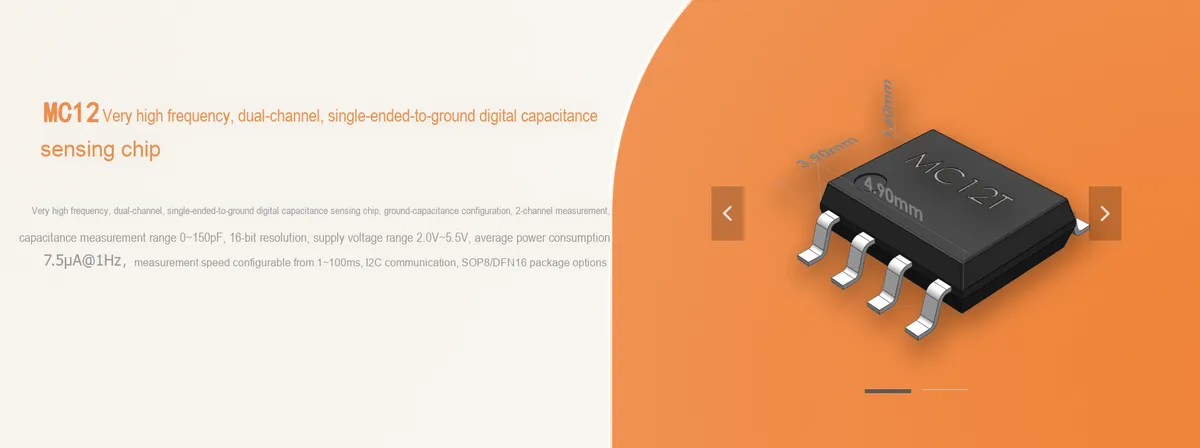
This is a dual-channel chip purpose-built for penetration detection and high-frequency scenarios, with an excitation frequency ranging from 10 to 100MHz — far higher than that of conventional chips. It delivers stronger penetration through plastic and glass, making it particularly suitable for liquid level detection outside container walls, water immersion sensing, or proximity sensing that requires penetrating non-conductive materials.
It features a measurement range of 0~150pF, power consumption of 7.5uA@1Hz, a compact package and low cost, making it the top choice for many low-cost penetration detection projects.
3.3.8 Entry-level Low-cost Differential Model: MDC04/MDC02
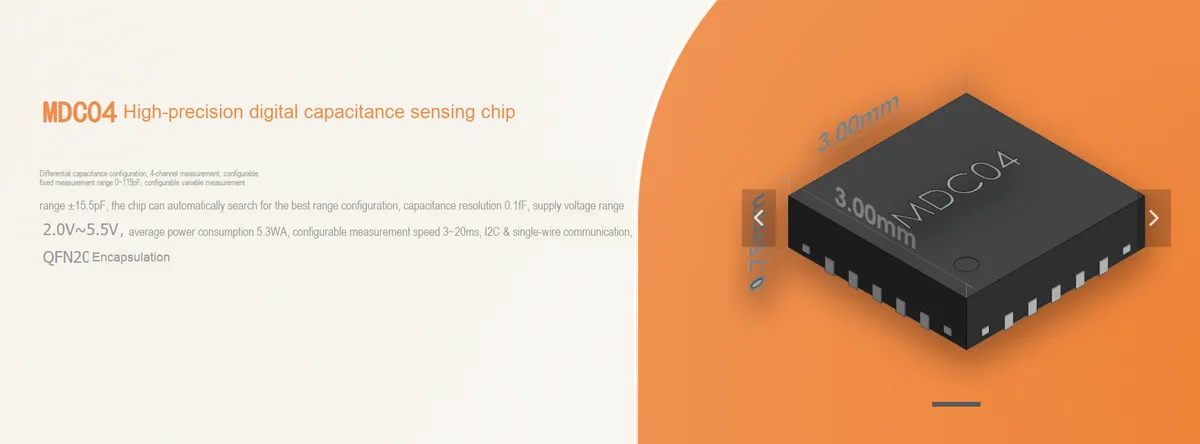
If your project has a limited budget and only requires simple liquid level detection, water immersion sensing or low-cost humidity detection, the MDC series is an extremely cost-effective option. It features a differential capacitor configuration, supports 2 to 4 channels, has a resolution of 0.1 fF, consumes only 5.3 uA at 1 Hz, comes in a compact package, requires almost no peripheral circuits, and has an extremely low cost.
It is particularly suitable for basic liquid level detection in small household appliances and smart homes, such as water level sensing for water dispensers, water shortage detection for humidifiers, or low-cost water immersion alarms, enabling stable capacitance detection at a very low cost.
3.3.9 High-frequency Band MCU Dual-channel Model: MCP62
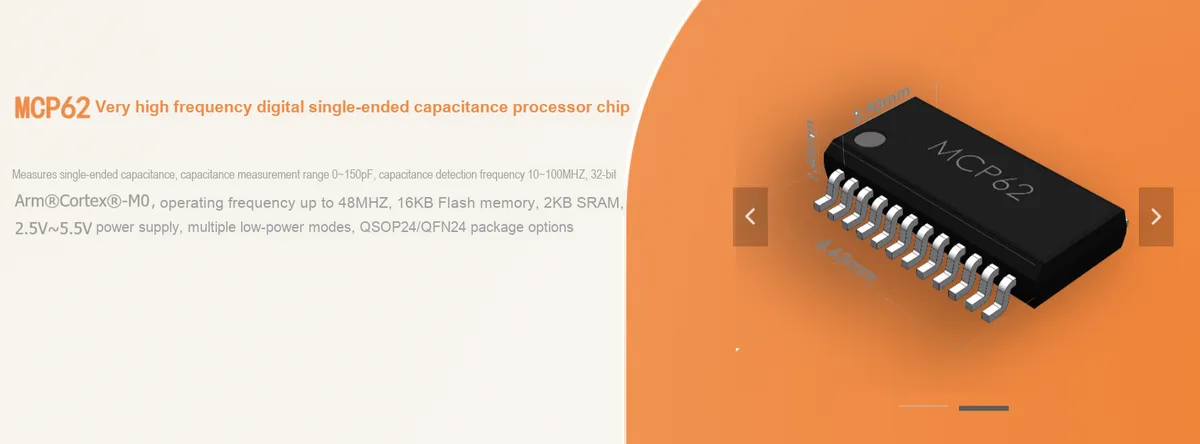
The MCP62 is a dual-channel chip purpose-built for high-frequency penetration + on-device algorithm processing. Just like the MC12, it features an ultra-high-frequency excitation frequency ranging from 10 to 100 MHz, delivering exceptional penetration capability through plastic and glass. It also integrates a built-in Cortex-M0 core, enabling direct on-chip algorithm execution that converts capacitive raw data into physical parameters such as liquid level and humidity, eliminating the need for an additional microcontroller unit. It is an all-in-one solution combining "penetration detection + on-site processing".
It features a measurement range of 0 to 150 pF, supports single-ended-to-ground measurement, and comes with a built-in temperature compensation circuit. It is particularly suitable for scenarios requiring container wall penetration detection, temperature compensation and low-power control at the same time, such as industrial liquid level detection with embedded algorithms, water immersion sensing with local processing, or low-power battery-powered penetration detection devices. A single chip can handle the entire workflow of "acquisition + processing + output".
3.4 How to Choose a Capacitive SOC Chip Suitable for Yourself
With so many models available, there's really no need to agonize over the choice — you can pick one quickly just by keeping three core requirements in mind:
- Number of Channels and Functions: If multi-channel touch/liquid level detection is required, choose the 10-channel MCP1085/1081 series; if only 2 channels are needed, select the MCP61/MC11/MC12 series;
- Application Scenarios: For industrial, outdoor and automotive scenarios, select the wide-temperature or automotive-grade MC1081 series; for low-cost small household appliances, select the MDC series;
- Power Consumption and Cost: For battery-powered low-power scenarios, choose the MC1081/MC11/MDC series; if the chip needs to run algorithms, select the MCU-equipped MCP1085/1081/MCP61 series.
No matter what scenario your project is in, these capacitive SOC chips can help you solve the pain points of traditional capacitive sensors, making your capacitive sensing solution more stable, simpler and lower-cost.
IV. Practical Applications of Capacitive Sensing SOC Chips
4.1 Partial Applications of Sensor Modules Equipped with Integrated Capacitive Sensing SOC Chips
Previously, we discussed the technical advantages and model features of capacitive sensing SOC chips, and the true value of these chips will ultimately be realized through integrated sensor modules in practical scenarios. MinyuSensor's capacitive SOC chips are not delivered in die form; instead, the full-process integration from hardware electrodes, PCB wiring, to signal calibration, algorithm optimization, anti-interference shielding and temperature compensation has been completed in advance, creating "Out Of The Box" finished modules.
This means that users do not need to build circuits or debug capacitor parameters by themselves; they only need to power on the module to directly obtain stable detection results, which minimizes the application threshold of capacitive sensing. These modules cover almost all mainstream capacitive sensing scenarios such as industry, home appliances, automobiles, and consumer electronics, and each model has been customized and optimized for specific applications, truly translating the "technical capabilities of the chip" into "product solutions that can solve practical problems".
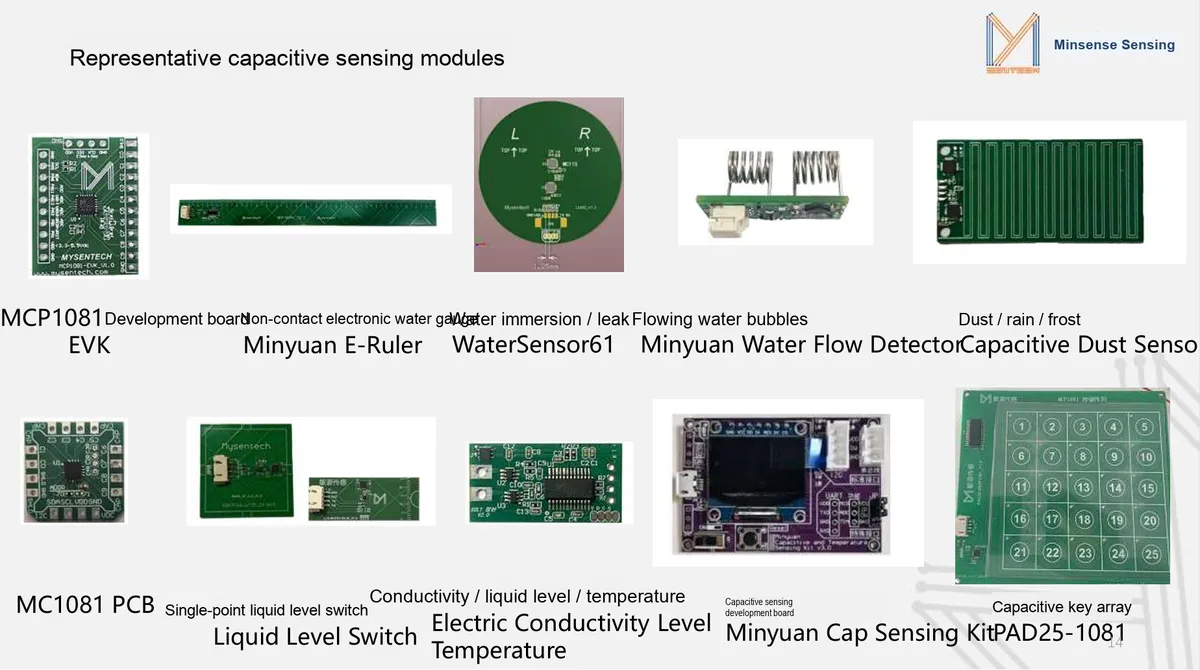
Now, let's break down how these modules function in practice one by one according to their application scenarios.
4.1.1 Introduction to Common Sensor Modules
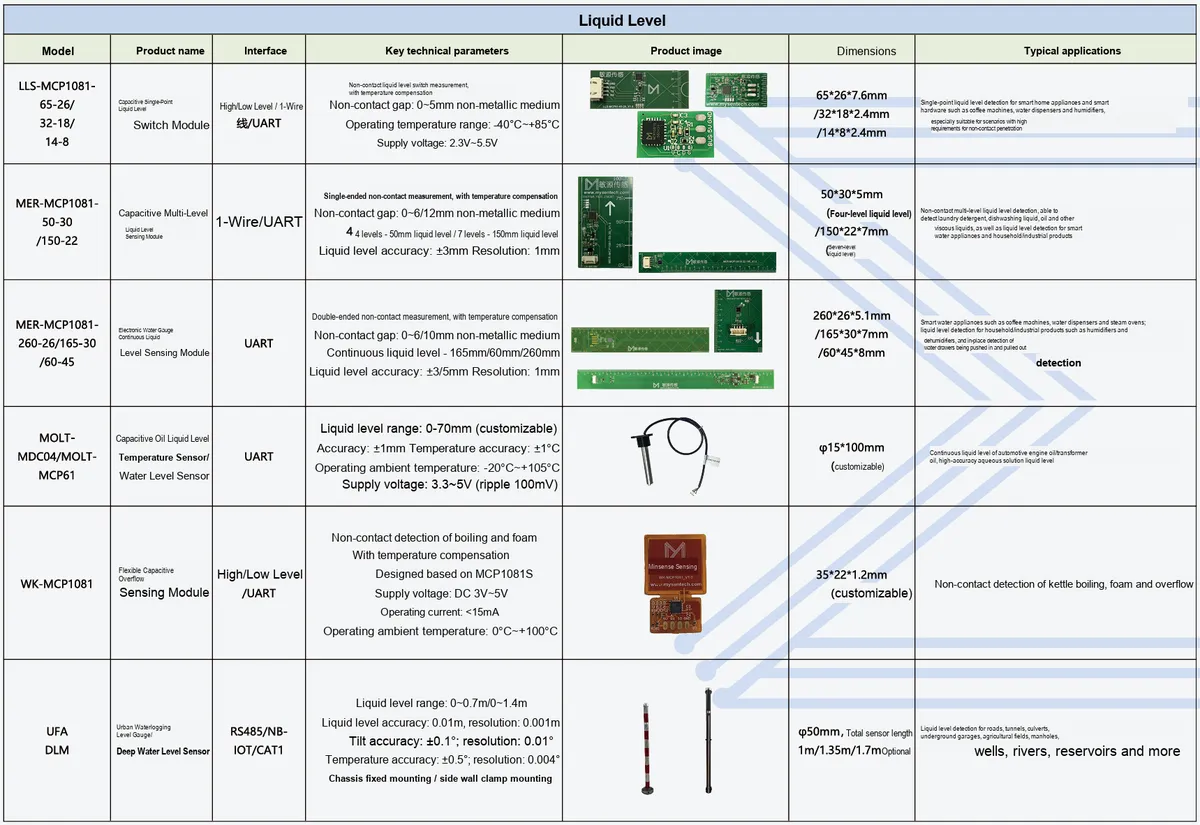
Liquid level detection is one of the most classic application scenarios of capacitive sensing, and also the field covered most extensively by Minsensor modules. Corresponding capacitive modules can be found everywhere, ranging from single-point liquid level switches in coffee machines and water dispensers, to graded liquid level detection in washing machines and dishwashers, continuous liquid level gauges in water tanks, and even large liquid level gauges for urban waterlogging monitoring.
All these modules feature a non-contact design, which eliminates the need to submerge the sensor in liquid, as it can detect the liquid level simply by being attached to the outer wall of the container. This not only prevents liquid corrosion to the sensor and removes the requirement for frequent maintenance; additionally, they come with a built-in temperature compensation function, so no reading drift will occur even when the liquid temperature changes, making them an ideal solution for liquid level detection in small household appliances and industrial equipment.
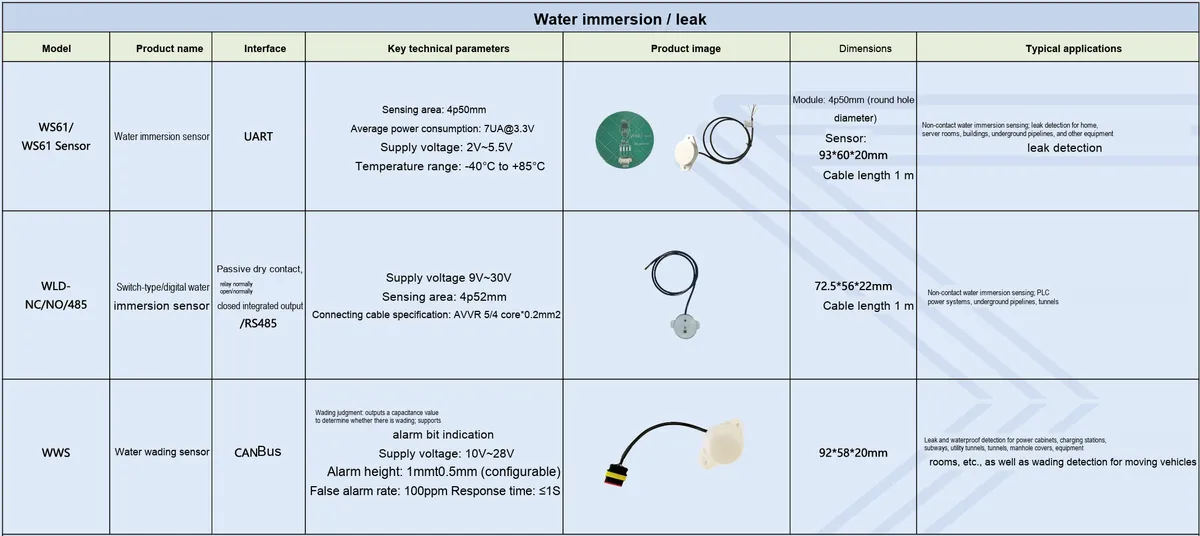
Water immersion and leakage detection are scenarios with inelastic demand in industrial and smart home applications, and the biggest advantage of capacitive water immersion modules is non-contact full-coverage detection. Whether in data centers, underground pipelines, power cabinets or charging piles, these modules can accurately detect water seepage through capacitance changes. They do not need to come into contact with liquid like traditional water immersion sensors, nor do users have to worry about electrode corrosion. Modules of different models also support multiple interfaces such as UART, RS485 and CAN bus, which can be directly connected to PLC or smart home systems to realize leakage alarm and remote monitoring.
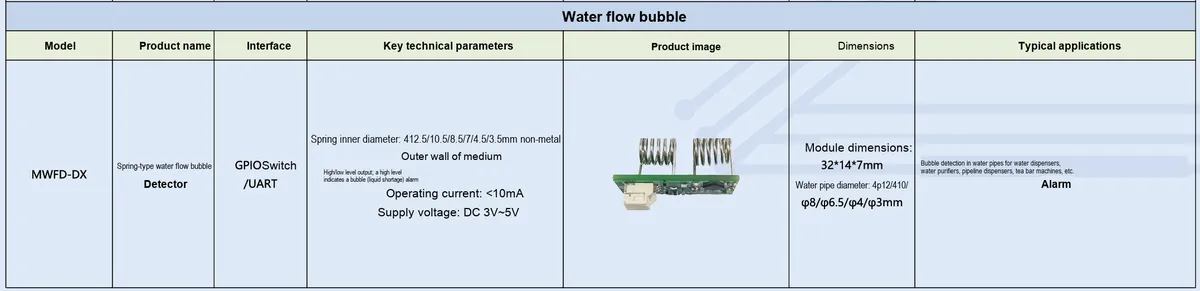
In household appliances such as water purifiers, pipeline water dispensers and coffee machines, air bubbles and flow interruption in water pipes are common problems, while traditional mechanical flow switches are prone to being stuck by limescale, which is perfectly addressed by the capacitive bubble detector. It features spring electrodes sleeved outside the water pipe, which can detect the status of water flow and bubbles through capacitance changes without contacting the liquid inside the pipe, and the presence of limescale or impurities in the water will not affect the detection results. It also supports adaptation to different pipe diameters from 3mm to 12mm, making it a practical solution widely used in water purification equipment.
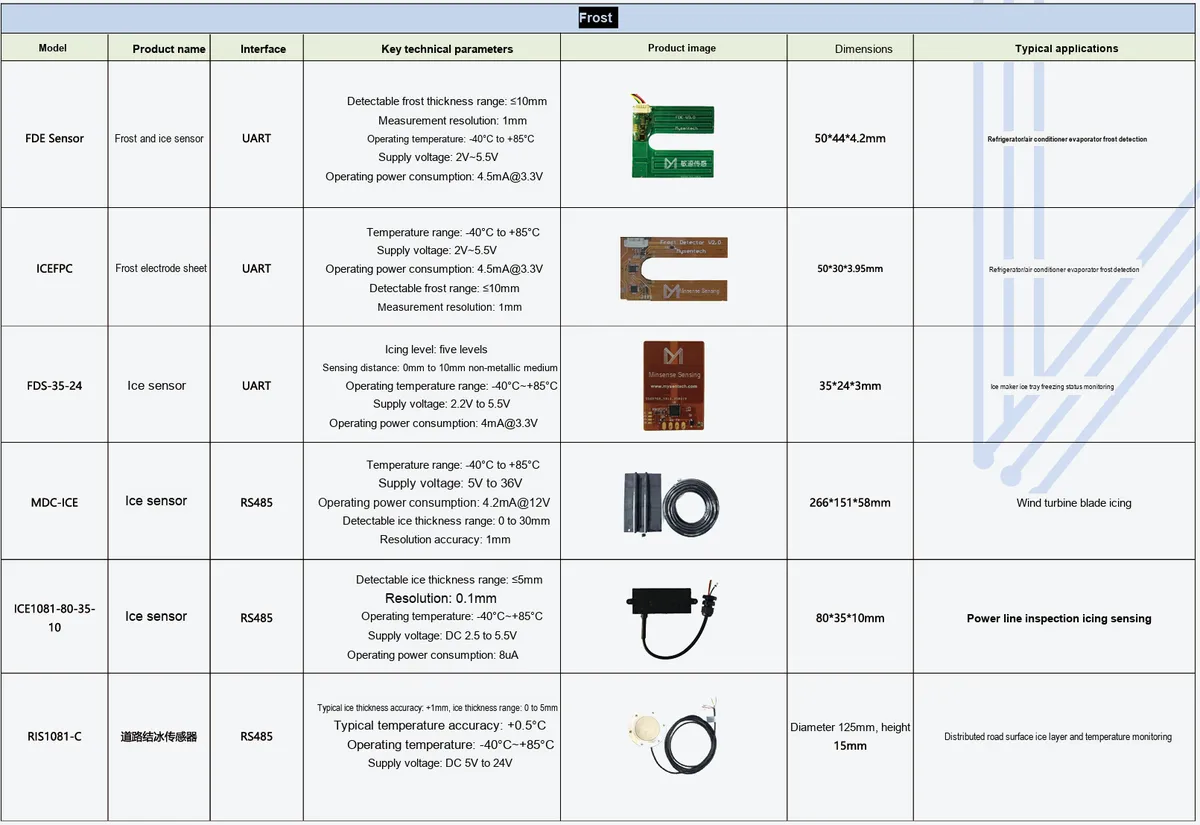
Frost formation on evaporators of refrigerators and air conditioners, ice coating on fan blades, and ice on road surfaces — all these scenarios require accurate frost and ice detection, and the capacitive frost and ice module is precisely designed for such scenarios. It can accurately detect the thickness of frost layer through capacitance changes, with a resolution of up to 1mm or even 0.1mm, and comes with built-in temperature compensation, enabling stable operation even in low-temperature environments of -40°C. Whether for defrost control of refrigerators, anti-icing of fan blades, or road ice monitoring, these modules can stably output data to prevent equipment failures caused by frost/ice formation.

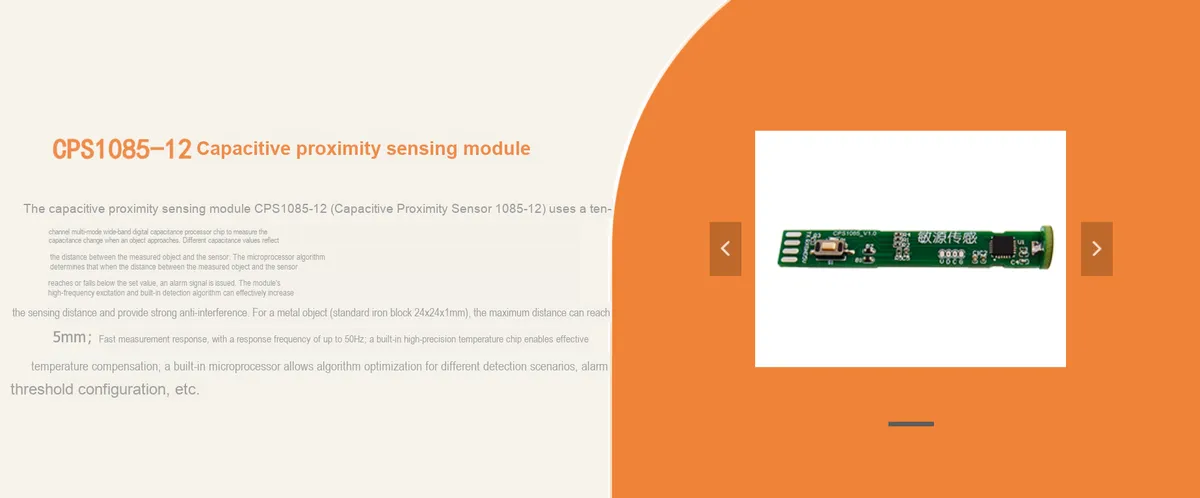
For proximity detection of metals and non-metals in industrial scenarios, traditional inductive proximity switches can only detect metals, whereas capacitive proximity modules can detect almost all materials including metals, plastics, wood, and liquids. They also support non-contact detection, meaning no contact with the detected object is required, eliminating wear issues. This proximity module features a detection distance of up to 4-5mm, a maximum response frequency of 100Hz, and outputs UART or IO signals that can be directly connected to industrial control systems, making it suitable for scenarios such as material detection and position sensing in industrial automation.
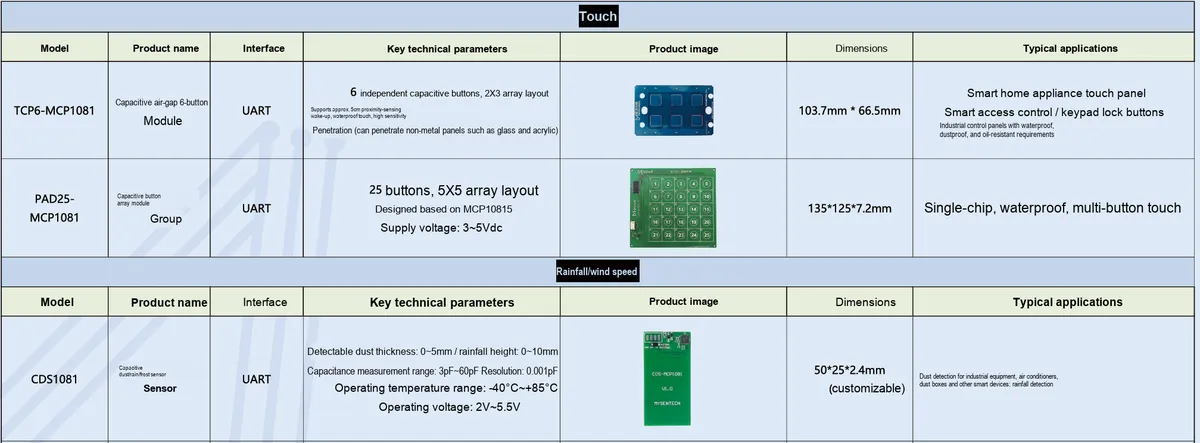
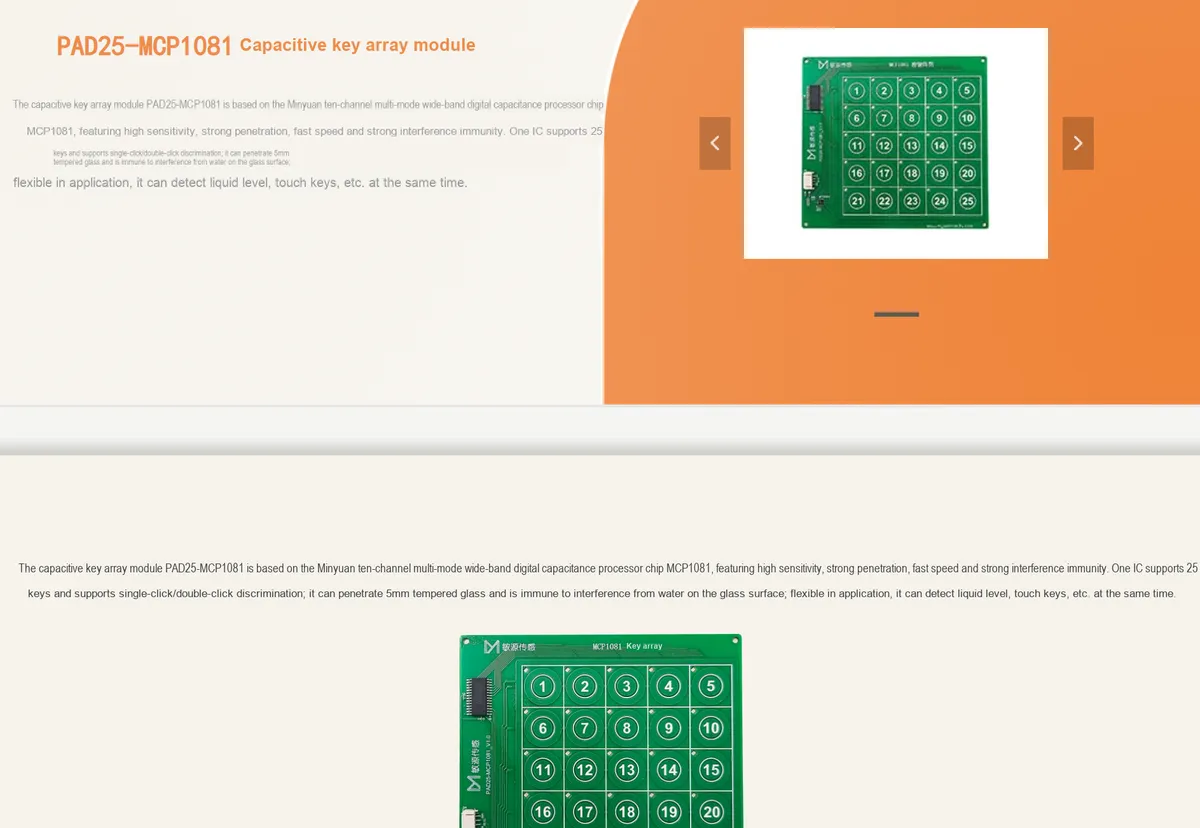
Capacitive touch is the most familiar capacitive sensing application for us, which is indispensable for capacitive touch modules ranging from the touch panels of smart home appliances to the buttons of access control password locks. Designed based on the MCP1081 series SOC chips, these modules feature inherent waterproof, dustproof and oil-proof properties, and can achieve stable sensing even through glass and acrylic panels;they also support multi-button arrays, which can be implemented from small 6-key panels to 25-key keyboard arrays. Users can use them directly after power-on without self-debugging, greatly reducing the development difficulty of touch panels for smart devices.
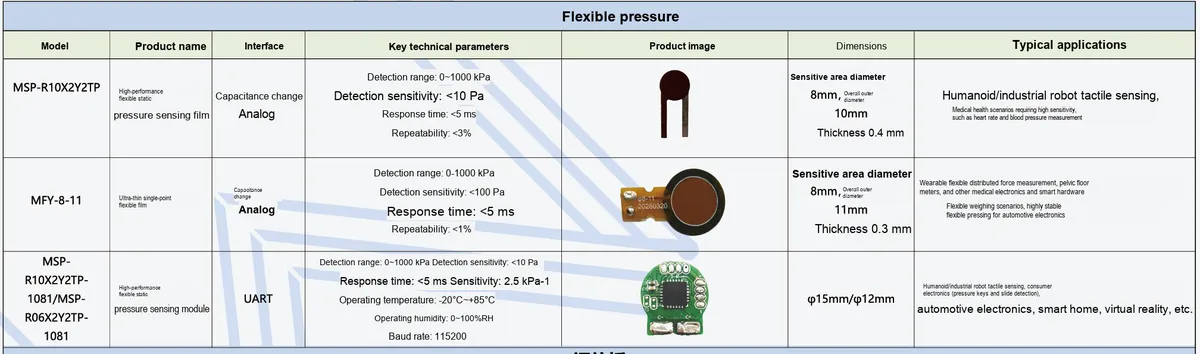
In scenarios such as robot tactile sensing, medical healthcare, and wearable devices, flexible pressure detection is a core requirement, and capacitive flexible pressure modules are precisely developed for such scenarios. At its core lies a flexible capacitive sensing sheet, which is only 0.3-0.4mm thick, can be bent to fit curved surfaces, boasts a pressure detection sensitivity of up to 10Pa, and has a response time of less than 5ms, with no fatigue drift even after repeated pressing. These modules are available in both die form and finished modules integrated with SOC chips, which can directly output capacitance changes or UART signals, and are suitable for scenarios including robot tactile sensing, pelvic floor meters, and wearable pressure detection.
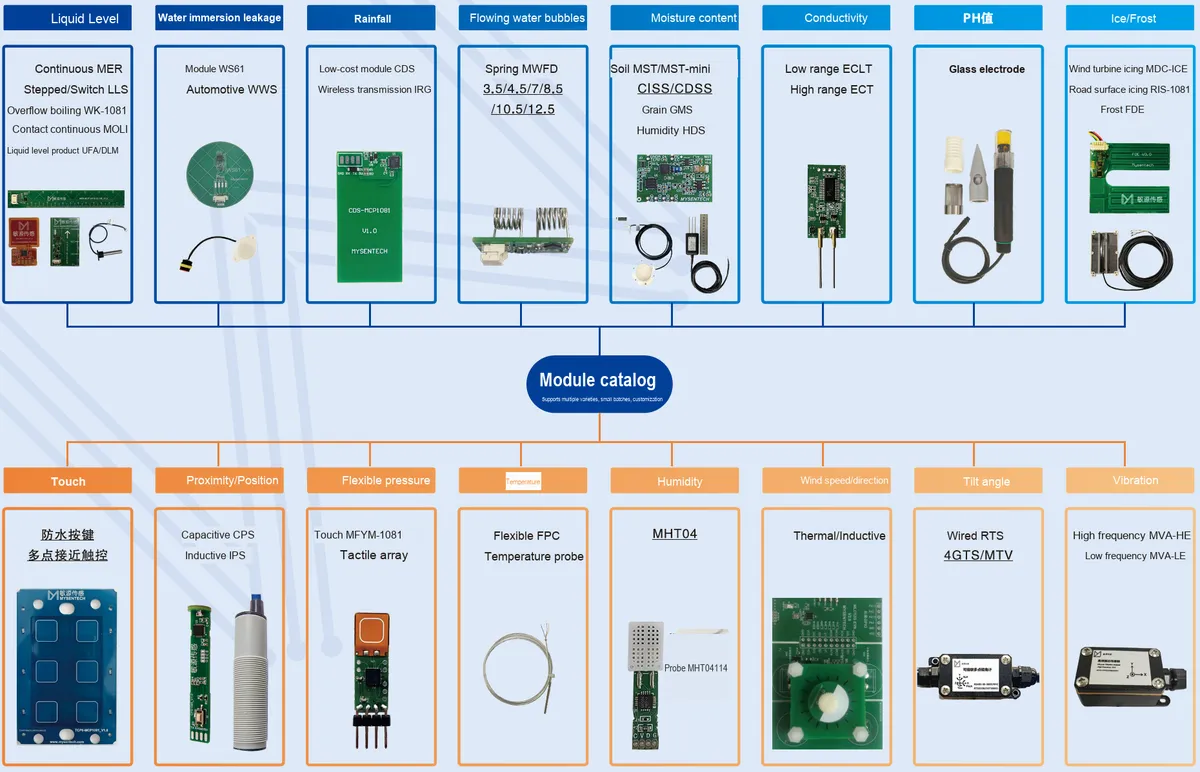
Beyond the aforementioned scenarios, Minyuan's capacitive sensing modules also cover more fields including rainfall/dust detection, soil moisture content, and electrical conductivity, forming a complete application map. The core advantage of these modules lies in translating the technical capabilities of capacitive sensing SOC chips into ready-to-implement "turnkey solutions" for users, which frees users from the trouble of circuit design, algorithm debugging and anti-interference processing, and promotes the practical application of capacitive sensing technology in all walks of life.
4.1.2 Intensive Case Study: Liquid Level Detection
Liquid level detection is one of the most mature and widely applied scenarios for capacitive sensing SOC chips, and also the field where the pain points of traditional solutions are most prominent. Float-type and photoelectric liquid level switches not only feature complex structures and are prone to being stuck by scale or oil stains, but also can only achieve single-point detection instead of continuous monitoring of liquid level changes; while capacitive liquid level modules perfectly solve these problems, and have become the preferred solution for small household appliances and industrial equipment by virtue of their advantages of non-contact, high reliability and continuous detection capability.
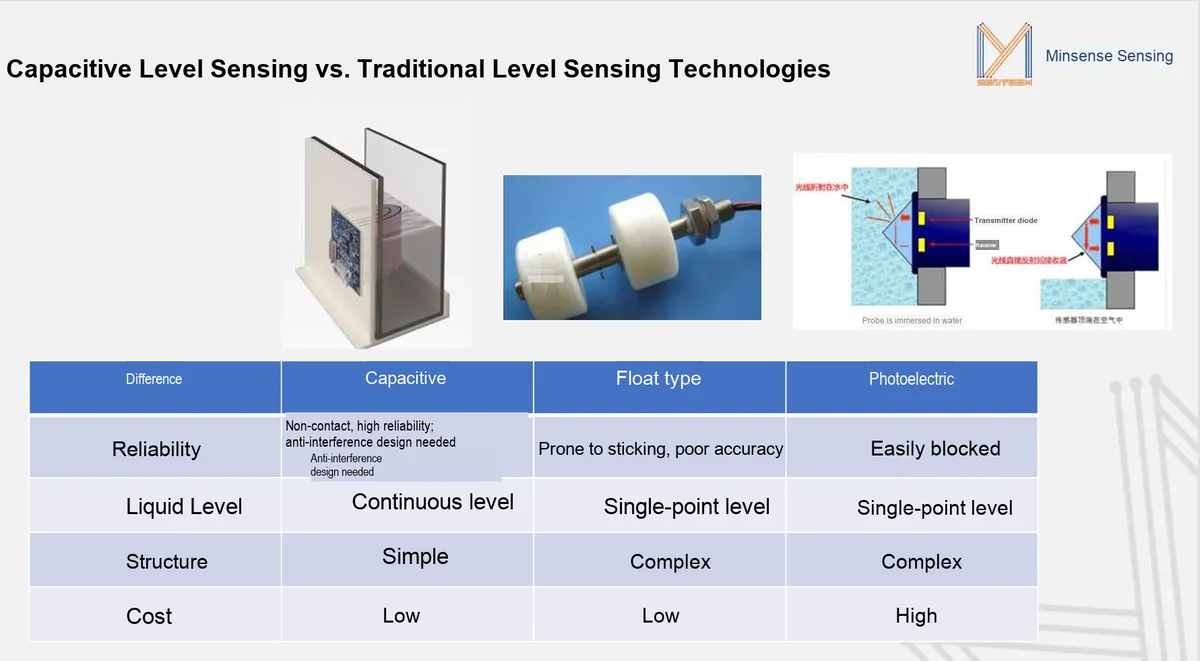
Compared with traditional liquid level technologies, the advantages of capacitive liquid level modules are immediately obvious:
- Higher reliability: Non-contact design with no mechanical moving parts, eliminating the risks of sticking, jamming, and concerns over liquid corrosion on electrodes;
- Stronger detection capability: capable of continuous liquid level measurement and real-time output of liquid level height, instead of only being able to judge the two states of "full/empty";
- Superior structure and cost performance: The PCB electrode features a simple structure that requires no additional mechanical parts, making its cost far lower than that of the optoelectronic solution.
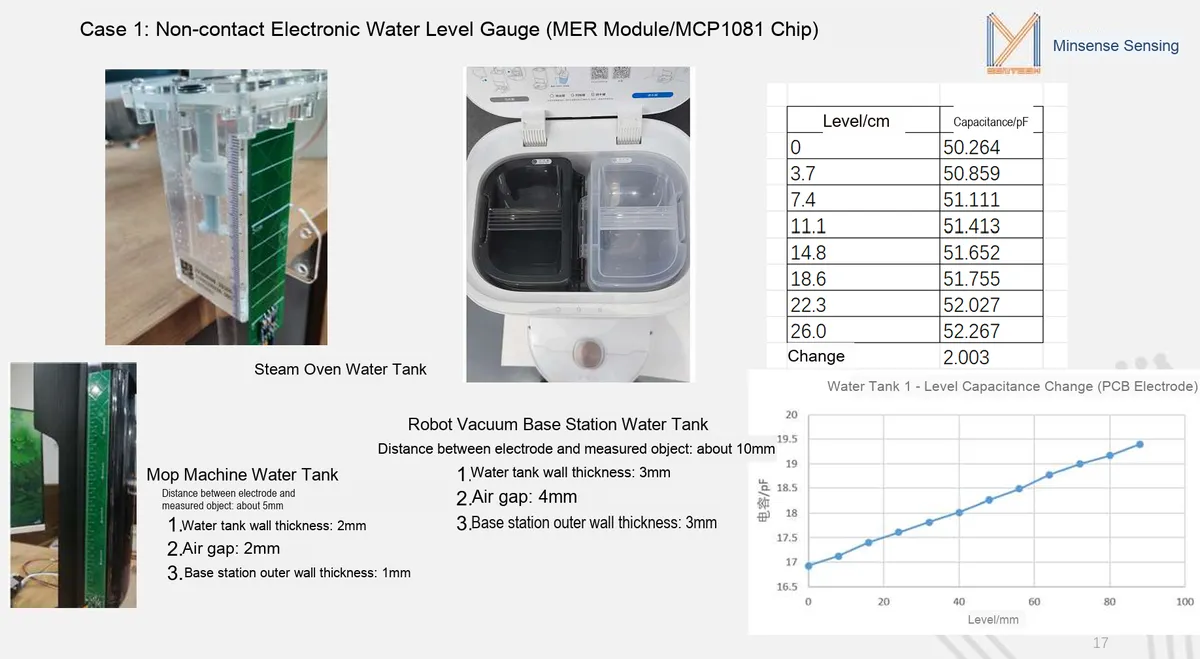
This is the most typical civilian scenario solution for capacitive liquid level detection, whose core is the MER electronic water gauge module based on the MCP1081 series SOC chip. It attaches the PCB electrode to the outer wall of the water tank, and can realize continuous liquid level measurement through capacitance change without contacting the liquid.
- Strong penetration capability: It can perform stable detection through the walls of plastic/glass containers of 2~3mm, and even across an air gap of 1mm;
- Anti-interference design: Equipped with built-in temperature compensation and algorithm optimization, it can overcome the impacts caused by liquid wall adhesion and water quality differences.
- Wide Scenario Adaptability: It can be easily adapted to scenarios ranging from the water tanks of steam ovens and coffee machines to the water storage boxes of robot vacuum bases. The module length can be customized according to the tank size, with a maximum supported liquid level measurement of 260mm.
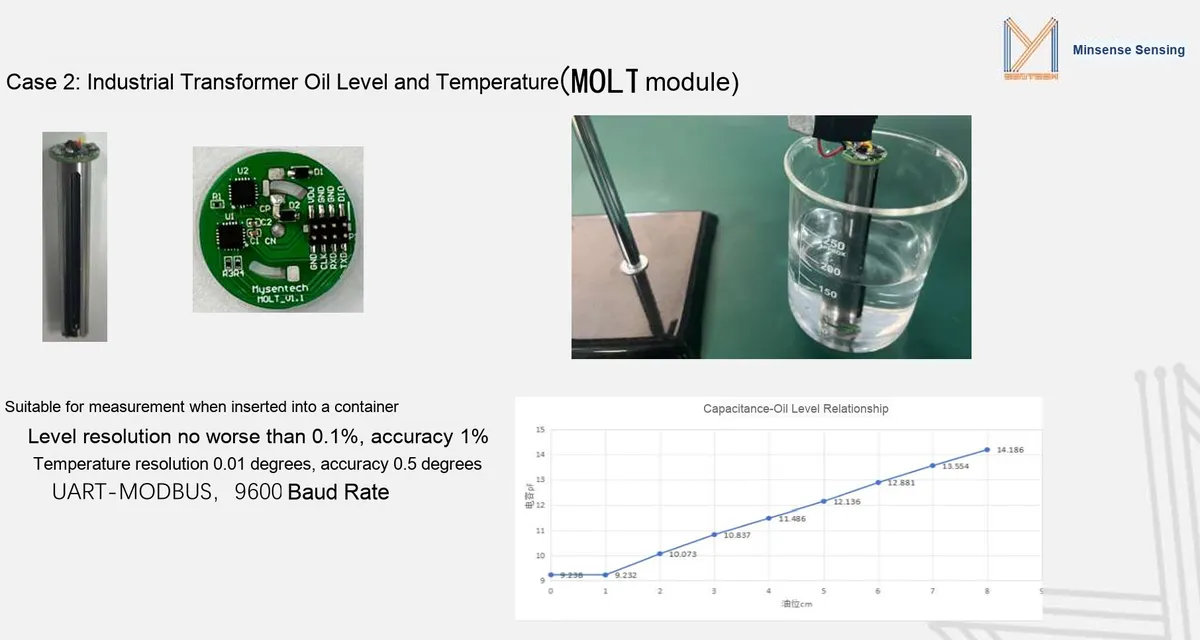
In industrial scenarios, capacitive liquid level detection also demonstrates extremely strong adaptability. The MOLT module is designed based on the MDC04/MCP61 chip, adopts a metal concentric circular electrode structure, is inserted to detect liquid level changes of transformer oil or aqueous solutions, and integrates a temperature acquisition function at the same time.
- High-precision detection: The liquid level resolution can reach 0.1%, and the temperature resolution is 0.01℃, which can accurately monitor the oil condition of industrial equipment;
- Stable operation in harsh environments: Supports wide temperature range and high humidity conditions, and is applicable to industrial scenarios such as oil level detection of power grid transformers and engine oil level monitoring of automobiles;
- High integration level: Directly output liquid level and temperature data via the MODBUS protocol, which can be connected to industrial control systems to realize remote monitoring and early warning.
4.1.3 Case Study: Proximity Detection
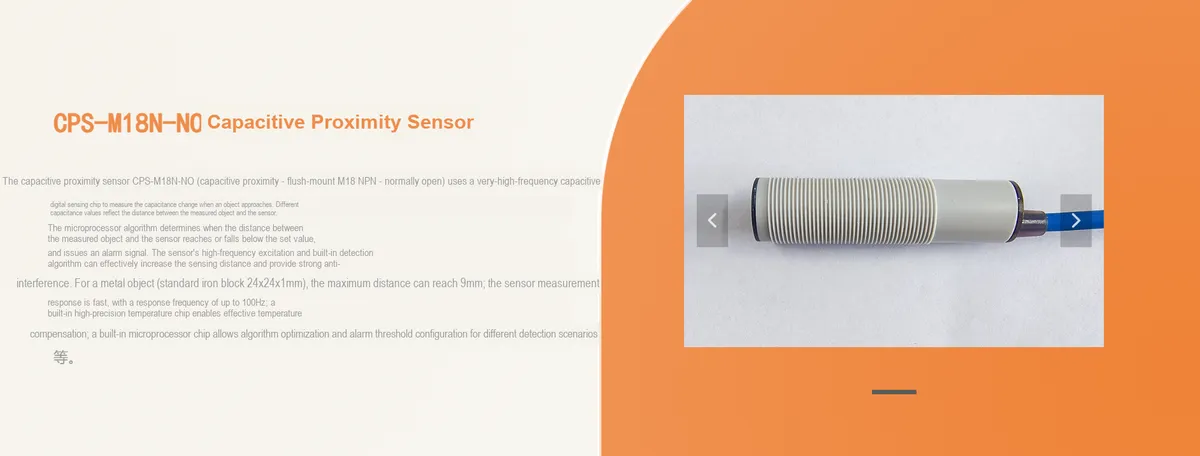
Proximity detection is one of the most fundamental sensing requirements in industrial automation and consumer electronics. Capacitive proximity sensors, with their capability to detect both metallic and non-metallic objects, overcome the limitation of traditional inductive sensors that can only detect metals, thus becoming a universal solution covering a wider range of scenarios. Minywell's capacitive proximity module is designed based on a very high frequency capacitive SOC chip, integrating high-frequency excitation, temperature compensation and algorithm calibration into one, achieving longer detection distance and stronger anti-interference capability.
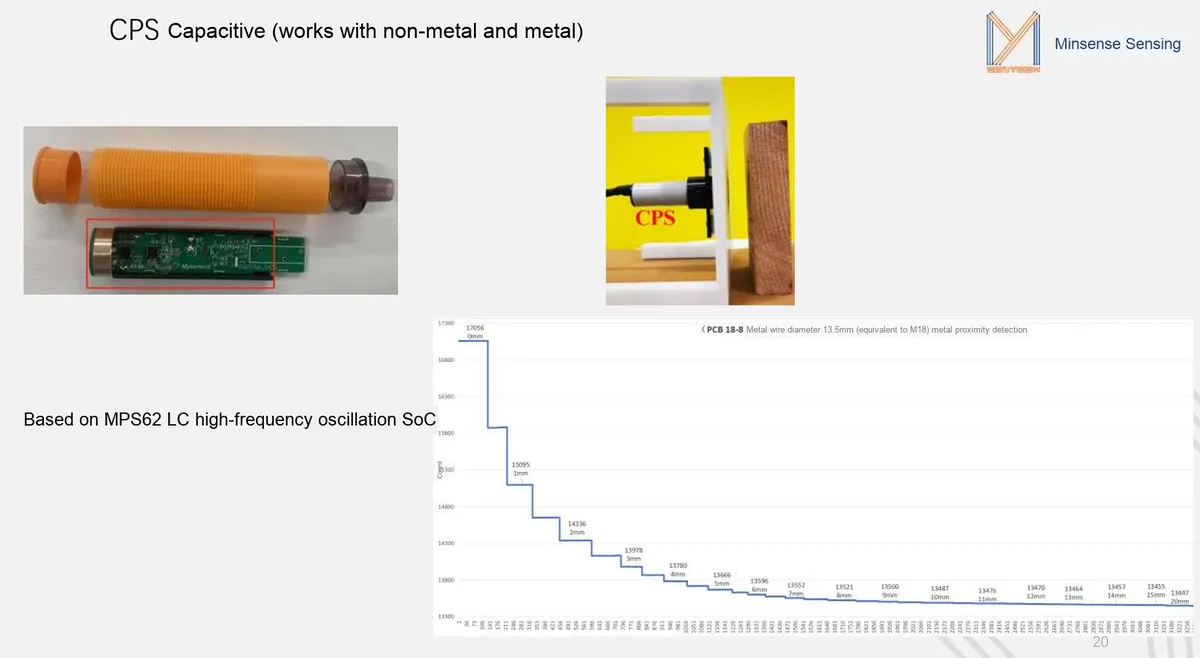
The core advantage of capacitive proximity modules lies in their breakthrough of material restrictions: whether it is metal, wood, plastic or liquid, as long as an object approaches the sensor, it will cause a capacitance change, which can then be accurately detected. Ranging from PCB-level modules to M18 cylindrical enclosures that meet industrial standards, they can adapt to different installation scenarios, with a maximum response frequency of up to 100Hz, which can meet the object detection requirements of high-speed production lines. Equipped with built-in temperature compensation, they can also work stably in wide-temperature environments.
Capacitive touch is the most common capacitive sensing application we encounter in daily life, ranging from home appliance buttons to industrial control panels. Minyuan's touch modules, in particular, have taken "waterproof, dustproof and through-touch" performance to the extreme, addressing the pain points of traditional mechanical buttons such as being prone to wear and tear, and vulnerable to water and oil contamination.
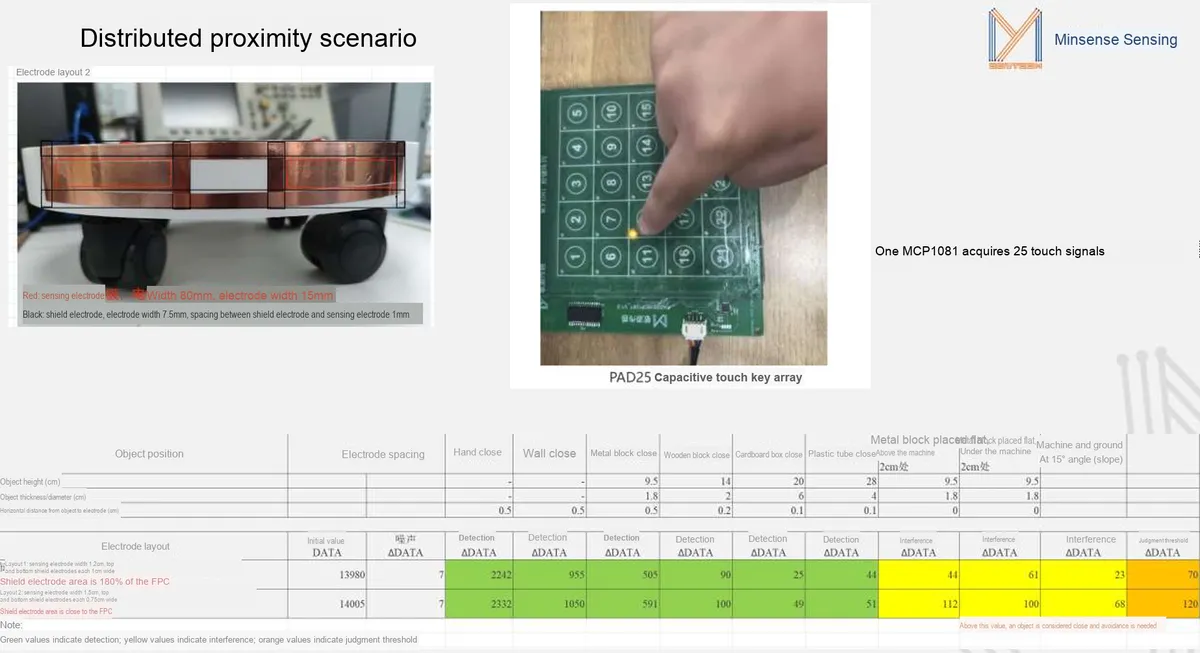
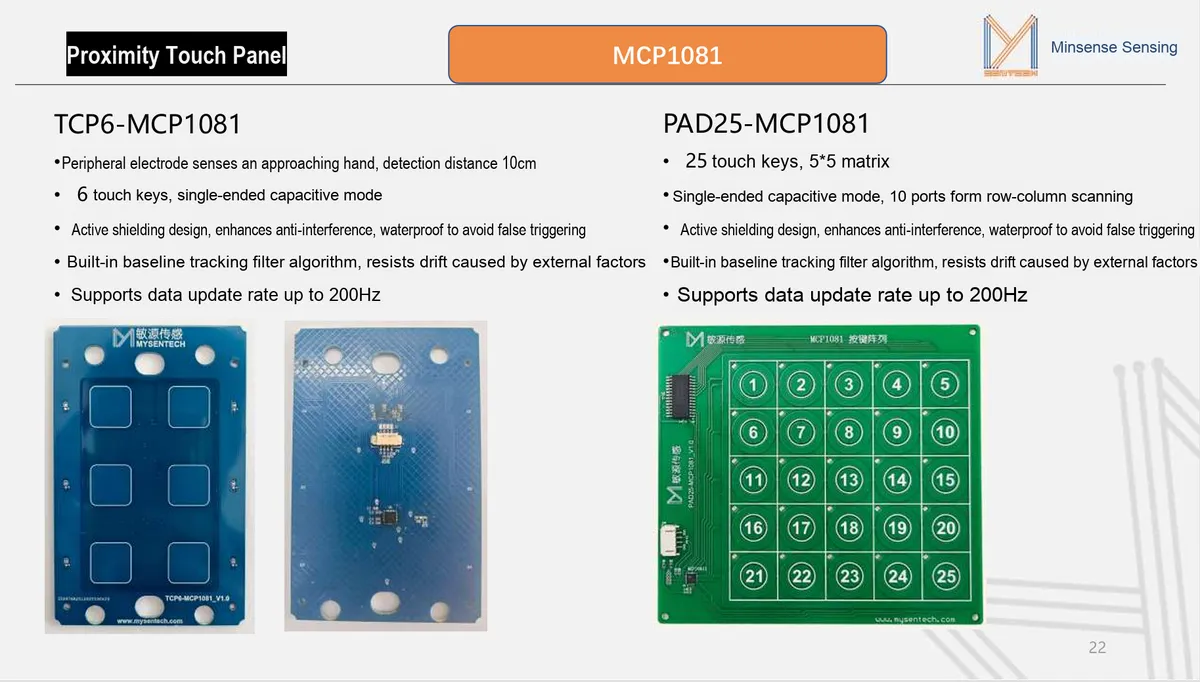
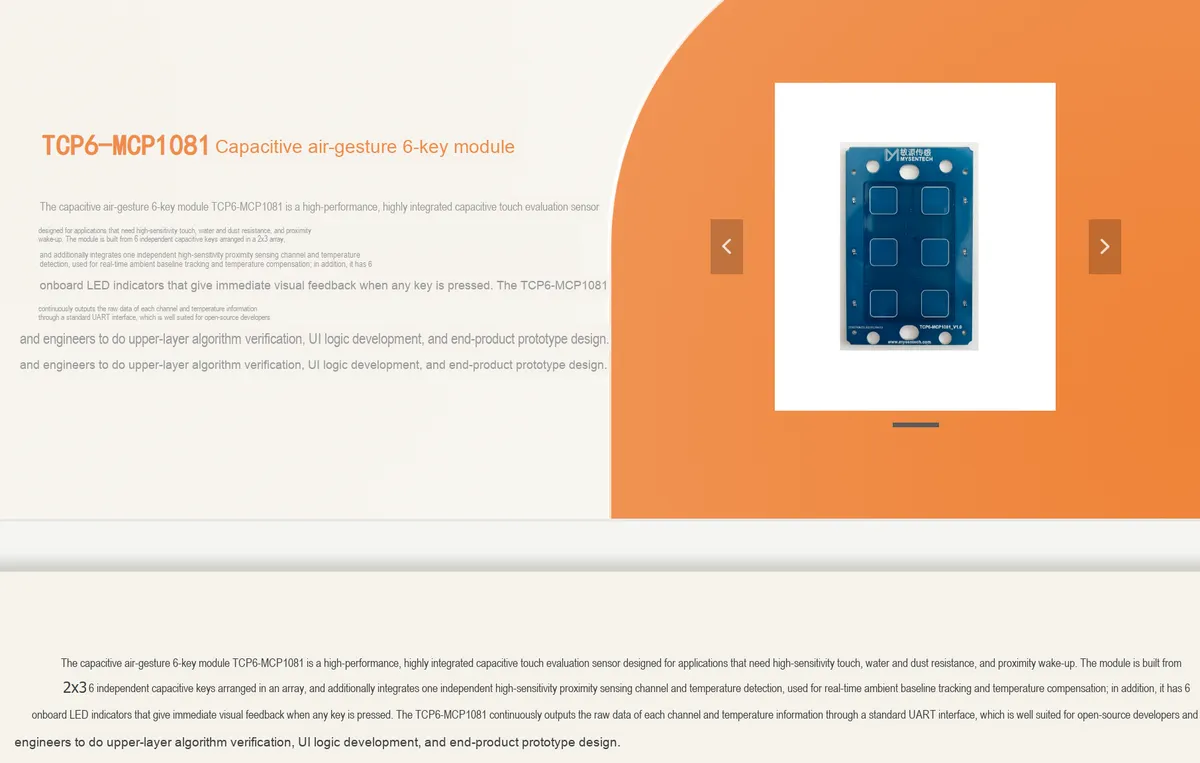
The touch module based on the MCP1081 series chips supports array scanning for 25 keys with a single chip, and integrates the proximity wake-up function simultaneously: the peripheral electrodes can achieve 10cm proximity sensing to automatically wake up the device when the user approaches, which not only enhances user experience but also reduces device power consumption. Equipped with a built-in active shielding design, the module can stably recognize touch operations even through glass or acrylic panels, or when there are water droplets or oil stains on the surface, and is widely used in scenarios such as smart homes, access control panels, and industrial control panels.
4.1.4 Case Study: Water Flow Bubble Detection
This case adopts the MWFD series water flow bubble detector from Minsensor to realize the detection of bubbles in pipeline water flow:
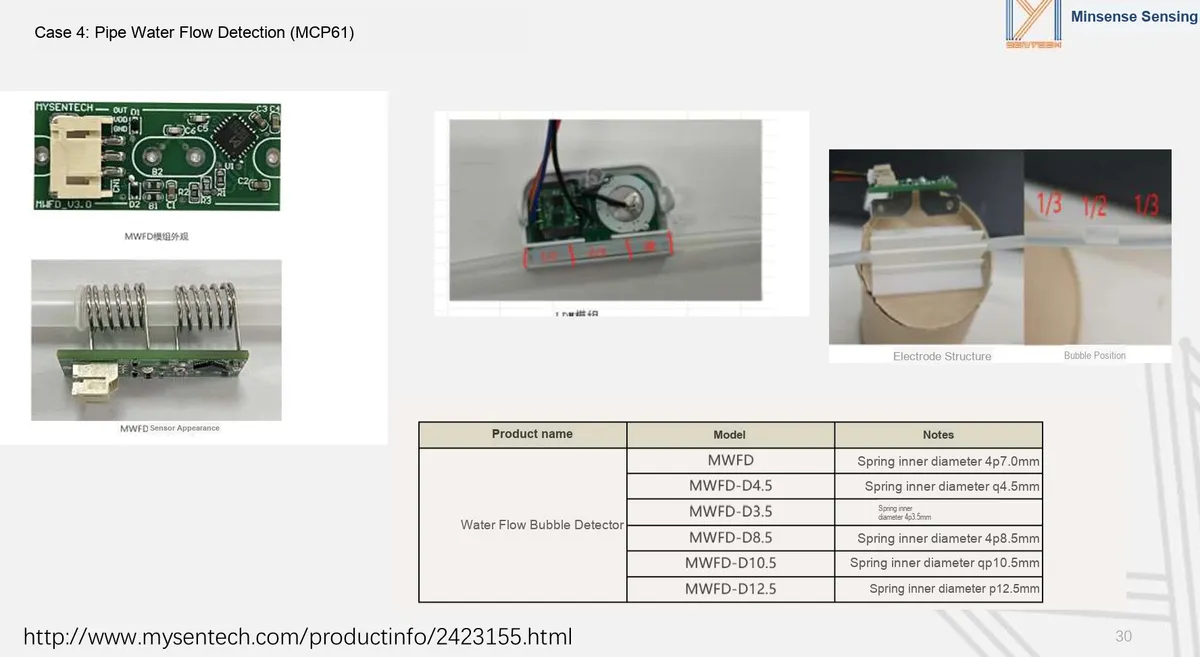
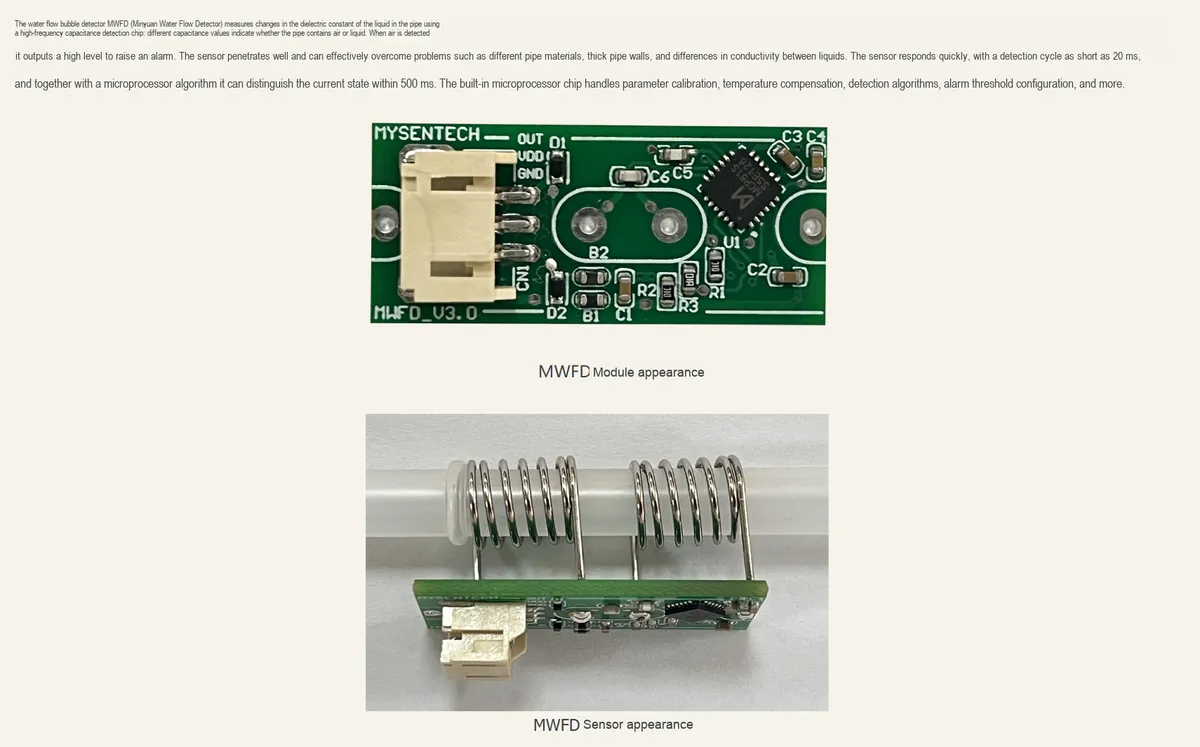
As shown in the figure, the detector is sleeved on the outer side of the fluid pipeline in a non-contact manner via spring electrodes. Equipped with a PCB module built-in high-frequency capacitance detection chip and a microprocessor, it distinguishes liquid from air by measuring the difference in dielectric constant of the medium inside the pipe, and outputs a high-level alarm when air bubbles are detected.
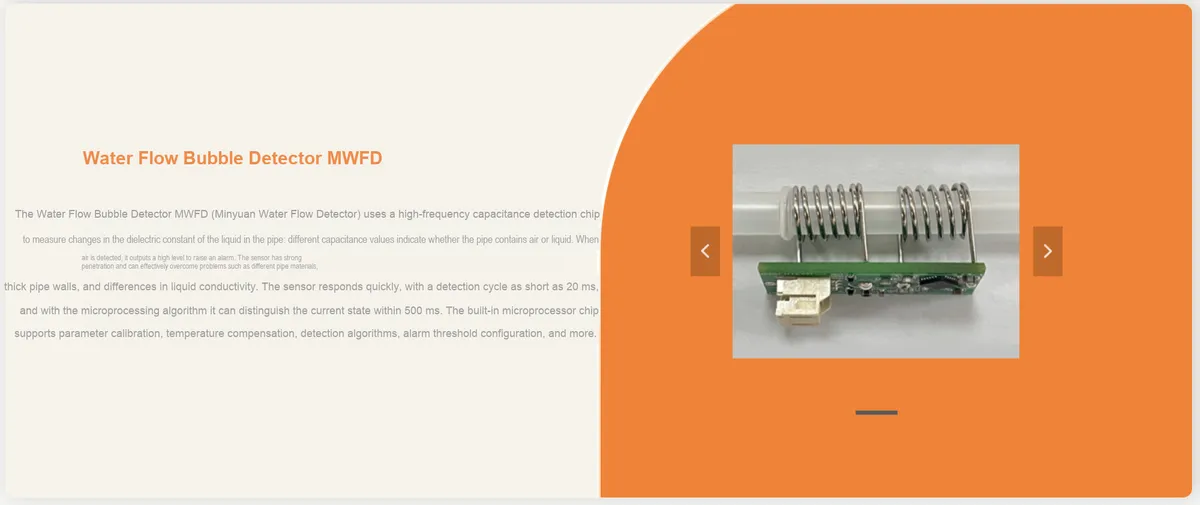
This solution features strong penetration, is unaffected by differences in water pipe material, wall thickness and liquid conductivity, boasts a minimum detection cycle of up to 20ms, can complete status identification within 500ms in conjunction with algorithms, and simultaneously supports parameter calibration, temperature compensation and alarm threshold configuration.
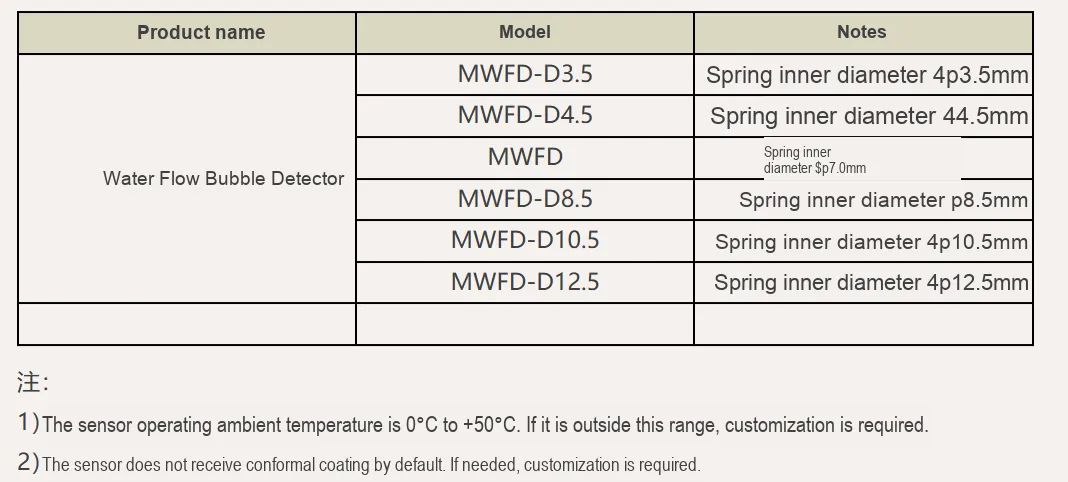
Models compatible with pipes of different inner diameters ranging from 3.5 mm to 12.5 mm are also available, which can be widely applied in bubble monitoring scenarios for small-sized fluid pipelines.
4.1.5 Case Study: Water Immersion Detection
Compared with traditional conductive sensors, capacitive solutions enable spatial surface detection, feature high reliability with no missing detection points, output continuous digital signals and are less affected by water quality, and some models also support cascade positioning function, making them an ideal choice for water leakage monitoring in scenarios such as data centers and buildings.
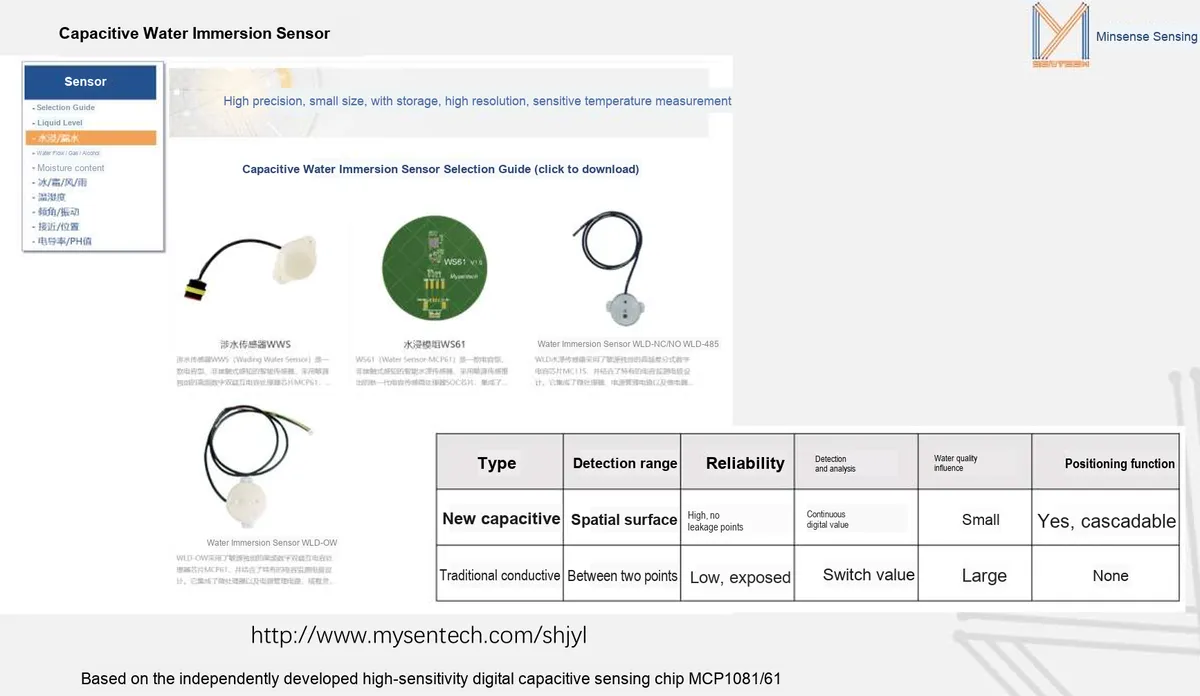
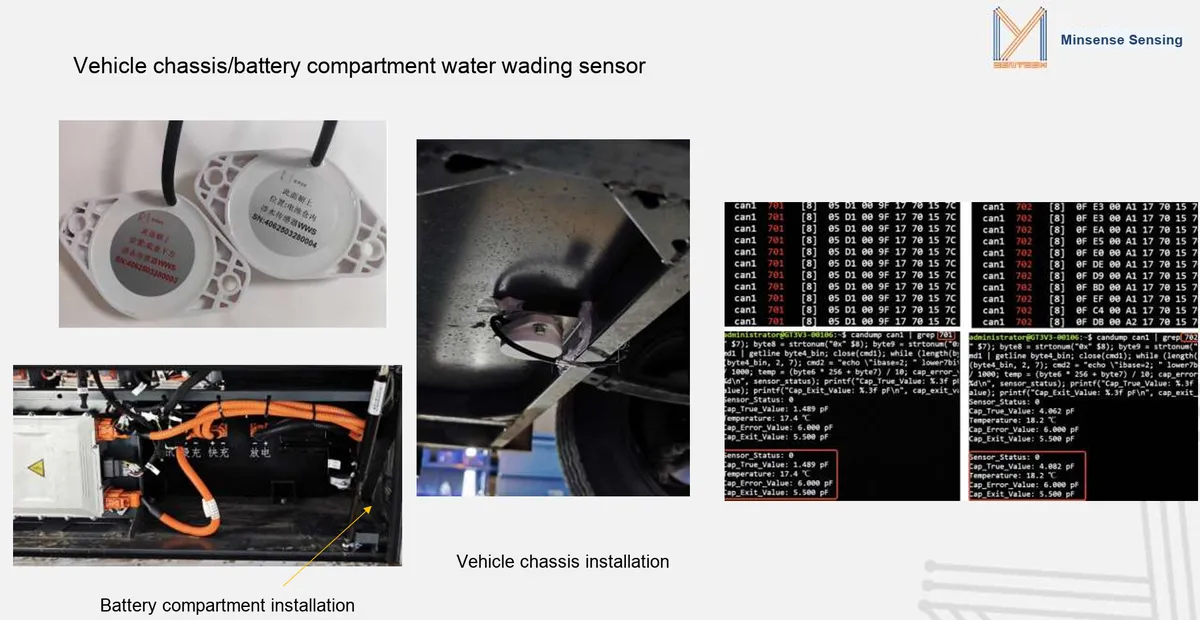
The figure shows the application scenarios of Minyuan WWS wading sensors in new energy vehicles. The sensors are respectively installed inside the battery compartment and on the outer side of the vehicle chassis. Based on the capacitive non-contact detection principle, they monitor the risk of water ingress into the battery pack and the chassis wading condition in real time, output stable capacitive detection data, and provide reliable early warning for vehicle wading safety.
Minyuan Sensing's water immersion sensors cover multiple models including WS61, WS11, WLD, and WS. Ranging from board-level modules to finished sensors and from single-point detection to positionable detection, they form a complete capacitive water immersion detection solution that adapts to the installation and functional requirements of different scenarios:
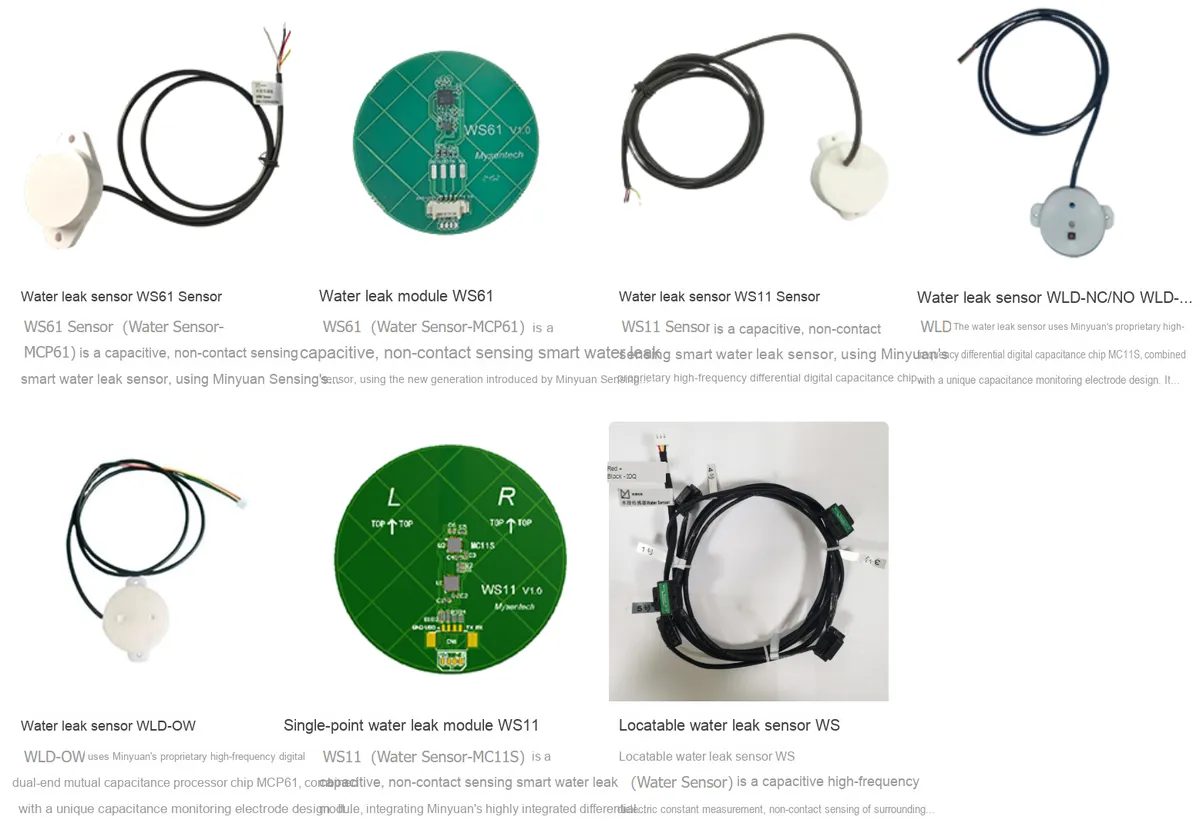
| Product name | Core chip | Product form | Output interface | Core function | Applicable scenarios | Core characteristics |
|---|---|---|---|---|---|---|
| WS61 water immersion sensor (finished product) | MCP61 capacitance detection chip | All-in-one finished sensor | UART | Distinguishes water from no water, simultaneously collects ambient temperature, rejects vibration and condensation interference | Equipment cabinets, indoor leak monitoring | Dual-channel detection, resistant to everyday environmental interference, stable and intuitive data |
| WS61 water immersion module | Capacitive sensing SOC chip | Embedded board-level module | UART | Integrates detection circuit and algorithm for basic water immersion recognition | Built into various custom devices | Compact size, low cost, easy for embedded development |
| WS11 water immersion sensor (finished product) | MC11S differential digital capacitance chip | All-in-one finished sensor | UART | Outputs capacitance value and water immersion status, resists external environmental interference | Smart homes, server rooms, ordinary underground pipelines | Differential detection design, highly versatile, suited to common civilian scenarios |
| WS11 single-point water immersion module | MC11S differential digital capacitance chip | Small integrated module | UART | Accurate single-point water immersion detection, with temperature data | Integration into small electronic products and portable devices | Lightweight design, easy to get started, quick to integrate and deploy |
| WLD series (NC/NO/485) | MC11S capacitance chip | Industrial-grade finished sensor | Switch output / RS485 | Judges water immersion severity, filters out electromagnetic and vibration interference | Power equipment, charging stations, industrial plants | Industrial-grade circuit design, supports relay output, high stability |
| WLD-OW water immersion sensor | MCP61 dual-terminal mutual capacitance chip | Industrial-specific sensor | Custom communication | Grades the degree of immersion, eliminates temperature and electromagnetic interference | Harsh industrial operating environments | Dedicated embedded algorithm, high detection accuracy in complex environments |
| WS locatable water immersion sensor | MDC04 high-precision capacitance chip | Multi-node combined sensor | Single-wire / RS485 | Accurate leak location, simultaneously outputs capacitance, status and temperature data | Server room corridors, tunnels, long building pipelines | Supports multi-node cascading, pinpoints the exact leak location |
4.1.6 Case Study: Frost Detection
Although frost formation and icing phenomena seem trivial, they exert tremendous hidden impacts across multiple industries: Excessive frost buildup on refrigerator evaporators drastically reduces refrigeration efficiency and increases energy consumption; ice accretion on wind turbine blades alters their aerodynamic profile, which in mild cases lowers power generation efficiency, and in severe cases causes turbine imbalance or even safety incidents; icing on roads and bridges directly threatens driving safety, serving as a major contributing factor to winter traffic accidents; when power inspection robots operate on ice-covered power lines, they also face risks of slipping and misjudgment.
Traditional frost and ice detection solutions mostly rely on temperature sensors, mechanical contact switches or image recognition: temperature sensors can only indirectly infer icing through ambient temperature and cannot directly measure the thickness of frost/ice; mechanical switches are prone to jamming and failure due to ice, and cannot quantify the degree of icing; image recognition is greatly affected by light and fog, leading to insufficient reliability in complex environments. In contrast, Minsensor's capacitive frost/ice detection technology provides a brand-new solution to these problems.
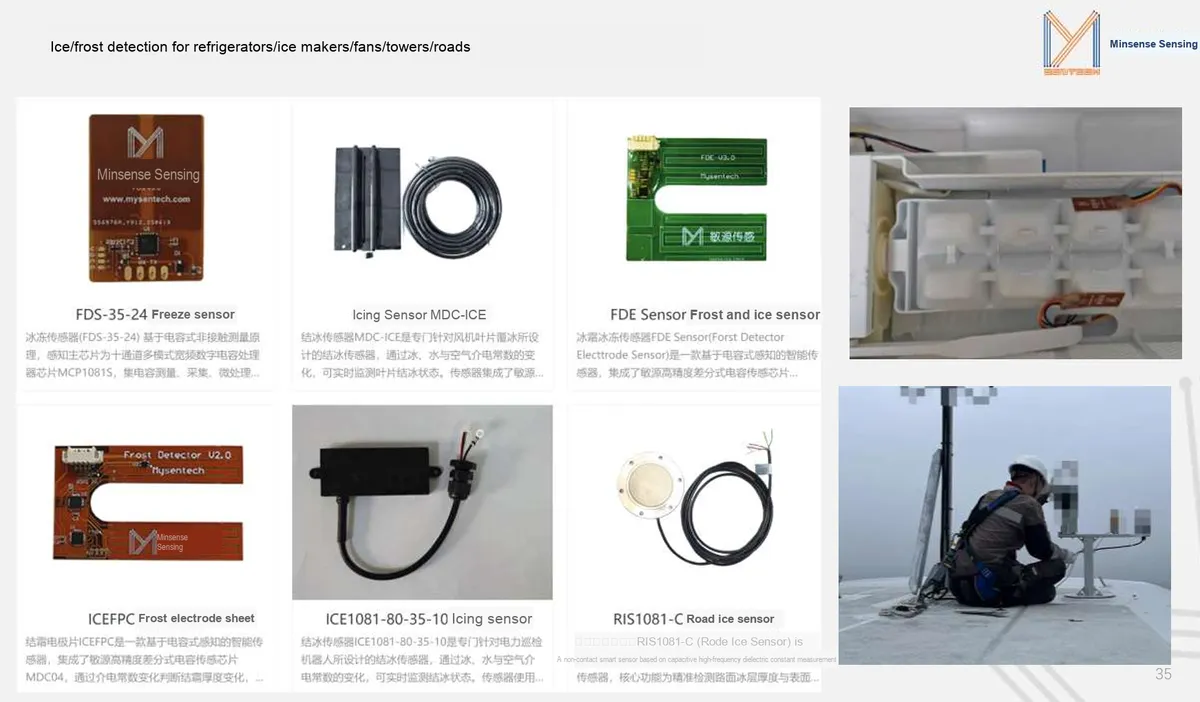
Minyuan Sensing's frost / ice detection solution is fundamentally based on the capacitive non-contact measurement principle: there are significant differences in the dielectric constants of ice, water and air (the dielectric constant of water is about 80, that of ice is about 3-4, and that of air is about 1). When frost or ice appears on the sensor surface / the measured area, it will cause a change in the capacitance value between the electrodes.With self-developed high-precision digital capacitance chips (such as MCP1081S, MDC04, MCP61, etc.), the sensor can accurately capture such capacitance changes. It can not only determine "whether icing/frosting occurs", but also quantify the thickness of ice/frost, and even distinguish different states such as ice, water, and ice-water mixture. Meanwhile, the built-in algorithm filters out environmental interferences such as temperature, electromagnetism and vibration, so as to realize stable and reliable detection.
From refrigerators and ice makers in the home appliance sector, to wind turbine blades in the new energy field, and further to roads in the transportation sector and inspection robots in the power sector, Minyu Sensor's frost/ice detection product series has developed into a complete solution covering multiple scenarios and forms. Below, we will analyze the features and applications of these products one by one.
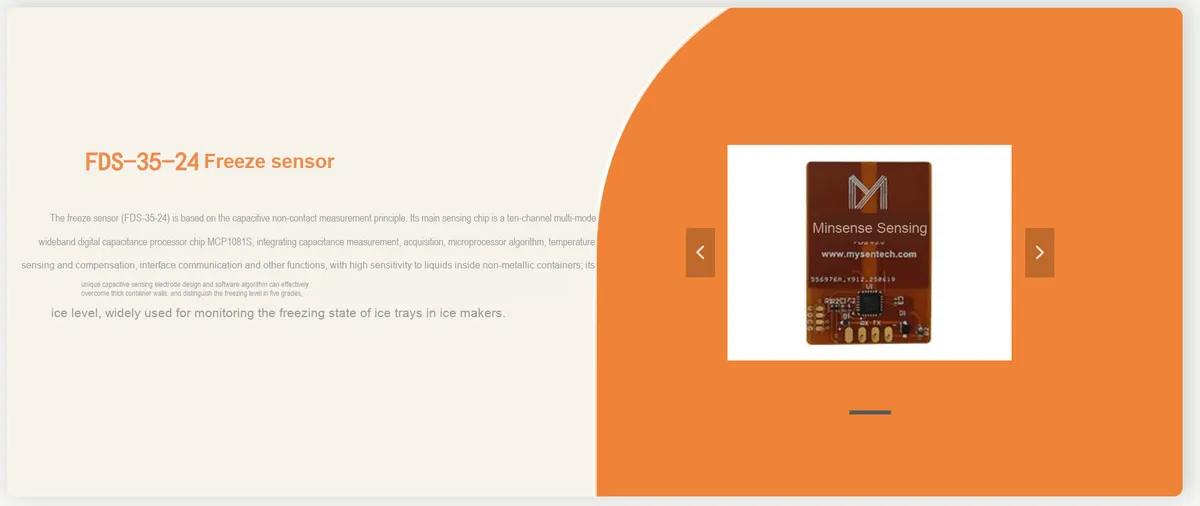
This is a flexible capacitive detection module specifically designed for refrigerators and ice makers. Built around the MCP1081S 10-channel multi-mode wideband digital capacitance processor chip and adopting a flexible FPC design, it can be directly attached to the outer side of the freezer compartment of a refrigerator or the ice tray of an ice maker, enabling ice formation state detection without contact with internal liquid. Through unique electrode design and algorithm optimization, it can counteract the influence of container wall thickness, output the icing degree in five quantified levels, accurately judge the ice freezing status of the ice tray, help ice makers or refrigerators optimize the timing of deicing and defrosting, and reduce energy consumption, making it a key component for energy-saving management of smart home appliances.
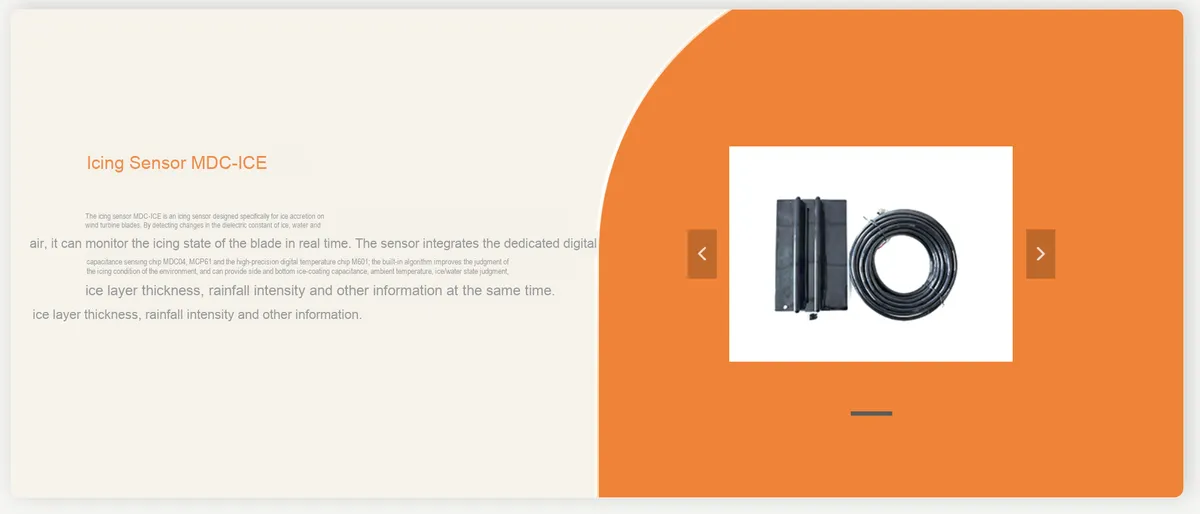
Minyuan Sensing MDC-ICE Icing Sensor is purpose-built for icing monitoring of wind turbine blades, serving as the "eye" that safeguards the safe operation of wind turbines. It integrates Minyuan MDC04 and MCP61 digital capacitance chips with the M601 high-precision temperature chip, and leverages the differences in dielectric constants among ice, water and air to monitor the icing status on blade surfaces in real time, while outputting multi-dimensional data including icing capacitance on side and bottom surfaces, ambient temperature, ice thickness, and rainfall intensity.The sensor adopts industrial-grade protection design, can be directly mounted on the surface of wind turbine blades, operates stably in harsh environments featuring high altitude, strong wind and low temperature, and helps wind farms give early warning of icing risks to avoid blade imbalance and shutdown accidents.
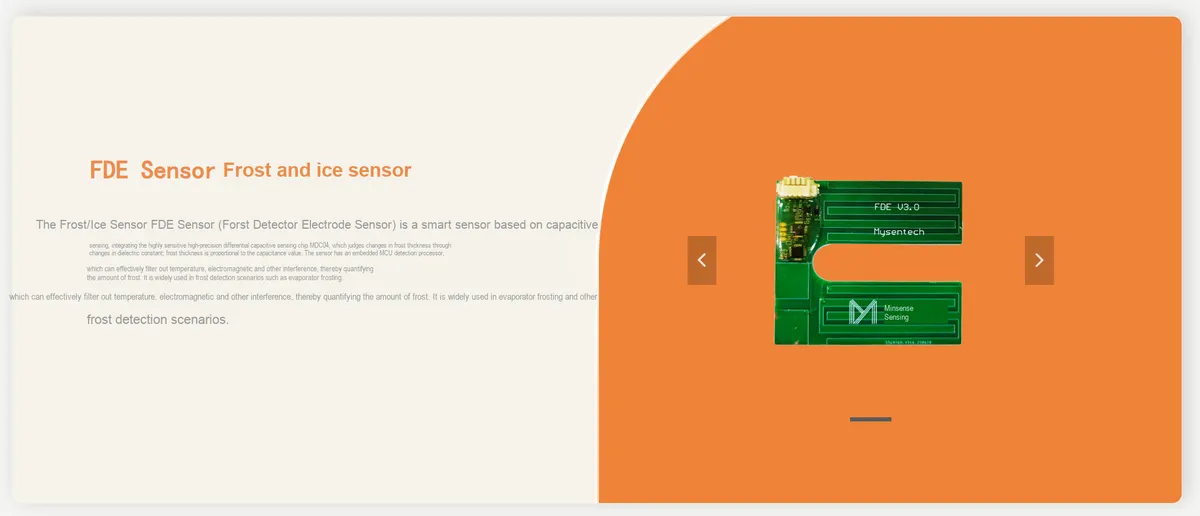
Minyuan Sensing FDE Sensor Frost & Freeze Sensor is a dedicated solution for frost detection on refrigerator evaporators. Built on the MDC04 high-precision differential capacitive sensing chip, it can accurately quantify the frost accumulation on the evaporator surface by leveraging the proportional relationship between capacitance change and frost thickness.The sensor has a built-in MCU detection processor, which can effectively filter out the interference from temperature fluctuations and electromagnetic interference, output stable frosting status data, help refrigerators intelligently judge the defrosting timing, avoid the decline of refrigeration efficiency caused by excessive frosting, and meanwhile reduce unnecessary defrosting heating to achieve energy saving and consumption reduction. It is widely used in the frosting detection scenarios of evaporators for various types of smart refrigerators.
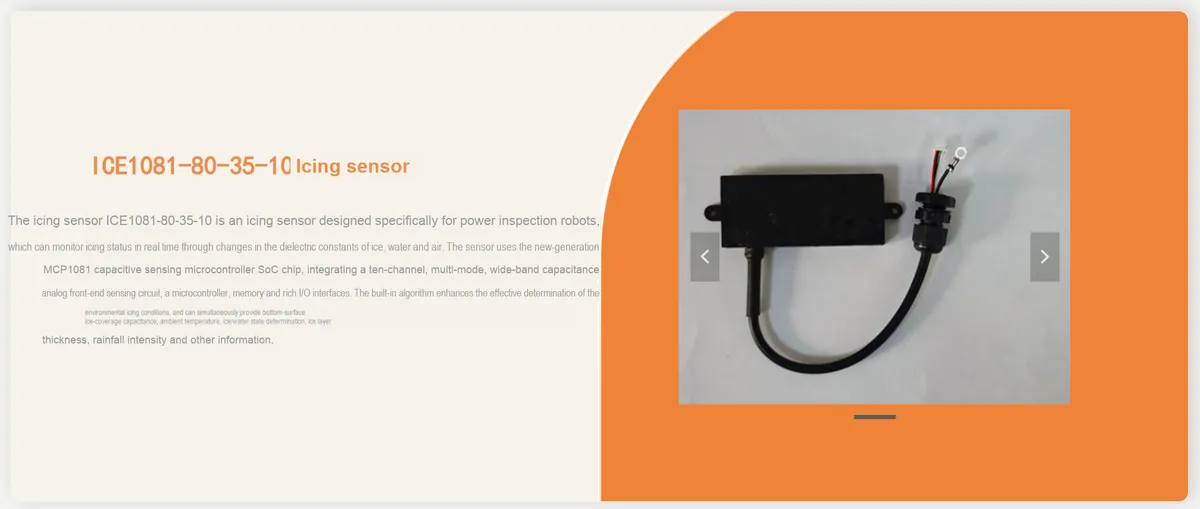
Minyuan Sensing ICE1081-80-35-10 Ice Sensor, purpose-built for power inspection robots, serves as the "anti-slip early warning device" that enables robots to operate safely on ice-covered power lines. Equipped with Minyuan's new-generation MCP1081 capacitive sensing microprocessor SOC chip and integrated with a 10-channel wideband capacitive analog front end, it can monitor the icing status of the working surface in real time by detecting changes in the dielectric constant of ice, water and air, and simultaneously output data including ice thickness, ambient temperature, and ice-water status.The sensor features an industrial-grade waterproof and dustproof design, which can operate stably in outdoor low-temperature and humid environments, helping inspection robots identify ice-covered areas in advance to avoid skidding and misjudgment, and ensure operation safety.
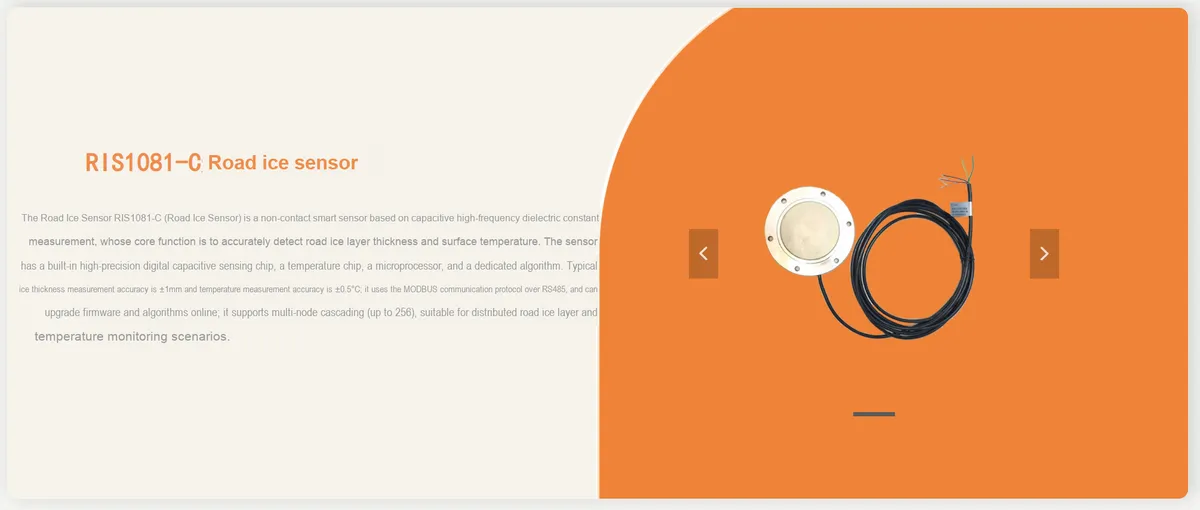
Minyuan Sensing RIS1081-C Road Icing Sensor serves as the "guardian" of traffic safety on roads and bridges in winter. Based on the capacitive high-frequency dielectric constant measurement principle, it incorporates a high-precision digital capacitance chip and a temperature chip, capable of accurately detecting the thickness of ice on road surfaces (accuracy: ±1mm) and the surface temperature (accuracy: ±0.5℃).The sensor features a rugged metal housing that can be directly embedded into the road surface, outputs data via the Modbus protocol over RS485, supports multi-node cascading (up to 256 nodes), enables distributed road ice monitoring, provides data support for road de-icing and traffic control, and effectively reduces the risk of road traffic accidents in winter.
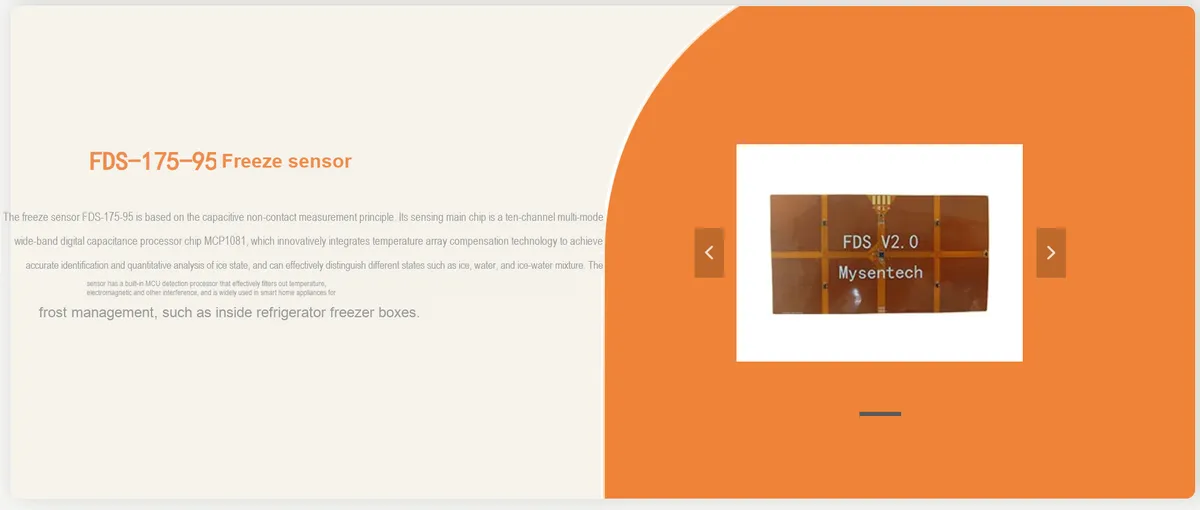
Minyuan Sensing FDS-175-95 Freezing Sensor is an advanced solution for frost management in smart home appliance freezers. Built on the MCP1081 digital capacitive processor chip and innovatively integrated with temperature array compensation technology, it can accurately identify different states such as ice, water, and ice-water mixture, which enables it to not only detect icing and frosting but also distinguish between different forms of moisture.The sensor features a large-area flexible electrode design, which can be attached to areas such as refrigerator freezer compartments and drawers to comprehensively monitor frost formation in the freezer, helping the refrigerator achieve refined frost management, optimize refrigeration strategies, reduce energy consumption, and enhance user experience.
4.1.7 In-depth Case Study: Soil Moisture Content Detection
Soil moisture content is one of the core indicators in agricultural production, which directly determines the growth status of crops, irrigation efficiency and water resource utilization rate; while grain moisture content is a key parameter in the links of storage, transportation and processing: excessively high moisture content will cause grain to heat up and go moldy, while excessively low moisture content will affect processing quality. Among traditional moisture detection schemes, although the drying method boasts high accuracy, it is time-consuming and labor-intensive and cannot realize online monitoring; devices based on time domain reflectometry (TDR) and frequency domain reflectometry (FDR) feature high cost and are susceptible to soil salinity and temperature, making it difficult to be popularized on a large scale.
Minyuan Sensing's capacitive moisture content detection technology provides a low-cost and highly reliable solution for soil and grain moisture monitoring. Its core principle is based on the difference in dielectric constant: the relative dielectric constant of water is about 80, which is much higher than that of soil particles (4~6) and air (1). When the moisture content in soil or grain changes, the overall dielectric constant will change significantly, which in turn causes the capacitance value between the sensor electrodes to change.Through self-developed high-precision digital capacitance chips (such as MCP62, M117, etc.), combined with high-frequency radio frequency signal transmission technology and multi-parameter fusion algorithm, the sensor can accurately capture capacitance changes, and meanwhile eliminate environmental interference through temperature and conductivity calibration, so as to realize stable and accurate measurement of soil moisture content. Its Product Form covers needle-type finished products, board-level modules and special sensors for grain, adapting to the full-scenario moisture monitoring requirements from farmland to granaries.
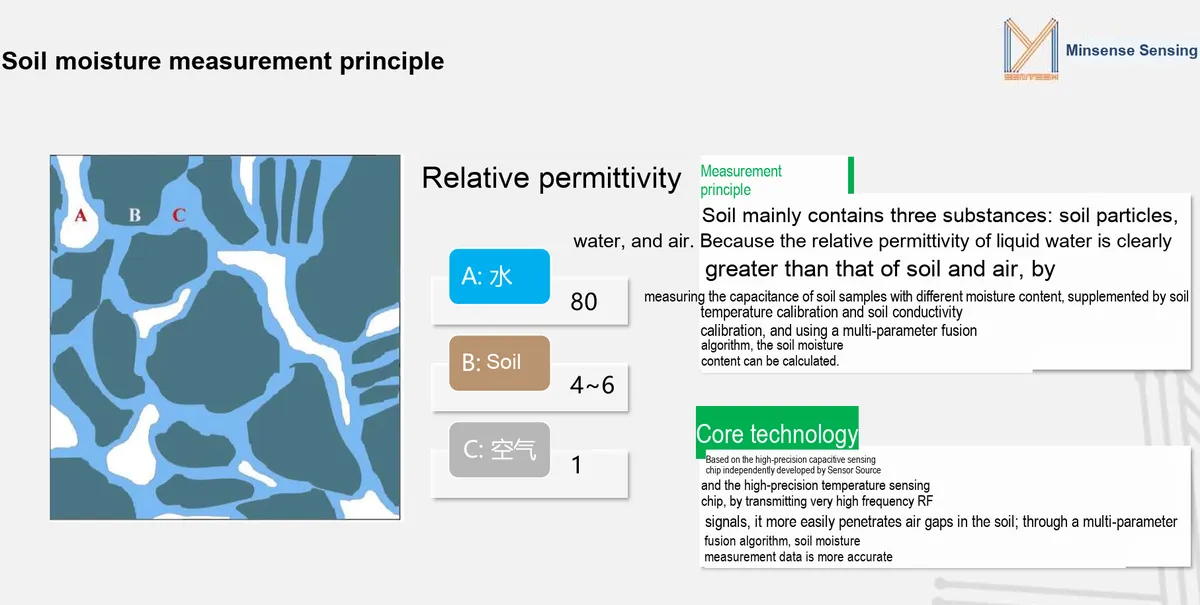
The above figure intuitively reveals the underlying logic of capacitive detection technology. Soil mainly consists of three components: soil particles, water and air. The dielectric constant of liquid water (about 80) is much higher than that of soil (4~6) and air (1). When the soil moisture content increases, the dielectric constant between the electrodes will increase accordingly, and the capacitance value will also rise synchronously.Minyu Sensing leverages its self-developed high-precision capacitive sensing chips and temperature sensing chips, transmits VHF radio frequency signals to penetrate soil gaps, and adopts a multi-parameter fusion algorithm calibrated with soil temperature and conductivity to convert capacitance changes into accurate moisture content data, addressing the longstanding pain point of traditional capacitive sensors being susceptible to interference from soil composition and ambient temperature.
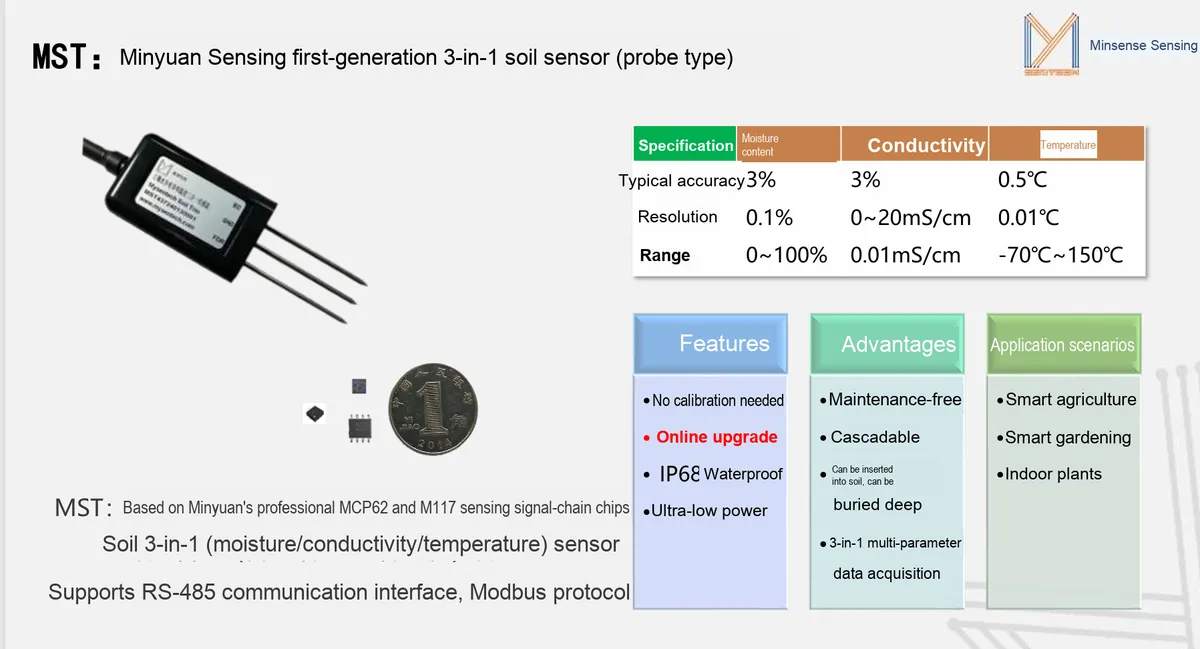
Minyuan Sensing MST First-Generation 3-in-1 Soil Pin Sensor, is an industrial-grade finished solution designed specifically for in-situ soil monitoring. It integrates detection capabilities for three parameters: moisture content, electrical conductivity and temperature, with a typical accuracy of ±3% for moisture content, a resolution of 0.1%, an electrical conductivity measurement range covering 0~20mS/cm, and a temperature measurement accuracy of ±0.5℃, which can fully reflect the moisture, salinity and thermal status of the soil.The sensor features an IP68 waterproof design, and its probe-type structure allows for direct insertion into soil or deep burial installation. It supports the RS-485 interface and Modbus protocol, and boasts the characteristics of ultra-low power consumption, no need for on-site calibration, and support for online upgrade. It is widely used in scenarios such as smart agricultural irrigation, garden soil monitoring, and ecosystem environment research.
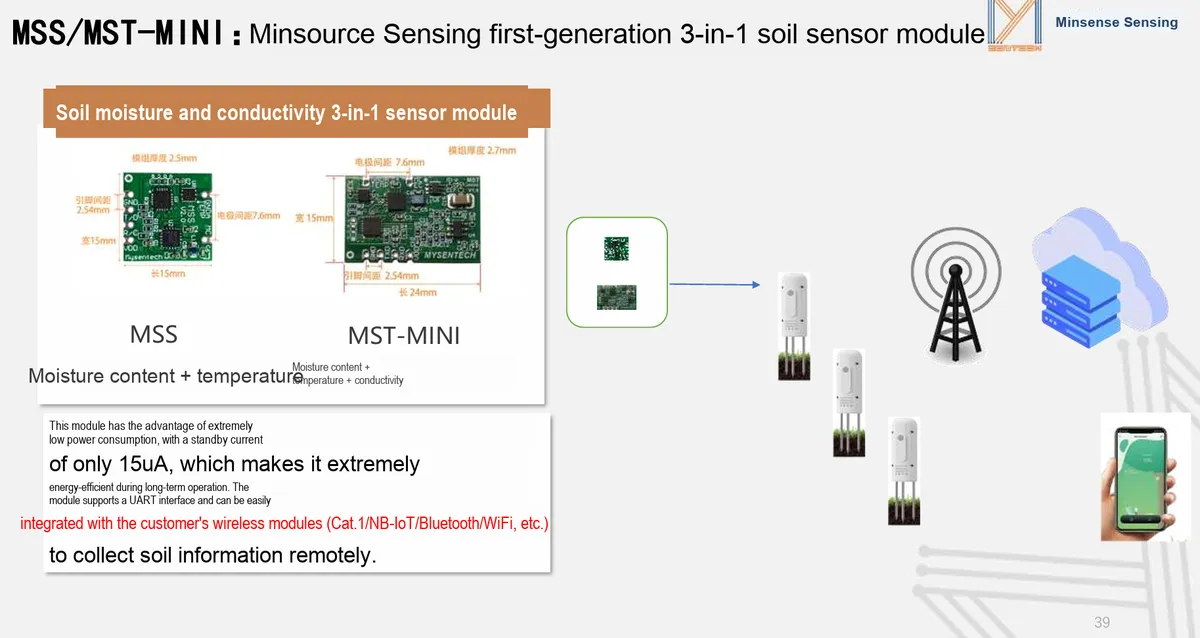
Minyuan Sensing MSS/MST-MINI Soil 3-in-1 Sensor Module is a board-level development solution targeted at device integrators. The MSS module supports dual-parameter detection of moisture content and temperature, while the MST-MINI module realizes 3-in-1 detection of moisture content, temperature and electrical conductivity. Both modules adopt an ultra-compact PCB design (with dimensions of only about 15mm×15mm), with a standby current as low as 15uA, making them suitable for long-term low-power operation requirements.The module supports the UART communication interface, which can be easily integrated with wireless modules such as NB-IoT, Cat.1, Bluetooth and WiFi to quickly build a remote soil monitoring terminal. It helps customers develop miniaturized and low-power soil moisture monitoring equipment, and is widely used in scenarios such as smart home green plant monitoring, portable soil detectors, and agricultural IoT nodes.
4.1.8 In-depth Case Study: Flexible Pressure Detection
Pressure is a ubiquitous physical signal, and flexible pressure detection is the key technology that converts such signals into digital data, playing an increasingly important role in fields including consumer electronics, healthcare, and new energy safety. Ranging from pressure feedback of pelvic floor muscle rehabilitation devices and suction control of pumps, to intensity adjustment of massagers and thermal runaway warning for new energy vehicle battery packs, flexible pressure sensors are required to achieve stable, accurate and repeatable pressure measurement in curved, dynamic and complex scenarios.
Flexible sensing technology is reshaping the interaction modes and perception capabilities in fields such as consumer electronics, robotics, and healthcare, among which flexible pressure detection and flexible temperature detection are the two core branches. Flexible pressure sensors endow devices with the "sense of touch" and can detect tiny contact forces and pressure distributions; flexible temperature sensors, on the other hand, can fit curved surfaces to achieve non-invasive temperature measurement, providing accurate temperature data for wearable devices and medical monitoring.
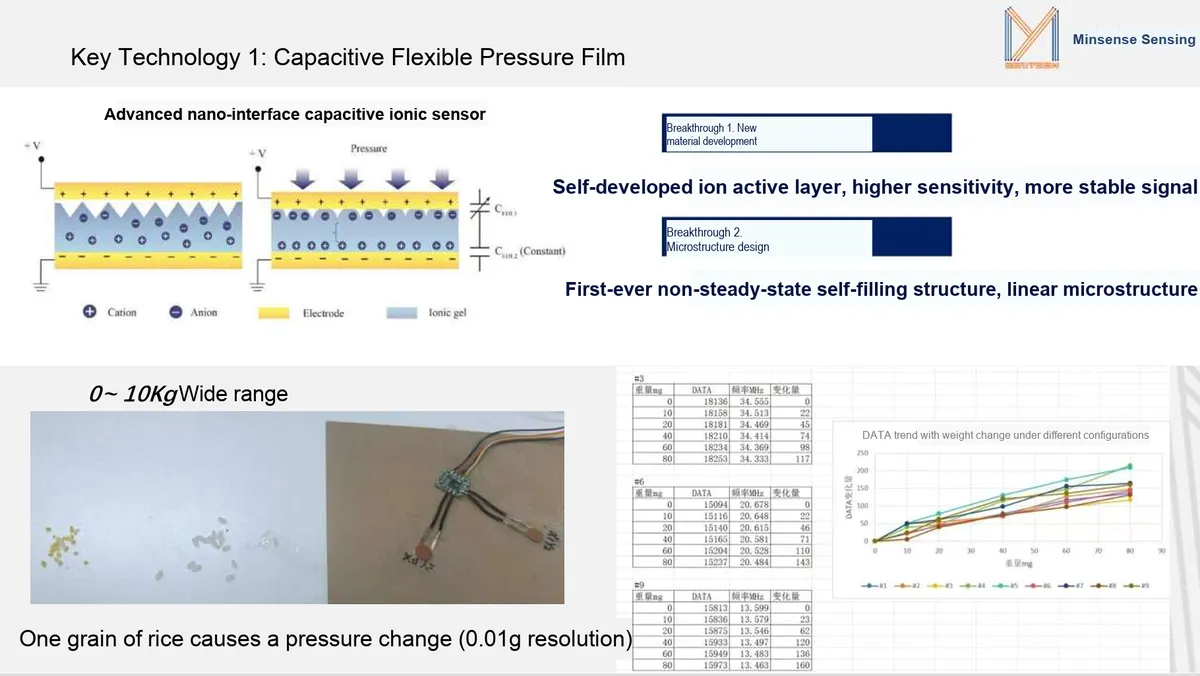
Traditional flexible pressure sensors mostly adopt piezoresistive schemes, which suffer from large hysteresis, high temperature drift and poor long-term stability; while temperature sensors are mostly rigid probes, making them difficult to adapt to curved surfaces and dynamic fitting scenarios. The capacitive flexible sensing technology of Minyuan Sensing, based on self-developed nano-interface capacitive thin films, ionic cell materials and high-precision digital capacitive chips, realizes pressure measurement with high linearity, low hysteresis and high resolution;Concurrently launched is the flexible FPC temperature module, which enables high-precision temperature measurement with curved surface fitting, forming a complete flexible sensing product matrix covering pressure and temperature sensing, and adapting to the needs of multiple scenarios ranging from smart wearables to industrial robots.
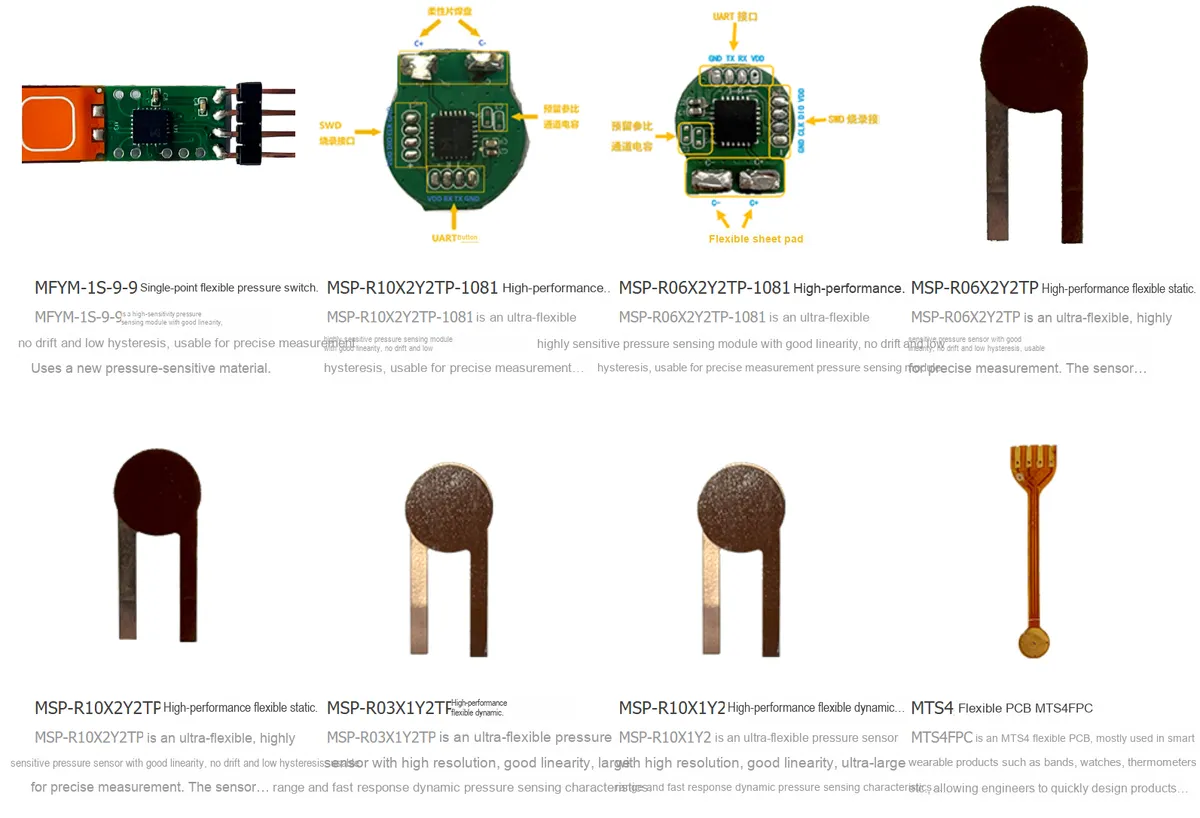
The comparison of Minsensor's flexible sensing products is shown in the table below:
| Product name | Core type | Core technology | Key parameters | Typical application scenarios | Core advantages |
|---|---|---|---|---|---|
| M601FPC-Cu5.5 | Flexible temperature module | M601 digital temperature chip | Accuracy ±0.1℃@28~43℃, range -70~+150℃ | Smart bands, watches, thermometers | Flexible conformal fit, high-accuracy body temperature measurement, compact size |
| MTS4FPC | Flexible temperature module | MTS4 digital temperature chip | Accuracy ±0.1℃@28~43℃, range -103~+153℃ | Smart wearables, medical temperature measurement | Wide temperature range coverage, I2C interface, suited to low-power devices |
| MFYM-1S-9-9 | Flexible pressure development board | PCB hybrid-structure capacitive technology + MCP1081 chip | High linearity, low hysteresis, no drift | Robot tactile sensing, human-machine interaction, prototype verification | Highly integrated, ready to use, convenient for rapid development |
| MSP-R10X2Y2TP-1081 | Static pressure module | Nano-interface capacitive technology + MCP1081 chip | High sensitivity, high linearity, low hysteresis, no drift | Flexible weighing, robot tactile sensing, human-machine interaction | With signal processing circuit, UART output, easy integration |
| MSP-R06X2Y2TP-1081 | Static pressure module | Nano-interface capacitive technology + MCP1081 chip | High sensitivity, high linearity, low hysteresis, no drift | Pressure sensing for small devices, human-machine interaction | Smaller size, suited to space-constrained scenarios |
| MSP-R06X2Y2TP | Static pressure sensing pad | Nano-interface capacitor technology + off-cell body | High linearity, low hysteresis, high sensitivity | Flexible weighing, robot tactile sensing | Pure sensing unit, low cost, suited to customer-designed circuits |
| MSP-R10X2Y2TP | Static pressure sensing pad | Nano-interface capacitor technology + off-cell body | High linearity, low hysteresis, high sensitivity | Large-area tactile feedback, flexible weighing | Larger sensing area, higher sensitivity |
| MSP-R03X1Y2TP | Dynamic pressure sensing pad | Nano-interface capacitor technology + off-cell body | High resolution, fast response, wide range | Robot tactile sensing, slip detection, dynamic weighing | Fast dynamic response, suited to rapidly changing pressure scenarios |
4.2 Partial Demonstration of the Application Scheme Using Integrated Capacitive Sensing SOC Chip
4.2.1 Smart Grain Condition / Online Moisture Content Detection Solution for Harvesting Agricultural Machinery
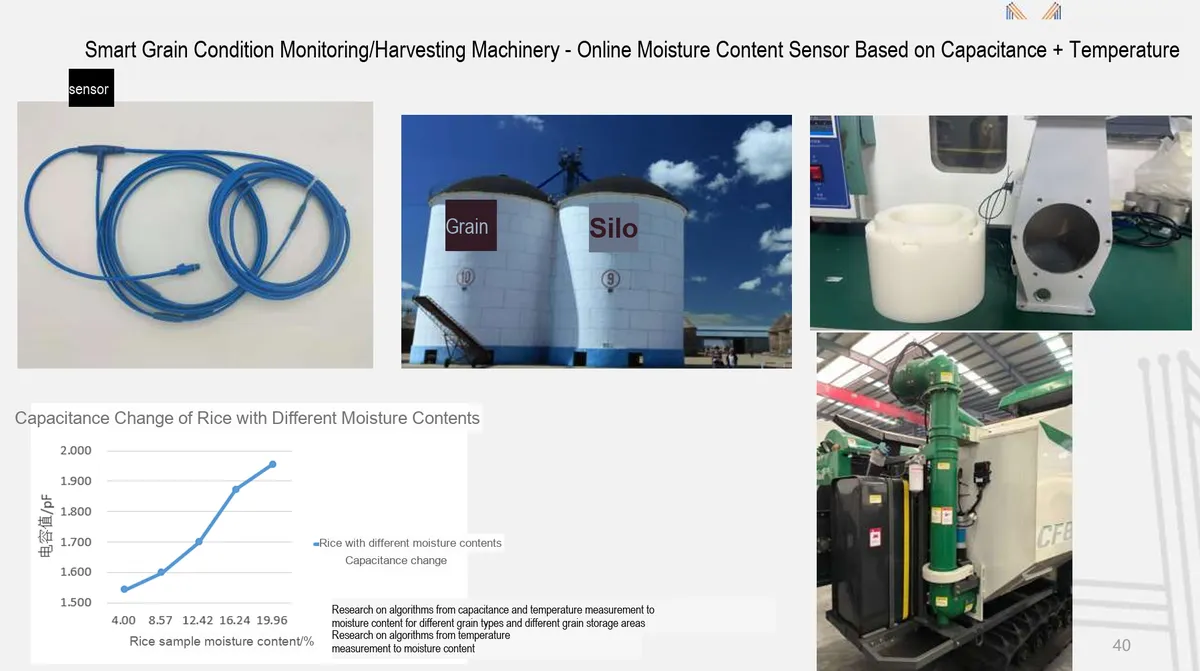
Capacitive detection technology is extended to the field of grain moisture monitoring. Similar to soil, changes in moisture content in grain will also cause a significant change in dielectric constant. As can be seen from the relationship curve between the moisture content of paddy and the capacitance value in the figure, the capacitance value shows an obvious upward trend with the increase of moisture content, which provides a reliable basis for online detection.This solution consists of a cable-type moisture content sensor for grain bins and an on-line detection device for harvesters. Through customized electrode design and grain variety adaptation algorithms, it can monitor the grain moisture content in different areas of the grain bin in real time, or detect grain moisture on-line during the harvesting process to guide drying operations and warehouse management, avoid grain mildew, and reduce drying energy consumption. It is a key sensing component for smart grain storage and modern agricultural machinery.
4.2.2 Flexible Pressure Sensing Scheme
Traditional flexible pressure detection solutions mostly adopt piezoresistive or piezoelectric principles: piezoresistive sensors rely on the deformation of conductive materials to cause resistance changes, but they generally suffer from large hysteresis, high temperature drift, and poor long-term stability; piezoelectric sensors can only detect dynamic pressure, cannot achieve continuous monitoring of static pressure, and are relatively costly. In contrast, Memsensing's capacitive flexible pressure detection solution provides a brand-new approach to addressing these pain points.
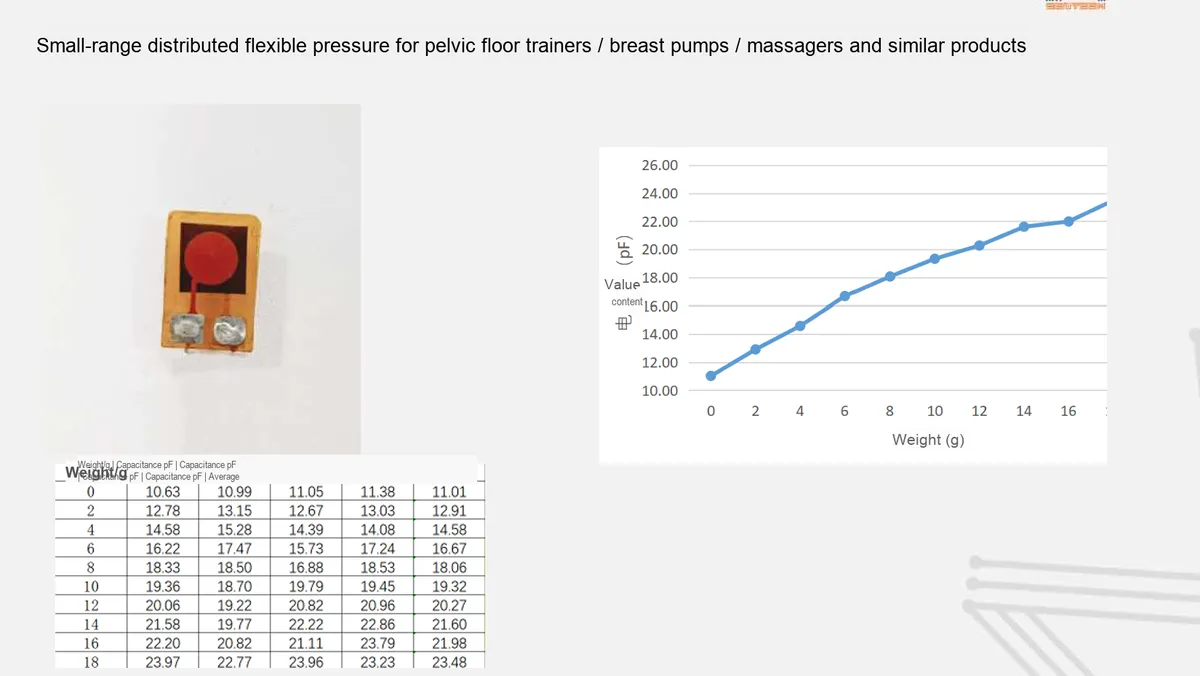
This sensor adopts a flexible FPC substrate and customized electrode design, which can be attached to curved or irregular surfaces to realize distributed pressure sensing. As shown in the test data, as the applied weight (pressure) increases from 0g to 18g, the capacitance value of the sensor rises stably from approximately 11pF to about 23.5pF, exhibiting excellent linearity and repeatability, and can accurately quantify pressure changes in a small range.This type of sensor is optimized specifically for low-pressure scenarios, and can be applied to pressure feedback of pelvic floor muscle rehabilitation devices, closed-loop suction control of pumps, and intensity grading adjustment of massagers, providing delicate and reliable pressure sensing capabilities for consumer electronic products to enhance user experience and the product's intelligence level.
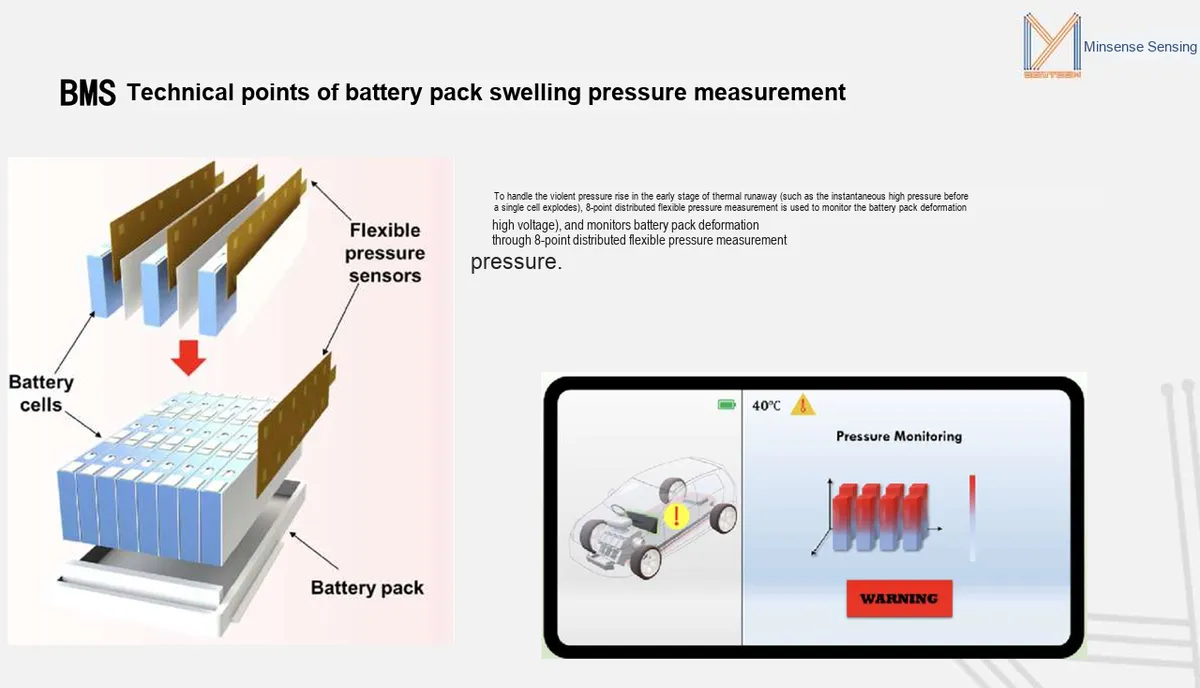
The battery pack swelling pressure measurement solution developed for the BMS (Battery Management System) of new energy vehicles adopts an 8-point distributed flexible pressure sensor, which is arranged between the battery cells inside the battery pack. It realizes early warning of battery swelling and thermal runaway by monitoring in real time the sharp pressure rise in the initial stage of cell thermal runaway. When a battery thermal runaway occurs, the cell will generate instantaneous high pressure due to gas production and swelling. The flexible sensor can quickly capture the sudden change in capacitance caused by the change in plate spacing, feed back the pressure data to the BMS system, and trigger an alarm or safety protection action.This solution can cope with the transient high pressure in the initial stage of thermal runaway and provide distributed monitoring for the deformation pressure of the battery pack, which is a key sensing technology for improving the battery safety of new energy vehicles and realizing active early warning.
4.2.3 Multi-type Detection Scheme for Pet Scenarios
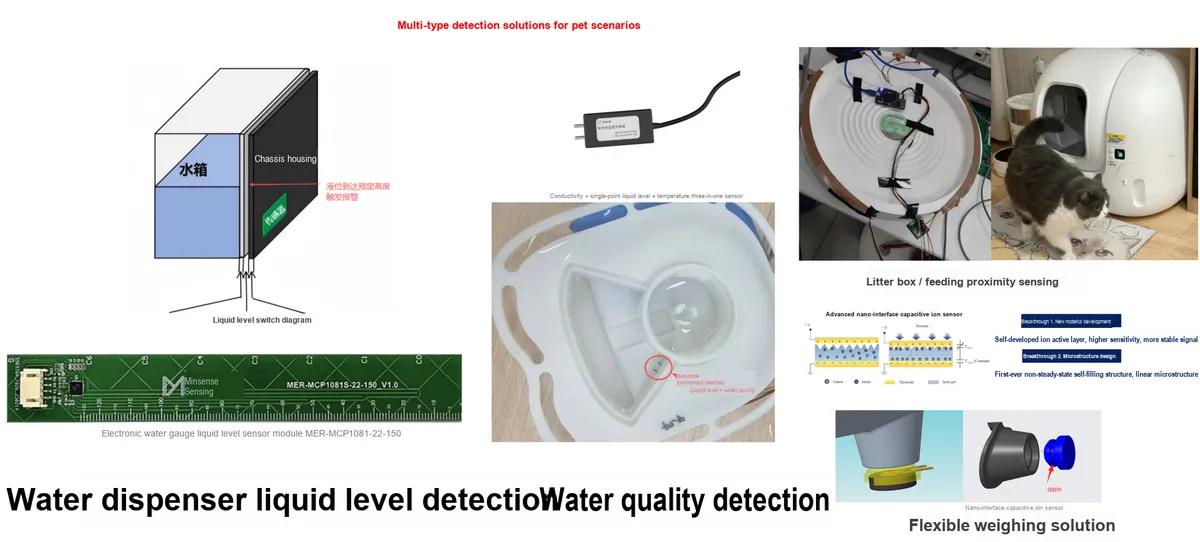
Minyuan Sensing, leveraging core technologies of capacitive/inductive sensing chips and modules, has developed a full-scenario sensing solution for pet smart hardware that covers water dispenser liquid level, water quality detection, cat litter box proximity sensing, and flexible weighing. The water dispenser adopts non-contact liquid level detection, supporting continuous/graded measurement with an accuracy of ±3mm; the water quality detection uses a conductivity + liquid level + temperature three-in-one sensor to monitor water level and water quality simultaneously; the cat litter box realizes non-contact proximity sensing through ring electrodes, which can trigger an emergency stop to ensure pet safety.The flexible weighing solution is based on a nano-interfacial capacitive iontronic sensor, which enables pet behavior and weight monitoring and empowers the intelligent upgrading of pet equipment in an all-round manner.
4.2.4 Coffee Machine Water Tank Liquid Level Detection Scheme
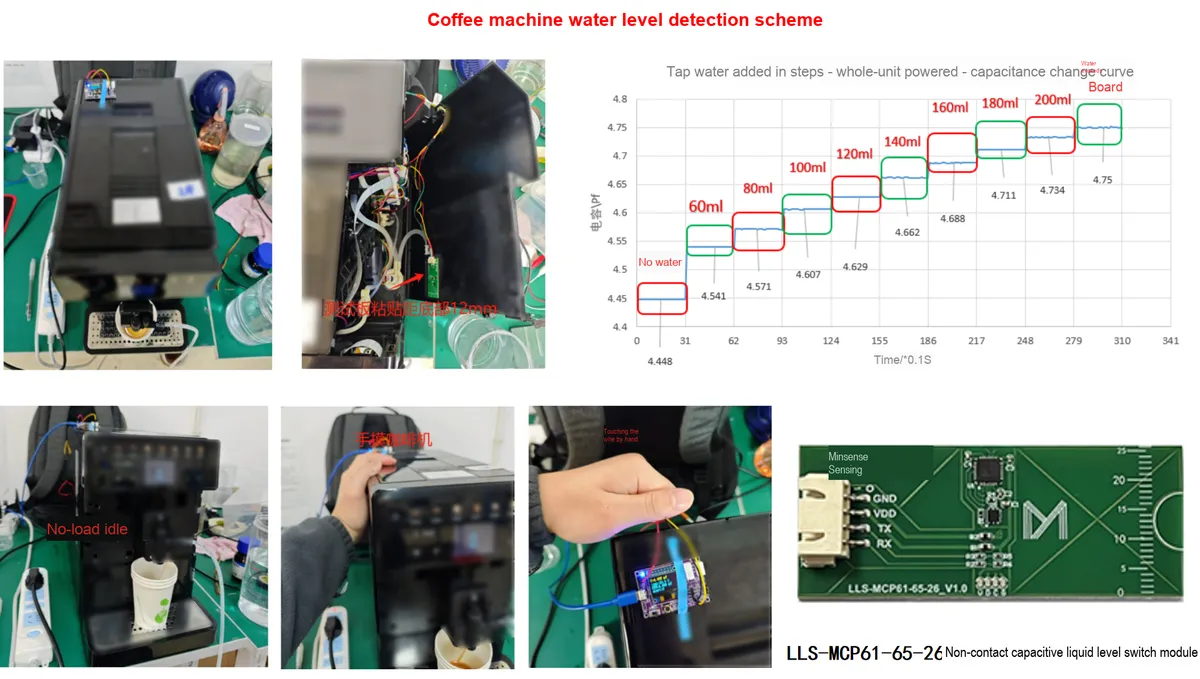
This solution adopts the Minyuan LLS-MCP61-65-26 non-contact capacitive liquid level switch module to meet the liquid level detection requirements of the coffee machine water tank. Leveraging the high dielectric constant property of water, the module can measure liquid level changes through the water tank housing, and the capacitance value exhibits a stable linear variation across different liquid level ranges including empty tank, 60ml, 80ml and 200ml (the capacitance change from empty tank to the critical threshold is approximately 0.302pF).Meanwhile, verified through anti-interference tests, touching the device body, wires, and water droplets adhering to the container wall will not affect the measurement results. It can effectively overcome problems such as container walls, scale, and EMC interference, providing reliable sensing support for coffee machine water shortage alerts and automatic water replenishment.
4.2.5 Washing Machine Perception Scheme
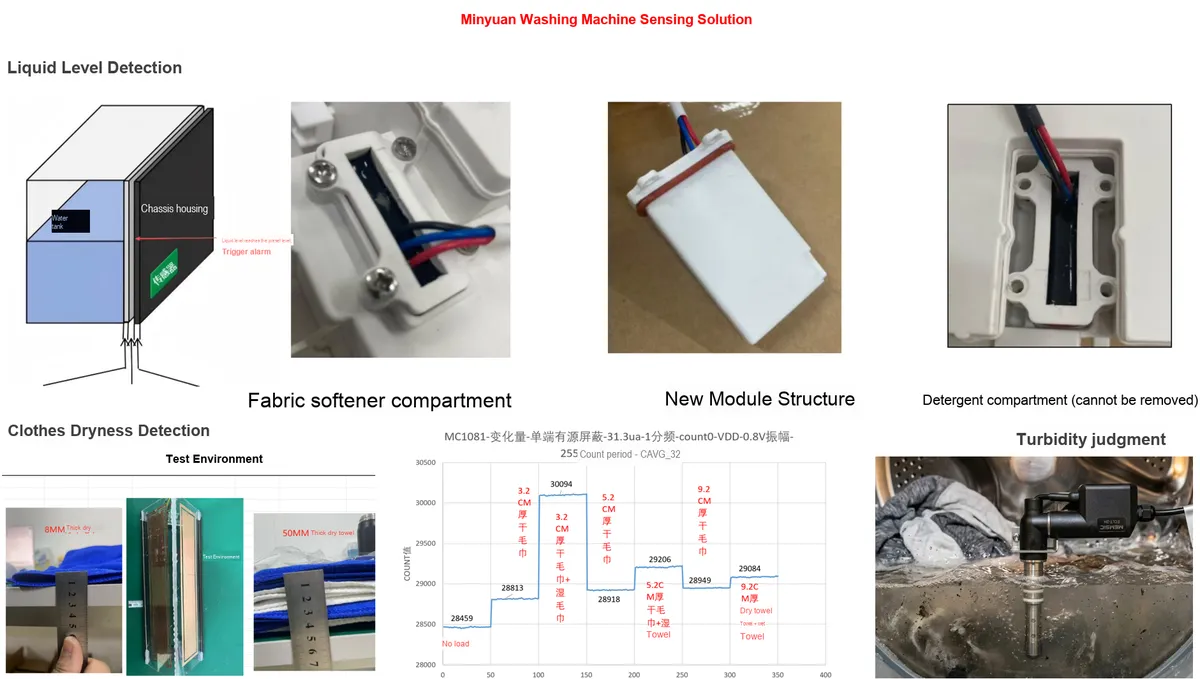
This solution relies on three major sensors, namely liquid level detection, laundry drying detection, and turbidity judgment to realize the perception of the whole process of intelligent washing and care of washing machines:
- Liquid level detection: By means of single-point/multi-stage/probe-type liquid level sensors, it accurately identifies the water level status and the remaining amounts of laundry detergent and fabric softener, so as to realize on-demand water supply and consumable reminder;
- Clothes Drying Detection: The sensor can clearly distinguish the states of no load, dry towels of different thicknesses, and stacked wet towels, and accurately feedback the dryness level through the change of COUNT value, so as to avoid over-drying or incomplete drying;
- Turbidity Judgment: By detecting the conductivity of washing water, it distinguishes between clean water, washing water with different levels of soil, and the rinsing residue status, automatically controls the number of rinsing cycles, improves washing performance and water-saving efficiency, and provides comprehensive sensing support for smart washing machines.
References
- Ti Document-FDC1004: Fundamentals and Applications of Capacitive Sensing: https://www.ti.com.cn/cn/lit/an/zhcaag1a
- https://pressure-sense.com/knowledge/capacitive-sensors/
- https://www.ifm.com/us/en/us/overview/capacitive/technology-overview
- https://www.realpars.com/blog/capacitive-sensor
- https://eshop.se.com/in/blog/post/what-is-capacitive-sensor-and-how-does-it-work-and-types.html
- https://en.wikipedia.org/wiki/Capacitive_sensing
- https://www.fluke.com/en-us/learn/blog/electrical/understanding-capacitive-voltage-sensors
- https://www.instructables.com/Capacitive-Sensing-for-Dummies/
- https://lorentzzi.com/how-capacitive-proximity-sensors-work-the-ultimate-guide/
- https://www.tacterion.com/wiki/capacitive-sensing
- https://www.sciencedirect.com/topics/engineering/capacitance-sensor
- Review on the Application of Capacitive Sensors: https://www.juzhikan.cn/static/upload/file/20260415/1776211164859185.pdf
- https://blog.csdn.net/chenhuanqiangnihao/article/details/134273539
- https://zhuanlan.zhihu.com/p/680704023
- https://mysentech.com/productinfo/180070.html
- https://www.youtube.com/watch?v=QItuf6lNvmI
- https://www.instructables.com/id/Touche-for-Arduino-Advanced-touch-sensing/
- http://www.planetanalog.com/document.asp?doc_id=527490
- https://actsensors.com/blogs/resources/how-does-a-capacitance-sensor-work
- https://www.cnlanbaosensor.com/blog/challenges-with-best-capacitive-sensor-applications/
- https://pressureprofile.com/pps-insights/strengths-and-limitations-of-capacitive-tactile-array-sensors
- Minyuan Sensing Electrode Solution Recommendation and Anti-Interference Shielding Design
- https://www.electronicsweekly.com/market-sectors/embedded-systems/adding-capacitive-sense-to-soc-design-2008-07/
- On-chip Capacitance Measurement Techniques for Microelectronic Capacitive Sensors
- https://www.fscwsensor.com/Solving-common-problems-with-capacitive-level-detection
- https://www.embedded.com/capacitive-sensing-for-advanced-user-interfaces/
- Minyuan Sensing Chips & Modules Product Line Introduction
- https://www.mysentech.com/
Version Record
Version Number | Modifier | Time | Content |
v1.0 | Li Zisheng | 2026/05/19 | Initialize the document. |